
Tofail Ahmed: The unsung architect behind 'Bangabandhu' title
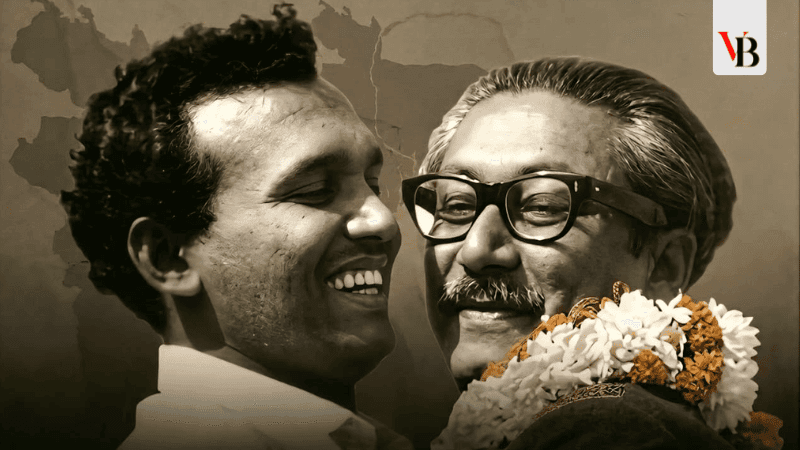

The tumultuous 1960s. On a February evening at the Race Course Maidan, the sky-shattering roar of lakhs of people echoed the name 'Bangabandhu' — a title that remains immortal and radiant in the hearts of Bengalis. The architect of that title was Tofail Ahmed. The veteran leader breathed his last while undergoing treatment at the capital's Square Hospital at around 3:30 pm on Monday, June 1. He was 82.
Tofail Ahmed was a close associate of the architect of independent Bangladesh, Father of the Nation Bangabandhu Sheikh Mujibur Rahman, a key organiser of the Liberation War and a multi-faceted politician. But he will remain forever memorialised in the annals of history for that immortal moment when he conferred the title 'Bangabandhu' upon the undisputed leader of the Bengalis.
The historic moment of conferring the 'Bangabandhu' title
Sheikh Mujibur Rahman was released from a Pakistani prison on February 22, 1969. His release was a symbol of the bloody victory of the mass uprising. The following day, on February 23, a sea of people gathered at the then Race Course Maidan (now Suhrawardy Udyan). People from across the country; Mymensingh, Tangail, Sylhet, Chattogram, arrived by packed trains, buses and launches to welcome their beloved leader.
Standing on the stage before that unprecedented ocean of people, a young student leader uttered an unforgettable sentence in history: "From today, he is our Bangabandhu Sheikh Mujib." The name of that young man was Tofail Ahmed.
Tofail Ahmed, then vice-president of Dhaka University Central Students' Union and convener of the All-Party Student Action Committee, at the age of 23, delivered that immortal declaration. According to archive records, Tofail Ahmed said that day, "We are conferring the title of Bangabandhu upon our great leader, who has spent his youth in the prisons of Pakistan and who, with a smiling face, wished to embrace death on the gallows."
Lakhs of people raised their hands in support of that proposal. From that day, the title 'Bangabandhu' became inseparably intertwined with the name of the undisputed leader of the Bengalis. 'Bangabandhu' means, Friend of Bengal. Friend of the people of Bengal.
Recalling that historic evening
February 23, 1969, will be written in golden letters in the political history of Bangladesh. Tofail Ahmed himself wrote about that public reception in his book 'The 1969 Mass Movement and Bangabandhu'.
In his own words: "February 23, 1969. Those who did not see the Race Course Maidan that day cannot be told about that gathering... I was saying that February 23 was the greatest day of achievement in my life. What greater achievement can there be in a student's life? Bangabandhu Sheikh Mujib, the undisputed greatest leader of Bengal, the greatest Bengali, was on that stage, and before him were more than ten lakh people, and I was the president of that meeting! It was then that I conferred the title 'Bangabandhu' upon the greatest son of Bengal, the great man of a thousand years, the leader of the oppressed, humiliated, cheated Bengalis, Sheikh Mujibur Rahman. From today, he is our 'Bangabandhu Sheikh Mujib'. Countless voices echoed 'Joy Bangabandhu'."
— Tofail Ahmed, The 1969 Mass Movement and Bangabandhu, pages 31-33
The title 'Bangabandhu' was not a sudden invention. Tofail Ahmed revealed that leaders of the Student Action Committee had decided this after prior discussions. One of their younger brothers had written a poem about Sheikh Mujib, titled 'Bangabandhu'. The inspiration came from there. Tofail wrote: "I somehow felt very good about the address 'Bangabandhu'. The oppressed Bengalis seemed to have been waiting for hundreds of years for such a friend."
Bangabandhu's most trusted young soldier
Tofail Ahmed's name is also written in golden letters in the history of the Liberation War. As one of the four commanders of the 'Mujib Bahini', he actively participated in the great Liberation War. He also played a pioneering role in building public opinion in favour of the country's independence. His courage and leadership during the Liberation War were exemplary.
After Bangabandhu's return to the country, on January 14, 1972, Bangabandhu Sheikh Mujibur Rahman appointed Tofail Ahmed as his political secretary with the rank of a state minister. There was reason behind that trust. In his book 'Truth and Lies of the Rakshi Bahini', retired Lieutenant Colonel Anwar Ul Alam wrote: "During the most calamitous moment of Bangladesh's history, after August 15, 1975, when the vice-president, prime minister and other important figures went into hiding, Tofail Ahmed was the only one who, without fleeing, came forward to the Rakshi Bahini headquarters to take action against the killers of Bangabandhu. That courageous man endured many humiliations and 33 months in prison during the long political adversities from the assassination of Bangabandhu until 1996, yet he never abandoned his ideals for a single moment."
'I will return to this Bengal'
In his own writing published in Bangla Tribune in 2020, titled 'I will return to this Bengal', Tofail Ahmed wrote about Bangabandhu. There he highlighted those heartbreaking words of Bangabandhu, spoken at the house at 32 Dhanmondi on the fateful night of March 25.
"On the eve of the genocide, in an interview, he recited from the poetry of the poet of Rupashi Bangla, Jibanananda Das, in a melancholic voice: 'I will return to the banks of the Dhanshiri, to this Bengal...'"
Tofail Ahmed himself, it seems, will return to this Bengal again and again — through his deeds, through his memory.
A witness to history bids farewell
Tofail Ahmed was a living witness to history. The language movement of 1952, the Six-Point Movement of 1966, the mass uprising of 1969, the election of 1970, and the great Liberation War of 1971 — he was present in every important chapter. Sometimes at the forefront, sometimes in the back rows. But he was always there, steadfastly.
The departure of Tofail Ahmed, the conferrer of that immortal title, the organiser of the Liberation War and multi-faceted politician, marks the end of an era. But he will remain immortal in the annals of history. As long as Bengalis exist in this world, as long as the word 'Bangabandhu' is uttered, Tofail Ahmed's name will be remembered with reverence. The sky of Bengal seems heavy with grief at his passing.
Inna lillahi wa inna ilaihi raji'un.
Leave A Comment