

Mother Language
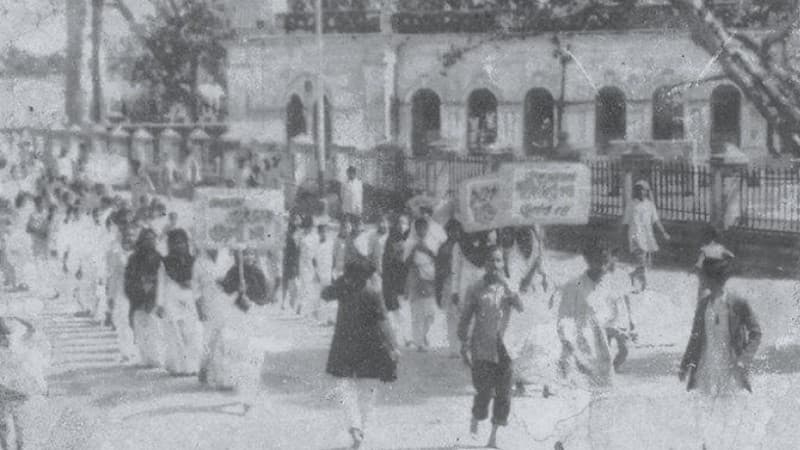
Rajshahians build first Shaheed Minar of language movement, first blood shed here
Among all the struggles in world history for establishing ethnic identity, our language movement holds a unique place. Such an unparalleled instance of sacrificing lives for the mother tongue shines brightly only in the history of Bangladesh throughout the latter half of the twentieth century. Today marks the 75th anniversary of our glorious Amar Ekushey. On this day, the Central Shaheed Minar was inaugurated in Rajshahi. The central Shaheed Minar has been constructed on approximately one acre of pre-designated land at the site of the old Survey Institute in the city. The foundation stone of the central Shaheed Minar was laid on December 16, 2020, under the management of Rajshahi City Corporation. Language veteran and Bir Muktijoddha Golam Arif Tipu inaugurated the foundation stone.

Desirable multilingual education in Bangladesh
In the 1950s, Sapir-Whorf hypothesis claimed that each language shapes and describes life and the world differently. If true, multilingual education could be more effective and complete than monolingual education. Multilingual education can be either natural or organic, like the Latin-based system in ancient Rome when Latin was alive, or artificial, like the Latin-based system in the Middle Ages when Latin was a dead language. The argument posits that natural multilingual education ensures general and effective education, while artificial multilingual education fails in both aspects. In Bangladesh, a Bengali language-based multilingual education system would be natural and effective since Bengali is the language of the masses. Conversely, an English-based multilingual education system would be artificial because English is not the language of the masses in Bangladesh. Moreover, it might undermine the use of the Bengali language, causing ultimate harm.