

Total Lunar Eclipse today: Chance to see 'Blood Worm Moon'
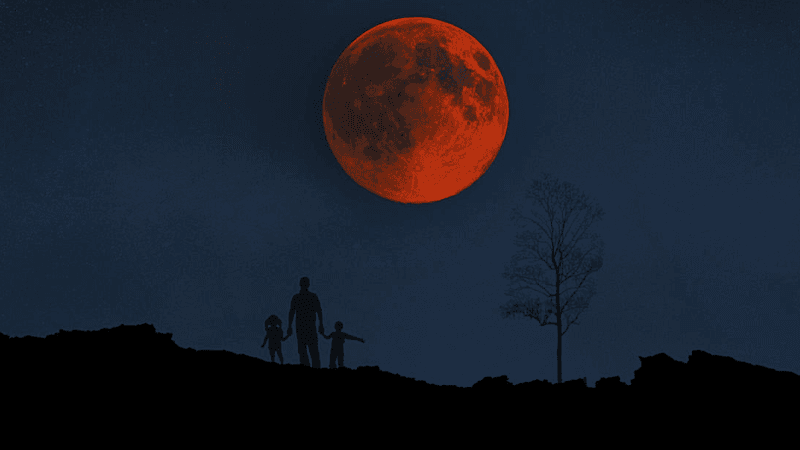

Today, March 3, 2026, marks one of the most fascinating astronomical events of the year—a total lunar eclipse. The moon will appear with a special reddish hue, known as the 'Blood Worm Moon'.
According to NASA, this total lunar eclipse will be visible on the night of the full moon today. If you miss today's eclipse, the next total lunar eclipse will occur on December 31, 2028.
In international time, the total phase will last from 11:04 to 12:03. In Bangladesh time, the total eclipse will be visible from 5:04 pm to 6:03 pm.
The eclipse will begin approximately one and a half hours earlier, with the entire process concluding at 8:23 pm Bangladesh time. So, watching the sky from evening onwards will allow you to enjoy the full spectacle.
The 'Blood Worm Moon' will be most clearly visible on the west coast of North America. It will be fully visible in East Asia and Australia during the evening. The Pacific region will see it throughout the night. Northern and Central America and western South America will have good views towards dawn. However, the eclipse will not be visible in Europe and Africa.
The March full moon is traditionally called the 'Worm Moon'. The name originates from the fact that as the soil warms in early spring, earthworms and insect larvae emerge from the ground.
When a total lunar eclipse occurs during a full moon, the Earth positions itself directly between the sun and the moon. As the Earth's shadow falls on the moon, it takes on a deep red or coppery hue, which is why it's called a 'Blood Moon'.
Lunar eclipses can be safely viewed with the naked eye. No special glasses are required, unlike solar eclipses.
However, binoculars or a telescope will reveal more subtle variations in the red hue. For photography, a DSLR camera with slightly increased ISO settings can capture good images in a cloudless sky.
Although there is a full moon every month, lunar eclipses do not occur each time. This is because the moon's orbit is slightly tilted relative to Earth's orbit. Most of the time, Earth's shadow does not fall directly on the moon. A total lunar eclipse only happens when the sun, Earth and moon are perfectly aligned in a straight line.
Today is one such rare day—if the sky is clear, simply look up to witness nature's stunning red glow.
Leave A Comment
You need login first to leave a comment