

Trump’s strike on Iran: US strategic interest or fulfilling Israel’s agenda?
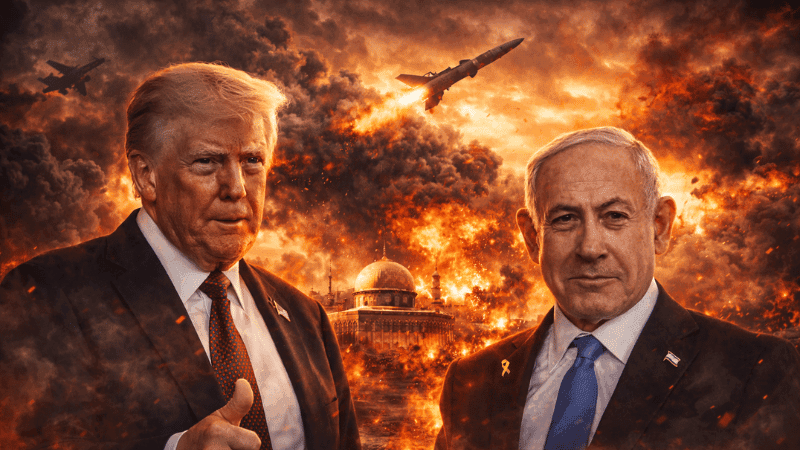

Less than a year after pledging to avoid foreign entanglements and regime-change wars, US President Donald Trump has ordered a full-scale military strike against Iran, marking a sharp shift from his earlier rhetoric of non-intervention.
During campaign speeches and regional visits, Trump had criticised past US interventions, arguing that Washington had destroyed more nations than it had rebuilt.
However, analysts say the justification and tone surrounding the latest strike closely resemble the interventionist policies he once condemned.
The central question now: Is this war driven by direct US national security interests, or does it reflect Israel’s long-standing push for decisive action against Tehran?
Analysts’ Assessment
According to analysis published by Al Jazeera, several Iran experts argue that the move contradicts Trump’s stated political doctrine and campaign commitments. Negar Mortazavi of the Center for International Policy described the strike as a “war of choice,” suggesting it aligns with years of Israeli pressure on Washington to confront Iran militarily.
Two Decades of Tension
Since the 2003 Iraq War, Israeli Prime Minister Benjamin Netanyahu has repeatedly warned that Iran was nearing nuclear weapons capability. Tehran has consistently denied pursuing a nuclear bomb. Even officials within the Trump administration have acknowledged there is no definitive proof that Iran is actively building a nuclear weapon.
Last June, the United States targeted key Iranian uranium facilities. Trump declared that the strikes had “completely destroyed” Iran’s nuclear programme. However, Israeli leadership later shifted focus to Iran’s ballistic missile programme, warning of its expanding range.
In a recent address, Trump echoed claims that Iran could eventually develop missiles capable of reaching the US East Coast—though no publicly verified tests have confirmed such capability.
Collapse of Diplomacy
Earlier this year, diplomatic engagement appeared possible. With mediation by Oman, US and Iranian officials held multiple rounds of talks.
Mediators indicated that Iran had shown openness to stricter international oversight of its nuclear activities.
Despite reported progress, military operations began abruptly. Jamal Abdi, president of the National Iranian American Council, said Israeli leadership has historically opposed diplomatic settlements with Iran and may have viewed the talks as a political risk.
He warned that the escalation could draw the United States into a prolonged and unpredictable conflict.
Domestic Reactions in the US
After prolonged wars in Iraq and Afghanistan, public appetite for another major conflict remains limited. Recent polling from the University of Maryland suggests that only a minority of Americans support direct war with Iran.
The debate has also surfaced within conservative circles. Former US Ambassador to Israel Mike Huckabee described Iran as the root cause of regional instability. However, commentator Tucker Carlson countered that tensions along Israel’s borders are not inherently America’s problem.
Congresswoman Rashida Tlaib criticized the administration, accusing it of advancing the agenda of Israel’s government over the will of the American majority.
White House Position
The Trump administration maintains that the strike aims to prevent Iran from becoming a direct threat to US national security. The president has acknowledged the risk of American casualties, stating that such risks are inherent in military action, but insists the operation will have long-term strategic benefits.
Yet the broader strategic debate continues: Is Iran, thousands of miles from US shores, an imminent threat requiring military intervention, or is Washington now acting primarily in alignment with a key regional ally’s long-standing objectives? The trajectory of the conflict may ultimately determine the answer.
Leave A Comment
You need login first to leave a comment