

US asks commercial vessels to stay away from Iranian waters
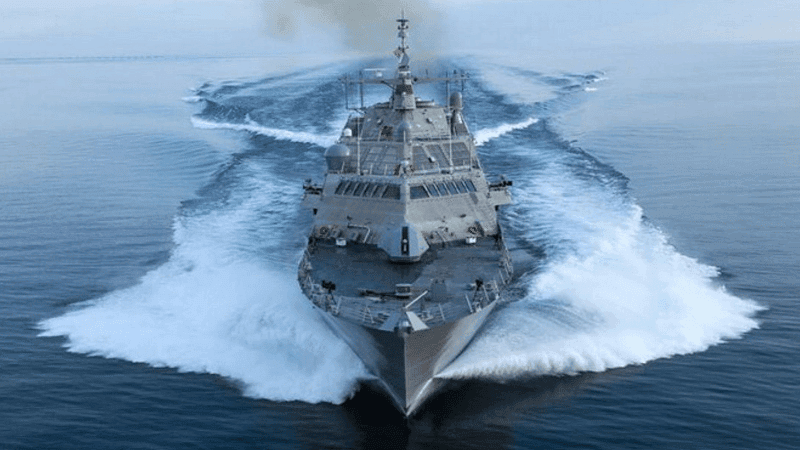

The United States has issued a new security advisory for US‑flagged commercial vessels transiting the Strait of Hormuz, amid rising tensions with Iran.
The guidance was released by the US Maritime Administration following renewed political and security friction in the Persian Gulf.
In the advisory, Washington urges US‑flagged vessels to keep as much distance as possible from Iranian territorial waters.
“It is advised that US‑flagged commercial vessels transiting these waters remain as far as possible from Iranian territorial waters without compromising navigational safety,” the guidance states.
Eastbound vessels are advised to sail closer to Omani territorial waters.
The US also provides specific instructions in the event of an inspection or boarding attempt by Iranian forces.
“If Iranian forces board a US‑flagged commercial vessel, the crew must not forcibly resist the personnel boarding the ship,” the US Maritime Administration wrote.
The advisory also stresses that there should be no forced resistance. “This does not imply approval or agreement to the boarding.”
The warning comes shortly after Washington and Tehran held their first round of indirect talks in Oman. The dialogue took place amid escalating rhetoric and threats that had previously pushed both countries toward a confrontational stance.
The Strait of Hormuz holds significant strategic value for global trade, particularly energy. The US government describes the area as “the world’s most important oil chokepoint” due to its role as a key export route for Middle Eastern oil to international markets.
A long history of tensions in Gulf shipping lanes forms the backdrop to this policy. From the Iran–Iraq Tanker War in the 1980s, to sabotage attacks on vessels in the Gulf of Oman in 2019, to Iranian Navy and IRGC drills in the Strait of Hormuz last January that prompted sharp warnings from the US military over “unsafe and unprofessional” behaviour.
More broadly, the US continues to strengthen its military presence in the region, while President Donald Trump has renewed threats against Iran, including over its nuclear and missile programmes.
Tehran, meanwhile, insists that the ongoing negotiations are “exclusively nuclear” and maintains that uranium enrichment is a sovereign right.
The geopolitical tensions intersecting with this vital shipping route place the Strait of Hormuz once again among the world’s most sensitive flashpoints for security and global trade.
Leave A Comment
You need login first to leave a comment