
US military leaving Iraq after two decades
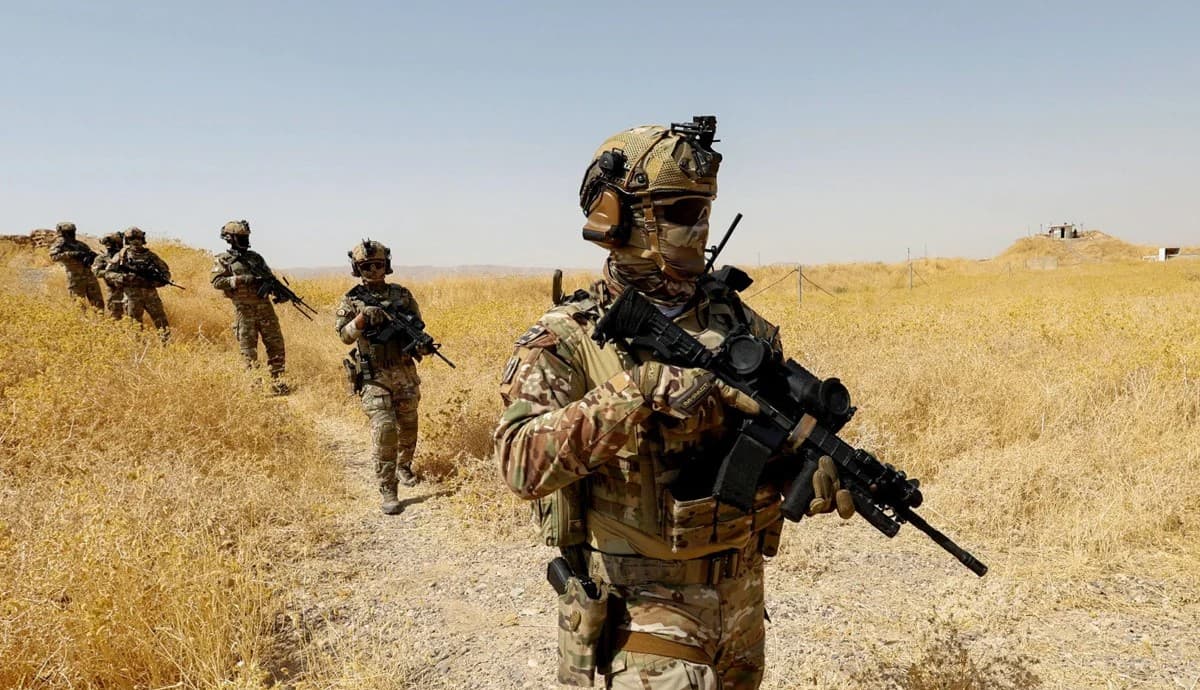

The final withdrawal of US troops from Iraq is set to be completed after more than two decades of military presence. US forces are scheduled to be pulled out of the country's last remaining bases by Wednesday. Iran and Iran-aligned Iraqi armed groups see the end of this long military chapter, which began in 2003, as a strategic success for themselves.
A Reuters report said the decision to withdraw US forces from Iraq is part of an understanding reached between the United States and Iraq in 2024 during the administration of then President Joe Biden. The current administration of President Donald Trump is implementing that same plan. However, security analysts in the country believe the US troop withdrawal from Iraq could create a new security equation amid the ongoing military conflict between the United States and Iran.
Iraqi security analyst Jasim al-Bahadli said Iran could gain strategically from the departure of the US-led coalition. In his view, the US military presence in Iraq had long created a balance against Tehran's political and security influence. Now, with that presence gone, Iran-aligned armed groups may try to further increase their influence over security and political decision-making.
The Iran-aligned 'Islamic Resistance in Iraq' coalition is also portraying the US troop withdrawal as a victory. The coalition's commander, Abu Mujtaba al-Yasiri, described the development as a historic success for Iraqi armed resistance groups and the country's people. According to him, they will celebrate the end of a chapter in Iraq's history on September 30.
However, there are also concerns within Iraq about the timing of the US forces' departure. Several security analysts have particularly cautioned about the strength of Iran-backed armed groups and the potential resurgence of Islamic State. They fear that various armed groups may try to exploit the security vacuum created when the US-led coalition's military presence ends. Some Iraqi security officials believe the country is not yet fully prepared to tackle all security challenges without outside military assistance.
In 2003, the United States launched a military operation in Iraq to oust then President Saddam Hussein. After a long conflict, US forces withdrew from Iraq towards the end of 2011. But after the rise of Islamic State in 2014, US troops returned to the country to assist Iraqi forces against the group. In the 2014 to 2017 campaign, the US-led coalition played an important role in recapturing vast areas held by Islamic State.
For a long time, Iraq has maintained both political and military relations with the United States and Iran simultaneously. As a result, the country's territory has at times become a field of indirect conflict between the two countries. In 2020, after Iran's top commander Qasem Soleimani was killed in a US drone strike near Baghdad airport, Iran-aligned Iraqi armed groups attacked US bases in the country. In response, the United States also carried out retaliatory strikes at various times. During this year's Iran-US conflict, US troops in Iraq were also at risk of attack.
Meanwhile, Iran has publicly welcomed the withdrawal of US troops from Iraq and the Middle East. Deputy Head of the country's parliamentary National Security Commission, Amir Hayat Moghaddam, said if US troops leave Iraq and the region, an opportunity will be created to establish lasting security there. On the other hand, Baghdad now needs to strengthen its own security structure to deal with the influence of Iran-aligned armed groups and the potential threat of Islamic State.
Leave A Comment