

War, hegemony, and its global cost
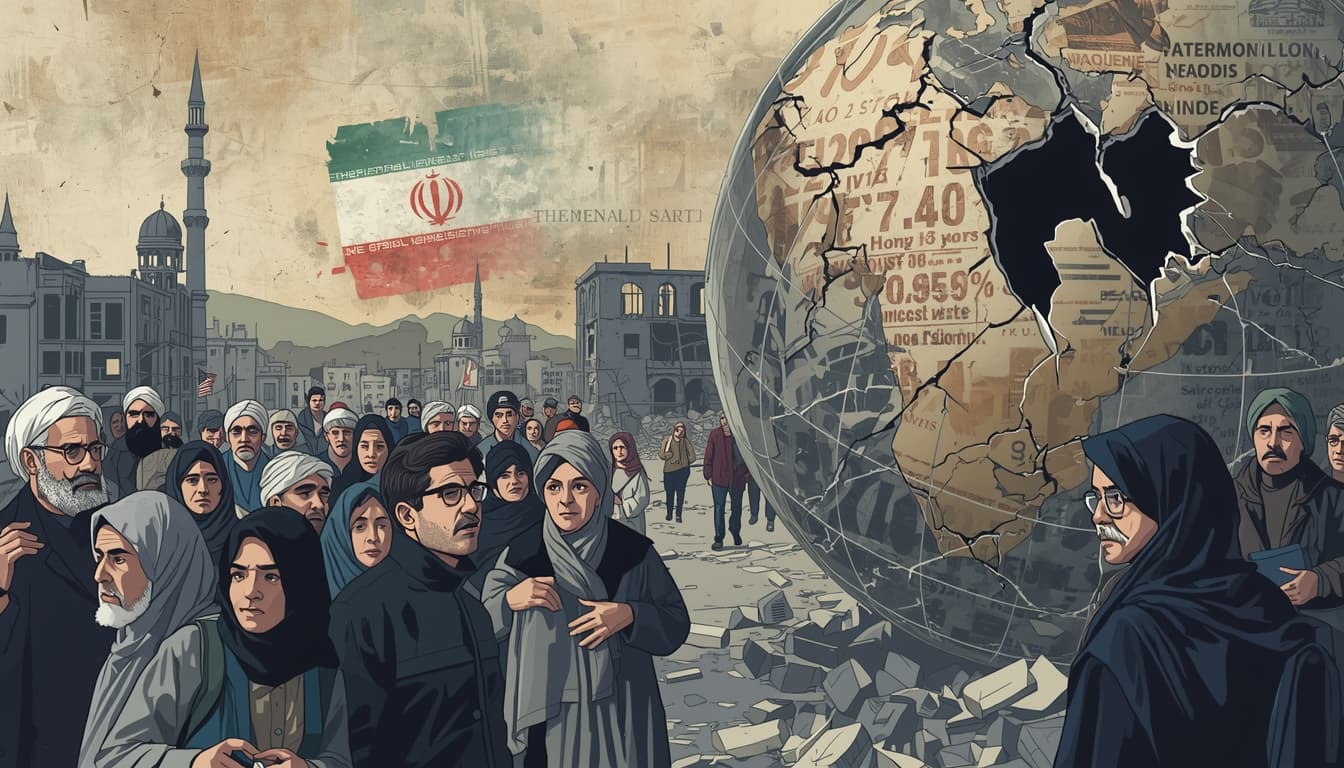

The recent tensions surrounding the United States, Israel, and Iran have brought to the fore an old problem in international politics—the reliance of powerful states on military power in world politics. While the governments involved justify their actions in the name of security and deterrence, the larger reality paints a different picture. This conflict once again demonstrates how the politics of geopolitical hegemony profoundly affects the lives of ordinary people, regional stability, and the global economy.
External military intervention is nothing new in the history of the Middle East. Over the past few decades, the direct or indirect military presence of powerful states has repeatedly changed the political reality of the region. But these interventions have rarely brought lasting peace. Rather, in most cases, they have created prolonged instability, destruction, and humanitarian crises—with ordinary people paying the greatest price.
Power politics and human cost
Modern warfare is never limited to military targets. Air strikes, missiles, or the use of advanced weapons often damage civilian infrastructure—hospitals, power systems, transportation networks, or water supplies. When these infrastructures are destroyed, the normal life of a society quickly collapses.
As a result, a humanitarian crisis occurs. Families are displaced, healthcare is disrupted, education and economic activities come to a standstill. While it is easy to make a statement about security from a distance from the battlefield, in reality, ordinary people are the biggest victims of war.
The experience of the past two decades in the Middle East has repeatedly confronted us with this reality. In many cases, military operations conducted in the name of establishing stability have deepened social divisions and given rise to new conflicts. As a result, the cycle of war has been prolonged.
The crisis of the international system
This situation also raises important questions about the future of the international system. After World War II, the goal of international law and multilateral institutions was to protect the sovereignty of states and set limits on the use of force. It was thought that it would be possible to make the world more stable by controlling the unilateral military actions of powerful states.
But when major powers bypass the diplomatic process and take military action, the credibility of this system is weakened. For developing and relatively small states, international law is often the main security framework. If international politics increasingly becomes a game of balance of power, that security framework will also become fragile.
This is why many observers refer to double standards in international politics. Some states face harsh sanctions and criticism for violating international norms, while others face relatively little accountability due to their geopolitical positions. This disparity undermines trust in the international system and calls into question global governance.
From this perspective, the current tensions surrounding the United States, Israel, and Iran are not just a regional crisis; they are a reflection of the influence and dominance of power in world politics.
Its implications for Bangladesh
Although Bangladesh is geographically distant from the Middle East, it is not possible to remain completely isolated from the economic impact of this conflict. As an economy deeply intertwined with global trade and energy markets, Bangladesh can easily feel the shock of international instability.
The most immediate impact may be on the energy market. The Middle East is one of the most important regions for global energy supplies. If conflicts in the region intensify, oil prices could rise rapidly. This could create major economic pressures for countries like Bangladesh, which are dependent on energy imports.
High energy prices increase the cost of power generation, transportation, and industrial production. As a result, inflationary pressures in the market increase and the cost of living of the common man increases.
Bangladesh’s export-dependent industries—especially the ready-made garment sector—could be indirectly affected. Increased global economic uncertainty could reduce consumer demand in major markets. In addition, increased transportation costs or disruptions in supply chains could complicate international trade.
At the same time, increased energy import costs could also put pressure on the country’s foreign exchange. For a developing country that is deeply integrated into the global economy, these pressures could affect economic stability.
Education for the Global South
Such conflicts remind countries of an important reality for the Global South. The geopolitical competition of powerful states often results in decisions that affect the economies and politics of distant countries.
Many developing countries, including Bangladesh, depend on a stable international environment—one where disputes are resolved through diplomatic negotiations, not through the use of military force.
When powerful states use military force to establish dominance, the cost of that conflict goes beyond the battlefield. It has implications for the global economy, humanitarian conditions, and the international political balance.
The need for diplomacy
The current tensions surrounding Iran are once again demonstrating that diplomatic dialogue, not military escalation, is the path to lasting solutions. The history of the Middle East teaches us that displays of military force rarely lead to lasting peace.
The most urgent task for the world community is therefore to reaffirm its commitment to restraint, diplomacy, and international law.
A just and rules-based international system is crucial for developing countries like Bangladesh. Because when power politics prevails, it is small and middle-class states that are most at risk.
Therefore, the true measure of global leadership should be measured not by its ability to wage war, but by its willingness to prevent conflict. Otherwise, this cycle of conflict over dominance will continue—and ordinary people, the global economy, and even distant countries will pay the price.
Leave A Comment
You need login first to leave a comment