

What will happen on polling day amid ongoing violence?
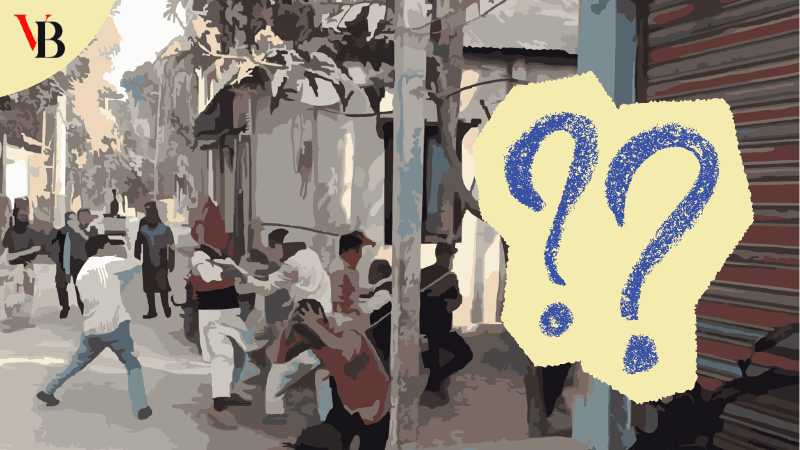
The political environment in the country has already become tense ahead of the 13th National Parliamentary Election and the referendum. Since election campaigns began across different regions, clashes, violence, attacks, and vandalism involving leaders and activists of various political parties have been reported. These incidents have created fear and anxiety among the general public, raising a pressing question: what will happen on election day?
In recent weeks, more than 25 clashes have occurred nationwide during election campaigns. These incidents involved scuffles and chases between activists and supporters of different political parties, leaving over 200 people injured so far. At least one person has been killed in election-related violence.
On January 28, a clash between BNP and Jamaat in Sherpur resulted in the death of Rezaul Karim, secretary of Jamaat’s Sreebardi upazila unit. The violence broke out during a manifesto-reading event organized by the assistant returning officer of Sherpur-3 constituency, following an argument and physical altercation over seating arrangements. The confrontation escalated into intense clashes using locally made weapons.
On February 5, at least 11 people were injured in a clash between BNP and Jamaat supporters during election campaigning in Kushtia-1 (Daulatpur). The incident occurred around 11:30 am at Pipulbari Bazar in Khalishakundi Union of Daulatpur upazila.
On the same day, clashes erupted in Faridganj of Chandpur between supporters of an independent candidate (Shrimp symbol) and those backing the Sheaf of Paddy symbol. A mobile court detained two individuals and sentenced them to one month in prison.
Also on that day, BNP and Jamaat leaders and activists clashed in Monpura upazila of Bhola during campaign activities, leaving at least eight people injured from both sides.
On February 3, at least 10 people were injured in clashes between BNP and Jamaat supporters in Naogaon during election campaigning. The incident took place in Makhna Komolgota village of Naogaon Sadar upazila.
On February 4, clashes broke out in Madaripur-2 constituency following allegations of an attack during a campaign by independent candidate Milton Baidya. At least 10 people were injured in the incident at Kalir Bazar in the sadar upazila.
On January 25, a clash between BNP and Jamaat supporters during campaigning in Hatibandha upazila of Lalmonirhat-1 constituency left 15 people injured. Several motorcycles were vandalized in the incident, which occurred in the Kasaitari area of Tongbhanga Union.
On January 22, repeated clashes occurred between two BNP factions during a campaign procession in Tongibari of Munshiganj, injuring 10 people from both sides.
On the same day, clashes erupted between Jamaat-e-Islami and BNP activists over the installation of festoons in Bhabaniganj of Lakshmipur, leaving three Jamaat activists and one BNP activist injured.
That day also saw clashes, chases, and vehicle vandalism between supporters of BNP and Jamaat candidates during campaigning in Sirajganj-4 (Ullapara) constituency. Nine people were injured.
On January 27, clashes broke out between BNP and Jamaat supporters in Araihazar of Narayanganj following allegations of obstruction to election campaigning. The incident took place in the Mollarchar area of Gopaldi municipality.
The same day, clashes between BNP and Jamaat activists occurred in Bhojeshwar of Naria upazila in Shariatpur, injuring 12 leaders and activists from both sides. The violence reportedly stemmed from a Facebook post related to election campaigning.
On February 1, clashes erupted between two BNP factions during campaigning in Ashulia of Savar, Dhaka, leaving several people injured.
On January 30, BNP and Jamaat activists clashed during campaigning in Bauphal of Patuakhali, injuring two people.
On January 25, at least 15 people were injured in clashes between Jamaat and BNP supporters during campaigning in Alamdanga of Chuadanga. The incident occurred in Jugirhuda village.
On the same day, clashes broke out in Valuka bus stand and Hobirbari areas of Mymensingh between supporters of BNP candidate Fakhruddin Ahmed Bachchu and those of independent candidate and former BNP upazila convener Morshed Alam. Around 30 people were injured.
Earlier, on December 9, clashes between two BNP factions during campaigning in Gazipur-1 constituency left 12 people injured.
On November 27, clashes between BNP and Jamaat leaders and activists during campaigning in Ishwardi of Pabna injured 25 people.
Political analysts warn that clashes may occur between candidates and political parties on election day and even in the days following the vote, potentially leading to loss of life. They argue that a culture of political tolerance has not yet developed in the country.
Security analysts have raised additional concerns, noting that more than 5,763 firearms and ammunition were looted during the July–August 2024 movement, of which approximately 1,362 weapons have yet to be recovered. They caution that these weapons could be used in election-related violence.
Meanwhile, intelligence reports suggest that arms and explosives are also entering the country through various border areas, posing further risks to a free and fair voting environment.
Home Affairs Adviser (retired) Lt Gen Md Jahangir Alam Chowdhury has stated that the highest level of law enforcement deployment will be ensured during the election, with strict surveillance on polling day.
According to Police Headquarters, out of 42,761 polling centers nationwide, around 25,000 have been identified as “risky,” including 8,780 deemed “highly risky.” Plans are in place to deploy patrols, body-worn cameras, CCTV, and drones at these centers.
The security plan also includes dog squads, Ansar members, and special army patrol teams on rapid response duty at each polling center.
Regarding misinformation and rumors, Election Commission (EC) Secretary Akhtar Ahmed said discussions have been held with Meta, Facebook’s parent company. At a press briefing on Thursday, he stated that instead of slowing down the internet or adopting other restrictive measures, the EC requested the removal of satirical, aggressive, or misleading content and propaganda.
On the same day, the head of the European Union Election Observation Mission, Evers Eeyabs, sought information on the EC’s preparedness and potential concerns regarding the 13th parliamentary election during a meeting with the Chief Election Commissioner.
EC Secretary Akhtar Ahmed said the commission briefed them on preparations, noting that ballot papers for 116 constituencies have already been dispatched to returning officers, while the remaining ballots are in process and expected to be delivered by February 7.
Earlier, on February 4, the home affairs adviser instructed election officials and law enforcement personnel to perform their duties with complete neutrality, warning against involvement in implementing any individual, party, or political agenda.
He also added that nearly 900,000 law enforcement personnel have been deployed for this election—the highest number ever. This includes 100,000 from the Bangladesh Army, 5,000 from the Navy, 3,730 from the Air Force (1,250 on the ground), 149,443 police personnel, 576,314 members of the Ansar and Village Defence Force, 37,453 from the Border Guard Bangladesh (BGB), 3,585 from the Coast Guard, 7,700 from RAB, and 13,390 from Fire Service and Civil Defence as support services.
Speaking to Views Bangladesh, EC Senior Secretary Akhtar Ahmed said reports from the Special Branch (SB), intelligence agencies, and Police Headquarters have identified 13 parliamentary constituencies as “highly risky” and 85 as “risky.” Nationwide, 8,746 polling centers have been categorized as “highly risky” and another 16,359 as “risky.”
He added that in these risky and highly risky centers, additional police, RAB, BGB, and Ansar members will be deployed, alongside mobile teams, quick response units, and 1,050 executive magistrates who will operate mobile courts from February 8 to February 14. Judicial magistrates will also remain in the field.
“We are not only increasing manpower in risky areas but also giving maximum importance to intelligence surveillance and rapid response mechanisms,” the EC secretary said.
“We hope to complete this election in a free, fair, and peaceful manner.”
Leave A Comment
You need login first to leave a comment