
Where will the Samba storm lead Brazil on Fifa World Cup?
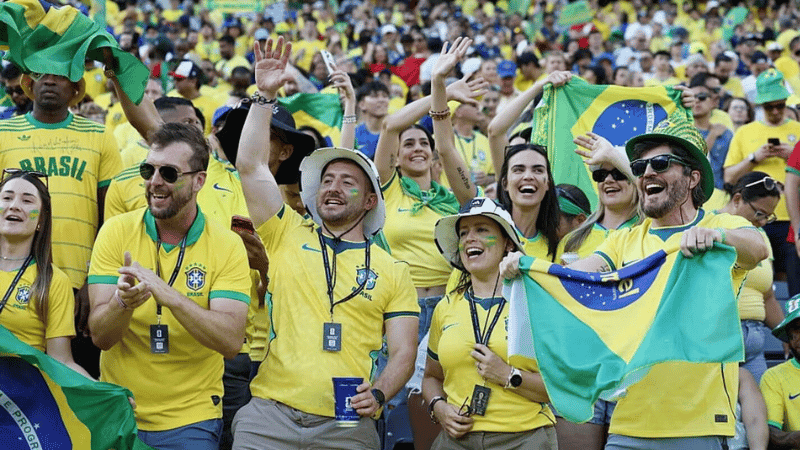

The 'Maracanazo' of the 1950 World Cup final remains a deep wound in Brazilian memory. Yet from that wound was born the Football Emperor — Pelé. In that continuity, Brazil has repeatedly written stories of returning to World Cup glory. And on the night of June 29, 2026, in Houston, history perhaps witnessed the rise of a new Brazil. The Brazil that cried against Uruguay nine decades ago, with a last-gasp victory over Japan, announced that this is no longer the old Brazil. This Brazil does not cry; this Brazil fights, comes back, and wins.
In the World Cup Round of 32 match in Houston, five-time champions Brazil came from behind to beat Japan 2-1. After falling behind to Kaishu Sano's first-half goal, Brazil equalised through Casemiro in the second half, and Gabriel Martinelli scored the winner in the fifth minute of stoppage time.
First half: Samurai surprise, Brazilian frustration
Brazil started aggressively, with Bruno Guimaraes' low shot in the second minute going for a corner. Vinicius Junior created chances, but the Japanese defence and goalkeeper Zion Suzuki stood firm. The first goal came in the 29th minute. Casemiro intercepted a poor pass from Danilo, and Kaishu Sano picked up the ball, sprinted from midfield and fired a low shot past Alisson Becker from outside the box. It was the Mainz midfielder's first international goal — scored against five-time world champions in the World Cup. Japan led 1-0 at half-time.
Second half: Don Carlo's magic sparks Brazil's comeback
At half-time, Carlo Ancelotti replaced Lucas Paqueta with Endrick. A different Brazil emerged. Endrick's cross narrowly missed Vinicius in the 50th minute. Guimaraes' header was brilliantly saved by Suzuki, and Casemiro's header was cleared off the line a minute later. But in the 56th minute, Japan could not hold. Gabriel crossed from Vinicius' pass, and Casemiro headed home. At 34 years and 126 days, he became Brazil's second-oldest World Cup goalscorer, behind Bebeto (1998).
Last-gasp drama: Martinelli's winner
Brazil kept attacking, but Japan formed an impenetrable low block. Six minutes of added time were signalled. Silence fell over the gallery. It seemed the match was heading to extra time.
But in the 95th minute, the moment arrived. Raphinha won the ball with his pressing and fed Guimaraes. Guimaraes played a perfect through ball to Gabriel Martinelli. The Arsenal forward calmly slotted it past Suzuki, off the post and into the net. Brazil led 2-1 just before the final whistle. This was Brazil's first comeback win from a losing position in a World Cup match since 2002 — a 24-year wait.
'Don Carlo' magic: How he changed the match
The architect of this comeback was Carlo Ancelotti. His decision to replace the injured Paqueta with Endrick was timely. His masterstroke was not bringing on Neymar, who was warming up, but sending on Martinelli instead. His late instruction for high pressing led to Raphinha forcing the error that created the winning goal. After the match, Ancelotti said, "This win was deserved. We never lost patience." This coach, who has won 29 trophies in his career, often says the story doesn't end before the final whistle. Japan learned that the hard way.
What this win means for Brazil
First, confidence. The belief from a comeback win after 24 years is immense. Second, squad depth. Youngsters like Martinelli and Endrick proved Brazil need not rely entirely on Neymar. Third, tactical flexibility. Ancelotti's side showed the ability to adapt. With Casemiro's equaliser and Martinelli's late pace, Brazil proved they are not just star-dependent but a strong unit.
Brazil's path in the knockouts
In the last 16, Brazil will face the winner of Norway vs Ivory Coast. Norway have Erling Haaland's firepower, while Ivory Coast possess speed and physicality. But Ancelotti's experience is invaluable. He can adapt to any opponent, just as he did against Japan. Brazil must become more organised, especially in midfield defence.
On the Houston night, Brazil proved they will not repeat old mistakes. By defeating a fighting team like Japan with their own weapons, they announced that the dream of the Hexa is alive. For the first time since 2002, Brazil showed the ability to come from behind. And that comeback story was written by Don Carlo Ancelotti. Where this Samba storm will stop, perhaps no one knows. But this much is certain: this Brazil is different. This Brazil fights, comes back, and wins.
Leave A Comment