

Who but Bangabandhu first thinks about Bangalis' fate
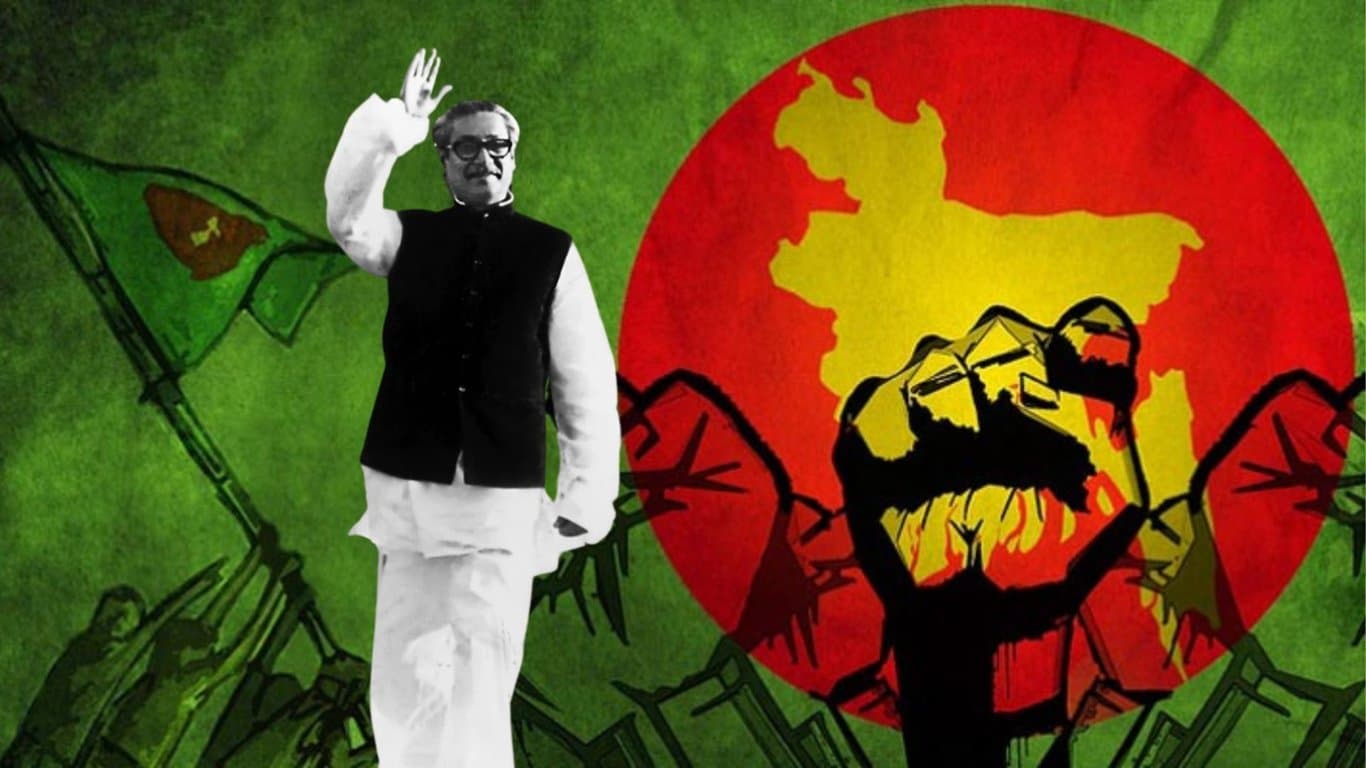
Many memories of December, the month of victory, floated in my mind. On December 16, 1971, we freed our beloved motherland from the invaders and gained a mighty victory in return of 3 million lives and supreme sacrifices of 200,000 mothers and sisters. Father of the Nation Bangabandhu Sheikh Mujibur Rahman advanced step by step by leading a 24-year-long struggle with the dream of independent Bangladesh. As long as Bangladesh exists, the heroic story of the great leader, Bangabandhu, will remain in the hearts of people. He was a great man whose heart was full of love for the people of his motherland. He contained unconditional love for the people of Bangladesh deep down his heart. I had experienced it while being with Bangabandhu.
There is no place in Bangladesh where I didn't accompany Bangabandhu. I have seen that when he called the gatherings out from the deep of his heart, 'My brothers', people's hearts were greatly touched.People used to stand by the sides of the roads late at night in semi-darkness to catch a glimpse of him. He stopped the vehicle and used to hold them closer to his heart. He used to exchange greetings with him and remember them forever. That man also felt blessed to be touched by Bangabandhu. Bangabandhu was such a leader who never underestimated anyone. He never belittled or ignored anyone. He knew how to embrace others. Those who do not believe in his ideals, was compelled to become his own man in his presence. Bangabandhu had charismatic human charm in his personality.
After the establishment of Pakistan, he realized in his heart that this Pakistan was not for Bangalis, one day the fate of Bangla will be controlled by Bangalis. He fulfilled his dream by first preparing himself, then the team and the people of Bangla keeping that goal in mind.
On December 16, 1971, as soon as the unconditional surrender of the Pakistan Army and celebration of our great victory began at 4:30 pm at the historic Race Course Maidan (now Suhrawardy Udyan), I rushed to the headquarters of the Government of the People's Republic of Bangladesh on Theater Road, Kolkata. All honorable Bangladeshi leaders were present there - Acting President of the People's Republic of Bangladesh Syed Nazrul Islam, Prime Minister Tajuddin Ahmed, Cabinet Member Mansoor Ali, Kamaruzzaman and other leaders. Everyone lost in joy! Leaders embraced us and expressed their affections. We freed our motherland from the invaders, the joy is indescribable! This was the very image of independent Bangla that the Father of the Nation drew in his heart and turned the peaceful Bangali nation to armed ones only by saying: 'No one can stop us.' Obeying the order of Bangabandhu by compelling the invading Pakistani forces to surrender, the indomitable Bangali nation made the whole world understand that no one can 'stop' us on the question of the just demand of national liberation.
On December 3, 1971, the Liberation War reached its final stage. We are on the verge of victory. Devastated by the four-pronged guerilla attack of the Mukti Bahini, the Pakistan Army unilaterally declared war on India without seeing any alternative. The Pakistan Air Force launched surprise attacks on air bases in western India and even Agra airfield near Delhi and Agartala airbase on the Eastern Front. In view of the emerging situation, after an emergency meeting with President VV Giri and senior leaders, Indian Prime Minister Mrs. Indira Gandhi declared a state of emergency across India at 10:30pm (Indian time). At 12:20pm, Indira Gandhi expressed her full support for independent Bangladesh in a radio address stating: 'Today this war has also emerged as India's war.'The following day on December 4, Acting President of the People's Republic of Bangladesh Syed Nazrul Islam and Prime Minister Tajuddin Ahmed jointly write letters to the Indian PM to obtain formal recognition of an independent nation.
The gist of the letter was: 'If we enter into formal diplomatic relations with each other, our joint position against the Pakistan military junta is much easier. Let the Government of India immediately recognize our country and our government.' Soon after, India counter-attacked and at 10:30am (Indian time) on Monday, December 6, the Government of India recognized the independent and sovereign 'People's Republic of Bangladesh'. Quoting the name of the state 'People's Republic of Bangladesh' adopted by the Bangladesh government in the Declaration of the Independence on April 10, 1971, Indira Gandhi said in the Lok Sabha session: 'Bangladesh will be called People's Republic of Bangladesh'. After the speech of the Indian Prime Minister, all the members of the Lok Sabha stood and applauded the announcement. I remember with gratitude the role played by the Indian government and public during the armed Liberation War from the beginning to the end.
Phanindra Nath Mukherjee, also known as PN Mukherjee, was the one who cooperated with us. Whom we used to address as 'Mr Nath' who met Bangabandhu in London before the beginning of the liberation war in October 1969, and informed Bangabandhu about the role of the Indian government in implementing the plan for the independence of Bangladesh. The funding for the war was arranged through him. He is also deeply remembered today. Many talk about the misunderstanding between Mujib Bahini and the Bangladesh government. This is not correct. I was in regular contact with the government. There was no room for personal whims. Everyone is well-organized-planned-disciplined. Mujib Bahini was organized with politically advanced freedom fighters dividing the entire Bangladesh into 4 large regions. Mujib Bahini's task was to fight the occupying forces together with the Bangladesh Liberation Army (FF), which was formed under the command of General Ataul Gani Osmani, appointed by the Bangladesh government.
At the end of nine months of the fierce Liberation War on December 16, the day the country was freed from enemies, we returned to the mother's arms as winners. On December 18, Abdur Razzak and I came to Dhaka by helicopter. I stepped on the soil of independent Bangladesh. Happiness was everywhere which cannot be possible to express in words! First of all, I ran to where Bangabandhu's family along with Bangabandhu's better half Bangamata Begum Fazilatunnessa Mujib, today's Prime Minister Bangabandhu's daughter Sheikh Hasina and Sheikh Rehana and Sheikh Russell was kept. Bangabandhu's eldest son Sheikh Kamal joined the Liberation War and was ADC to Colonel Osmani, Commander-in-Chief of the Mukti Bahini, and Sheikh Jamal was with me in Dehradun; But overshadowing the joy of victory, I only remembered the words of my beloved leader Bangabandhu. I raised slogans of Independent Bangla on the streets; I worked for Bangla under the dynamic leadership of Bangabandhu; The much-desired Bangladesh has become independent today. Today we are free from invaders, we are free.
The leaders of the Bangladesh government successfully conducted the Liberation War by uniting everyone regardless of party, class, and trust and returned home on December 22. Leaders are welcomed at the airport with garlands. Millions of people were on the streets. The battle cry of the Liberation War echoed everywhere with the slogan 'Joy Bangla'. The great gathering of freedom fighters and joyous processions were seen everywhere. People were coming to see us. The glimmer of glory that I saw in the eyes and faces of the common people in those glorious days of victory, that form is manifested in the glorious light of victory. Despite the pain of losing a relative, every Bangali had a smile; Which still floats in front of my eyes; But overshadowing the joy of victory, I only remembered my beloved leader Bangabandhu. Everyone has the same question, 'Where is Bangabandhu, how is he, when will he return?'
For Bangabandhu's release from confinement, freedom seeker Bangali people were fasting and organizing special prayers at every house. The celebration of the victory was incomplete without Bangabandhu. Bangabandhu's execution was already ordered in October during the Liberation War. If the country was not independent, Bangabandhu would have been hanged in December; But we knew about the leader's trust in Bir Bangali. He used to say proudly: 'They can kill me; But they will not be able to keep the people of the Bangla under control. If they kill me, millions of Mujibs will be born.' Even after the victory on December 16, we could not think of ourselves as independent as Bangabandhu was still imprisoned in Pakistan. We achieved complete independence on January 10, 1972, when the Father of the Nation returned to the independent Bangladesh of his dream, with full of joy and the pain of losing his near and dear ones.
On December 14, the best children of the nation, intellectuals, were brutally killed by the Pakistani forces and their collaborators--local Razakar and Al Badr. Although December is a glorious month of great victory, December 14 is our day of agony. I remember the fearless journalist Shaheed Sirajuddin Hossain. To whom I am indebted, he helped me with wisdom and advice during the fiery days of the mass uprising of 1969. I remember the martyred intellectuals-- Munir Chowdhury, Mofazzal Haider Chowdhury, Ghiyasuddin Ahmad, Anwar Pasha, Jyotirmoy Guhthakurta, Dr Abul Khair and Shahidullah Qaiser. The killings were undertaken with the goal of annihilating the intellectual class of Bangladesh to make it talentless.
During the bloody days of the great War of Liberation, the entire nation was united by the call of the Father of the Nation on the formula of patriotism. Those days were unprecedented signs of national unity. Students-Teachers-Intellectuals-Farmers-Workers-Youth all of us united shoulder to shoulder with direct and indirect participation and achieved great victory through successful cooperation. And here lies the historical success of Father of the Nation Bangabandhu Sheikh Mujibur Rahman. He transformed an unarmed nation into an armed nation by making the call for freedom. We gave slogans that day: 'Jago Bangali Jago (Wake up, wake up Bangali)', 'Pindi na Dhaka, Dhaka Dhaka'; 'Tomar amar thikana, Padma-Meghna-Jamuna'; "Beer Bangali ostro dhoro, Bangladesh swadhin koro (take up arms, make Bangladesh independent)"; 'Joy Bangla' etc. On that day, who is Hindu, who is Muslim, who is Buddhist, who is Christian, these questions were not relevant. Our main slogan was 'Tumi ke, ami ke? Bangali, Bangali (Who are you? who am i? Bangali, Bangali).'
Our identity was 'We all are Bangali'. However, sometimes I astonishingly think that the prisons of Pakistan could not hold Bangabandhu; Even with the death penalty, and when he normalized the war-torn country by becoming the Prime Minister, when he called for the second revolution for economic liberation, the killers of the defeated forces on the soil of independent Bangladesh, Moshtaq-Rashid-Farooq-Dalim, killed Bangabandhu along with his family! The anti-independence activists who killed our men General Zia rehabilitated them in politics and removed the spirit of the great Liberation War from the Constitution. Due to the resurgence of the defeated forces and the reality that we have faced every moment during the regime of the defeted quarters, we only felt that the joy of the victory is temporary, and the agony of defeat is long-lasting!
Today, I only think that if the wheel of time could be turned to the past and taken back 53 years ago, then the memories of the victory would not be on the pages of paper or written letters, but the presence of the great Liberation War hero Bangabandhu would have been all over Bangladesh. It would have been nice to stare at this great man, handsome, gentle, bright. He led the nation with his powerful entity towards the great Liberation War by delivering the historic speech of March 7. Bangabandhu did politics with two goals. One is independence—the independence he called for on March 26, 1971, which was fulfilled on December 16. Another is to make Bangladesh economically independent. But it could not be implemented. If Bangabandhu could have implemented the program of the second revolution today, Bangladesh would have overtaken Malaysia long ago.
Today, Bangabandhu is no more, lying in eternal rest in Tungipara. He will never come again; But the successor of his blood and spirit is Bangabandhu's daughter Sheikh Hasina. We handed over the flag of Bangladesh Awami League to her in 1981; With that flag in hand, She successfully keep the Awami League in power four times by managing the party with dedication and honesty! Bangladesh is today a role model of development in the international world under her leadership. To maintain this continuity of development, the Awami League, the flag-bearer of the great Liberation War under the leadership of Bangabandhu's daughter Sheikh Hasina, will again form the government through people’s vote and will construct a Smart Bangladesh through the establishment of Bangabandhu's second revolution program- exploitation-free, hunger-free, poverty-free Sonar Bangla. This is our pledge to the nation on this Victory Day.
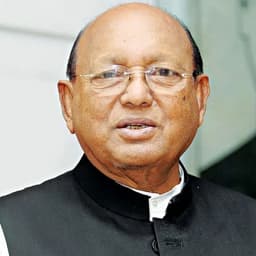
Author: Awami League Leader, Member of Parliament and President, Parliamentary Standing Committee on Commerce Ministry, Jatiya Sangsad.
Leave A Comment
You need login first to leave a comment