
Why 1GB pen drives disappeared from the market
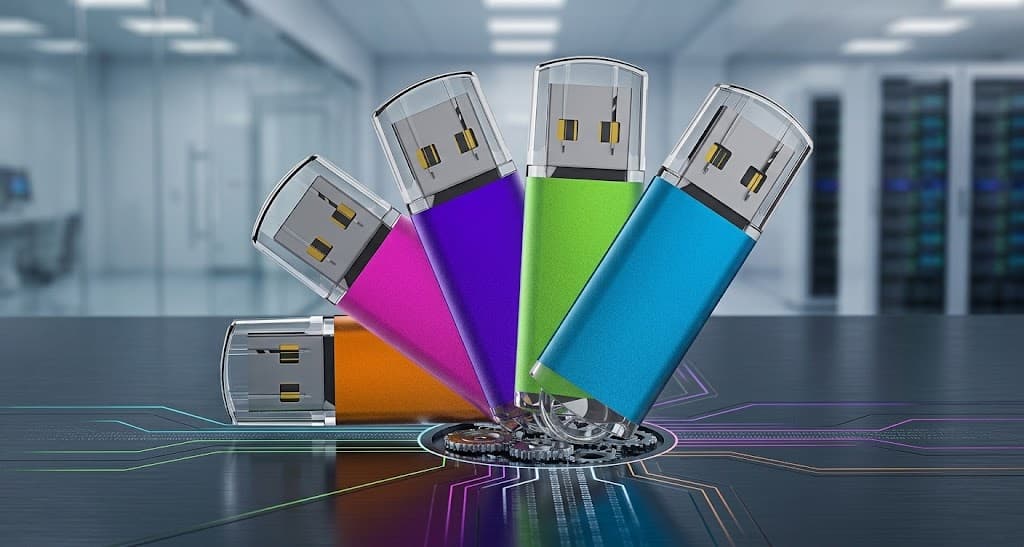

A 1GB pen drive was once a prized piece of technology, but the tiny storage capacity has all but disappeared from the mainstream market as flash storage has become cheaper and far more powerful.
The first 1GB flash drives emerged around 2002 and quickly gained popularity as a convenient way to carry files. More than two decades later, storage capacity has increased dramatically. Mainstream USB drives from brands such as Kingston now typically start at 64GB and can go up to 512GB or more.
The disappearance of 1GB drives, however, is not because manufacturers can no longer produce such small memory chips. Rather, it is a result of technological progress, falling storage costs and changing market demand.
At the heart of the transformation is NAND flash technology. Advances in chip design have allowed memory cells to become smaller, while 3D NAND technology has made it possible to stack memory cells in multiple layers. This allows manufacturers to store much more data on chips of similar physical size.
The expansion of technologies such as 3D NAND and TLC NAND has also sharply reduced the cost of storage per gigabyte. As a result, producing higher-capacity flash storage has become more economically attractive than manufacturing low-capacity products.
So why not simply make 1GB pen drives?
The answer is economics. A USB flash drive requires more than a memory chip. The total cost also includes the USB connector, controller, circuit board, casing, packaging, transportation and marketing. Using a 1GB chip instead of a 64GB chip therefore does not reduce the overall cost proportionately.
At the same time, demand for 1GB drives has become extremely low. Modern operating systems, software and files often require several gigabytes of storage, making a 1GB drive impractical for most users. Manufacturers consequently have little incentive to produce and market such low-capacity devices separately.
Smaller flash storage has not disappeared completely, however. Devices with capacities such as 256MB or 1GB are still used in some industrial equipment, legacy systems and specialised applications where reliability, durability and compatibility matter more than storage capacity.
The story of the 1GB pen drive is therefore less about a technology becoming obsolete than about technology advancing so far that the once-useful capacity no longer makes economic or practical sense.
Leave A Comment