
Why is Delhi sending Dinesh Trivedi to Dhaka?
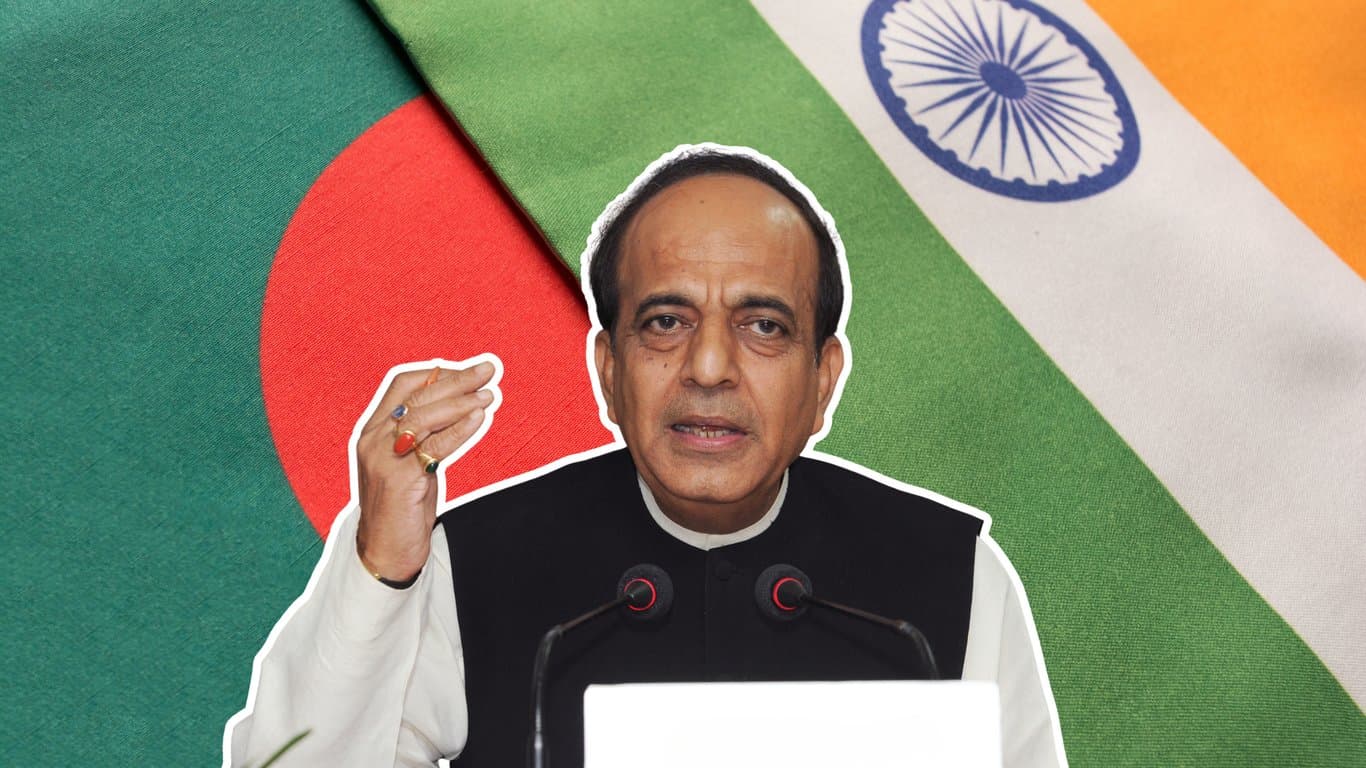
Dinesh Trivedi is set to arrive in Dhaka. This announcement has sparked considerable interest and enthusiasm within the diplomatic and political communities of Dhaka. Numerous individuals have served as Indian High Commissioners in Dhaka, and many more are expected to follow. However, Dinesh Trivedi stands out as 'unique' among those who have held this position, even before he officially assumes office. Unlike his predecessors, he is neither a seasoned diplomat nor a senior bureaucrat; rather, he is a prominent figure in Indian politics, having previously served as a member of the Lok Sabha and held ministerial roles in the central government. He is recognized as a close associate of India's current Prime Minister, Narendra Modi. Additionally, he was the inaugural general secretary of the Trinamool Congress, the party led by West Bengal Chief Minister Mamata Banerjee. Consequently, it is only natural to wonder why such a significant political figure is being dispatched from Delhi to Dhaka.
Dinesh Trivedi's political journey is notably varied. He commenced his political career as a worker and leader within the Indian Congress during the 1980s. Subsequently, in 1988, he became a member of the Janata Party led by Vishwanath Pratap Singh, also known as VP Singh, and was elected to the Rajya Sabha from a Gujarat seat in 1990. In 1998, with the establishment of the Trinamool Congress under Mamata Banerjee's leadership, he joined the party and took on the role of its first general secretary.
It is important to note that despite Dinesh Trivedi's Gujarati heritage, he was born in New Delhi and raised in Kolkata. This background facilitated his entry into the Trinamool Congress and his election as a Lok Sabha member from Barrackpore, West Bengal, during the 2009 elections. The Trinamool Congress subsequently allied with the UPA (United Progressive Alliance) led by Manmohan Singh in the national elections. In 2011, following Mamata Banerjee's resignation as the Union Railway Minister of the UPA government to assume the role of Chief Minister of West Bengal, Dinesh Trivedi succeeded her. However, his tenure as Union Railway Minister was brief.
Due to disagreements regarding railway fares, he was compelled to resign from his position as Railway Minister after a few months, facing pressure from the party. Subsequently, Mukul Bose, another prominent leader of the Trinamool Congress, assumed the role.
In 2021, Dinesh Trivedi became a member of the ruling BJP. He had been recognized as a close ally of Prime Minister Narendra Modi even prior to this transition. Speculations had circulated since 2018 regarding Dinesh Trivedi's departure from the Trinamool Congress to join the BJP, which ultimately materialized in 2021.
This raises a significant question: why would an experienced politician be chosen over a professional diplomat? Particularly, why would a political figure with ties to four different parties that have governed India at various times be sent by Narendra Modi to Dhaka?
It is widely acknowledged that a professional diplomat or bureaucrat must operate within established regulations. Even if a bureaucrat wishes to, he is unable to exceed the limits set by these regulations.
For instance, consider a scenario where an individual holding the position of Joint Secretary has not yet ascended to the role of High Commissioner of India and encounters the Foreign Secretary. During their conversation, a proposal concerning bilateral relations arises. This proposal will undergo multiple levels of scrutiny before reaching the Prime Ministers of both nations, a process that could span from a week to several months. Conversely, a senior political figure such as Dinesh Trivedi maintains a direct connection with the current Prime Minister of India.
Consequently, even after assuming the role of High Commissioner, Dinesh Trivedi will have the ability to promptly inform his country's Prime Minister about any matters pertaining to Bangladesh-India relations, facilitating swift decision-making.
Since Dinesh Trivedi's appointment, various Indian media sources have reported that he has been frequently traveling to London for an extended period. This has led to the establishment of a close, familial bond with the current Prime Minister of Bangladesh, Tarique Rahman.
As a result, he will have the capacity to engage directly with Prime Minister Tarique Rahman on any relevant issues. It is likely that the rapport with both Tarique Rahman and Narendra Modi—two Prime Ministers—significantly influenced Dinesh Trivedi's nomination as High Commissioner in Dhaka. This development will undoubtedly present a substantial opportunity for enhancing relations between the two nations.
It is evident that during the interim government under Dr. Muhammad Yunus, the relationship between Bangladesh and India has been steadily deteriorating. Given that the Narendra Modi administration maintained favorable relations with the Awami League government and that Sheikh Hasina sought refuge in India following the uprising on August 5, it was anticipated that the relations with Dr. Yunus's government would not start off positively.
However, as time progressed, the Dr. Yunus administration failed to take the necessary actions to uphold normal diplomatic relations with its largest and closest neighbor. Instead, certain government advisors and intellectuals associated with the administration, particularly some coordinators of the July coup, have made outrageous and peculiar anti-India remarks, further straining the relationship between the two nations.
Mohammad Touhid Hossain, who served as the foreign affairs advisor of the interim government, previously held the position of foreign secretary. Following his retirement, he gained recognition as a diplomatic analyst and was known for his critical stance on Indian politics and diplomacy for an extended period. Consequently, he was unable to engage in meaningful bilateral discussions with India. Moreover, even after assuming the role of foreign affairs adviser, Mohammad Touhid Hossain continued to criticize various Indian policies while expressing admiration for Pakistan.
As a professional diplomat, upon taking on a significant responsibility, the essential element of diplomatic decorum should be evident in Touhid Hossain's discourse.
However, when addressing matters concerning India, he tends to exhibit heightened emotional responses rather than maintaining decorum, which has contributed to further entrenching the chill between the two nations. As a result, the relations between Bangladesh and India have not seen any normalization during his tenure.
Nonetheless, it is essential for any government’s diplomatic agenda to prioritize the maintenance of a natural bilateral relationship with a significant neighboring nation such as India. This is due to India's crucial role in both global and regional politics, being the fifth largest economy in the world. We will certainly take into account the importance of fostering relations with India while also upholding our dignity and prioritizing our national interests. However, can any government justify a major adversarial relationship with its closest neighbor?
Regardless of whether the relationship with a prosperous neighbor is amicable or strained, in times of crisis, it is customary for individuals to seek assistance from their neighbors; this has been a longstanding tradition in human civilization. Even amidst the ongoing energy crisis, India was the first to extend support. This reflects a stark reality: diplomacy cannot thrive when emotions are placed above practical considerations.
The visa policy implemented by the Indian government during Dr. Muhammad Yunus' administration, which restricted visas for Bangladeshi citizens, has led to significant challenges for the people of Bangladesh.
This is particularly true for those who need to travel to India frequently for medical treatment and business purposes, as they have faced considerable hardships. Many European countries have their visa processing centers located in India, which has resulted in numerous individuals, including students, being unable to travel to various European nations despite having urgent needs for different reasons. This situation has also adversely affected the legal export of labor to Europe.
Simultaneously, the chance to travel to European countries, as well as the Middle East, Central Asia, and India at affordable prices via airlines, has also been restricted. While India may have incurred losses due to the deterioration of relations, one must question whether any economic metric surpasses that of Bangladesh. Nevertheless, during the interim government, certain intellectuals have assessed India's significant losses in a rather absurd manner. In this context, India's appointment of Dinesh Trivedi as the next High Commissioner in Dhaka reflects a constructive approach towards enhancing relations with Bangladesh.
Notably, the resolution of the long-delayed Teesta water sharing agreement and the renewal of the Ganga agreement are currently of paramount importance. The West Bengal state government plays a crucial role in both of these issues. Dinesh Trivedi, who has previously been allied with Mamata Banerjee and is now associated with Narendra Modi, can act as a highly effective intermediary for these agreements.
Fluent in Bengali, Hindi, English, and Urdu, Dinesh Trivedi was elected to the Lok Sabha from Barakpur, which is in close proximity to the Bangladesh border. Consequently, he possesses a deep understanding of these border-related crises.
As a seasoned politician, Dinesh Trivedi is acutely aware of the types of crises that exist along the border of the two nations and the necessary measures to address them. Particularly since Prime Minister Tarique Rahman assumed office, there have been positive steps taken to thaw the chill in Bangladesh-India relations. The recent visit of Foreign Minister Khalilur Rahman to India serves as evidence of this. We are optimistic that through mutual goodwill, the well-established relationship between these two neighboring countries will once again flourish, benefiting the citizens of both nations.
Rased Mehedi: Editor, Views Bangladesh
Leave A Comment