
Youth protest movement spreads to Italy
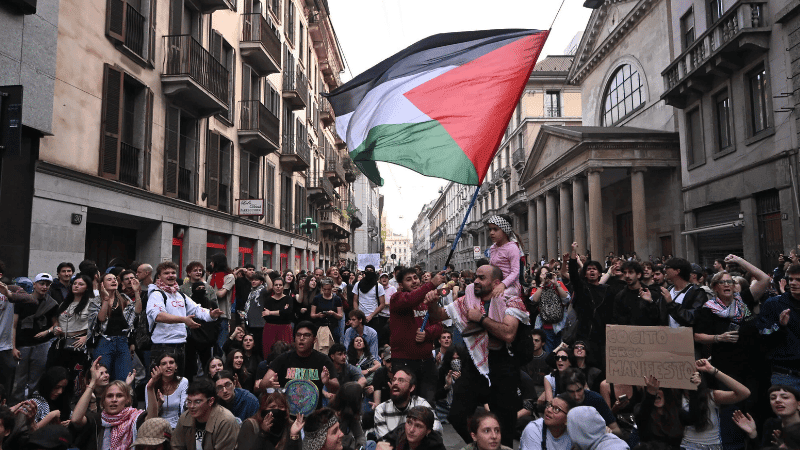

Massive protests that have been shaking France for a month are spreading across the continent and threatening to destabilize other governments, beyond that of Emmanuel Macron. This weekend, Italy also experienced mobilizations that, in some cases, turned into violent riots and clashes between protesters and the police. The problems were concentrated mainly in Milan, where the police arrested 271 people between Saturday and Sunday, the vast majority of them minors.
Italian Prime Minister Giorgia Meloni has called an emergency meeting for this Monday to "take stock of the situation and evaluate new tools" against those who "take advantage of legitimate protests to sow violence and chaos," as the leader explained. This Sunday night, Meloni expressed her solidarity and gratitude to the law enforcement forces who, as she remarked, had to face "the violence of criminals." According to figures from the Interior Ministry, 14 officers were injured in Milan.
On Saturday, protests were called in several cities across the country against the rising cost of living and low wages, which ended in violent clashes mainly in Milan, where the riots were repeated this Sunday. Hundreds of young people gathered in the city center, where there was a strong police presence. Shortly after, the riots began and some protesters looted shops, set up barricades, and destroyed street furniture, and the police responded with charges against violent groups and fired tear gas and water cannons.
Various local media have described the situation as a "guerrilla war". The Milan public prosecutor's office has issued eleven requests for pre-trial detention for youths arrested during the clashes, accused of devastation and looting (a crime punishable by up to 15 years in prison) and aggravated resistance. About thirty more people were arrested on Saturday during protests in other cities in the north of the country, such as Bologna, Bergamo, and Turin.
In the south of the country, there have also been mobilizations for three days, in this case by transporters protesting against the rising cost of fuel, which have caused kilometers of queues on highways in the regions of Campania, Sicily, Apulia, and Calabria. All of this may put the Meloni government in difficulty, as there are no signs that the mobilizations are set to disappear. The Italian General Confederation of Labour, the country's main trade union, has already announced the call for a general strike for November 20.
Leave A Comment