
1,080 tonnes of methanol to be transported to Dhaka by river from Assam
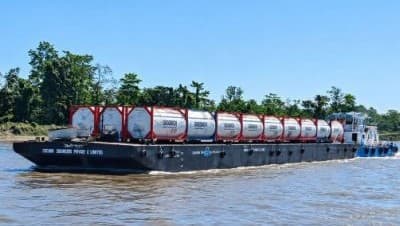

A new initiative has been launched to transport commercial goods from India’s Assam to Bangladesh through the Brahmaputra River’s inland waterway. As part of the initiative, methanol produced by Assam Petro-Chemicals Limited (APL) in Namrup will be transported directly by water from Bogibeel in Dibrugarh to Dhaka.
According to officials involved in the initiative, this will be the first international commercial cargo shipment from Dibrugarh to Bangladesh through the Brahmaputra River since the Partition of India in 1947. They believe the initiative could open up new opportunities for river-based trade between Bangladesh and India’s northeastern region.
Two specialised vessels have been prepared to transport the methanol. Each vessel can carry 27 containers, with each container holding 20 tonnes of methanol. Thus, each vessel will carry 540 tonnes, bringing the total shipment to 1,080 tonnes of methanol on the two vessels.
The vessels will travel approximately 783 kilometres by water from Bogibeel, across the Bangladesh border, to Dhaka. The entire journey is expected to take around seven days.
APL Chairman Bikul Deka said the two vessels had remained out of operation for nearly three decades. APL later leased the vessels and moved them to Pandu Port in Guwahati. After necessary refurbishment and repairs, the vessels were restored for commercial operations. They will now be used to transport methanol from Bogibeel to Dhaka.
Meanwhile, infrastructure at the Bogibeel Inland Water Transport (IWT) Terminal is being prepared for international cargo operations. Customs clearance facilities, a modern jetty and warehouses for storing goods have been developed there. Work is also underway to establish a lighthouse and a Regional Centre of Excellence to oversee waterway operations and provide support to stakeholders.
Those involved in the initiative say that once the Bogibeel terminal becomes fully operational, it could facilitate not only methanol shipments but also the transportation of various industrial and agricultural products from Assam and other parts of northeastern India to international markets through Bangladesh.
Potential cargo includes products of Brahmaputra Cracker and Polymer Limited (BCPL), petroleum products, coal and tea. Assam’s geographical indication (GI)-certified products, including Kaji Nemu lemons, Bhut Jolokia chillies and black pepper, could also potentially reach overseas markets through this waterway.
According to trade experts, transporting large volumes of goods by water is generally less expensive than by road or rail and also places less pressure on the environment. The Brahmaputra waterway could therefore play an important role in expanding trade between northeastern India and Bangladesh in the future.
Historically, the Brahmaputra River played an important role in Dibrugarh’s commercial activities. During British rule, ships of the East India Company used the river route to transport goods between different parts of India and overseas markets. After a long hiatus, efforts are now underway to reactivate this historic trade route in a new form.
Leave A Comment