
30-40% of digital loan borrowers are rural people: BIBM research
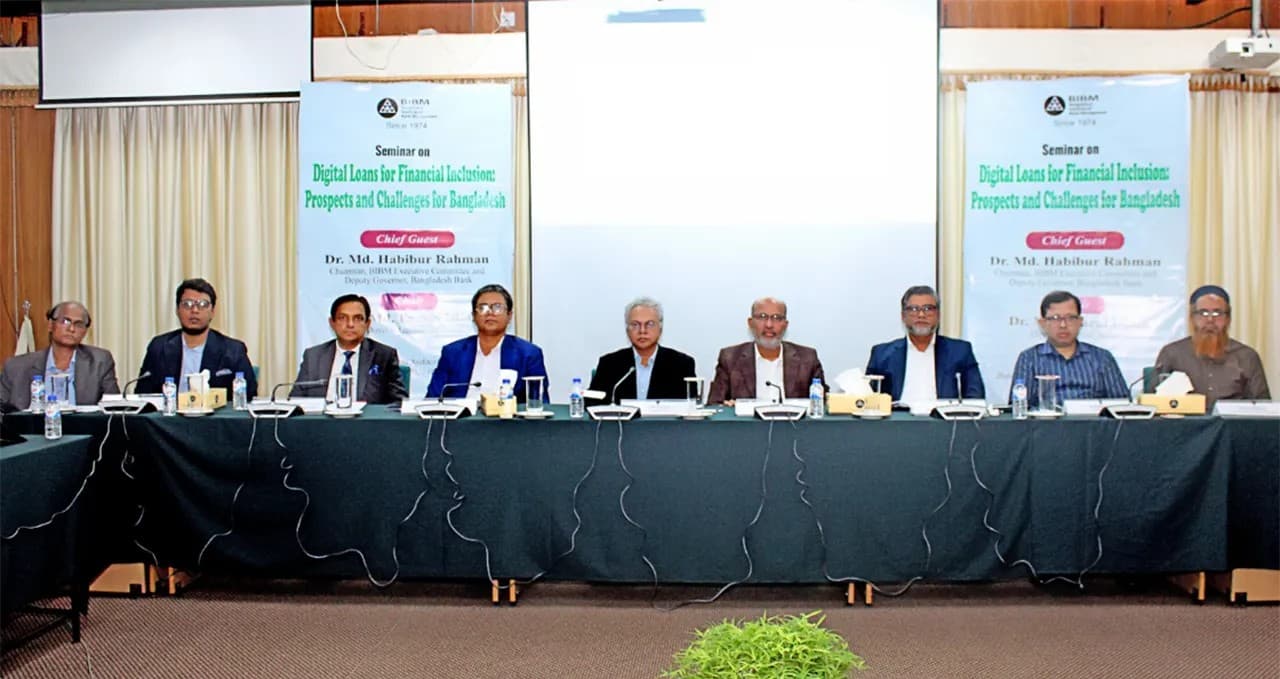

Rural people's participation in Bangladesh's expanding digital loan services is increasing alongside the sector's growth, with nearly 30 to 40 percent of digital loan borrowers currently coming from rural areas. The expansion of mobile financial services (MFS), agent banking, e-KYC and digital payment systems has allowed rural people to access formal loan services without visiting bank branches.
The Bangladesh Institute of Bank Management (BIBM) revealed this information in a research study. The findings were presented at a seminar titled "Digital Loans for Financial Inclusion: Prospects and Challenges for Bangladesh" held at the BIBM auditorium in Mirpur, Dhaka, on Wednesday (September 9).
The research stated that digital loans have created new possibilities for increasing financial inclusion in the country. It noted that such loans could particularly create effective financing pathways for rural people, farmers, small entrepreneurs, women, and small and medium businesses who remain outside conventional banking services.
For a long time, major obstacles for rural entrepreneurs in obtaining bank loans included travelling to bank branches, arranging necessary documents, providing collateral, and lacking prior loan records. The use of technology and alternative data analysis in digital lending systems has made it possible to assess a customer's loan eligibility, creating formal loan opportunities for many customers outside the traditional banking structure.
Speakers at the seminar said one of the key advantages of digital loans is delivering funds to customers quickly and at comparatively lower cost. According to the research findings, the operating cost of digital loans can be less than 1 to 2 percent compared to conventional loans, which creates scope for making small loan disbursements financially viable.
Those concerned believe digital loans could also have a positive impact on the rural economy. Small businessmen, farmers or local entrepreneurs, when they receive short-term capital in times of need, can use it to cover business operating costs, purchase raw materials or goods, and increase production. This could boost local-level economic activity and transactions, alongside creating opportunities for business expansion and employment.
BIBM Executive Committee Chairman and Bangladesh Bank Deputy Governor Dr Md. Habibur Rahman said digital loans can play an important role in delivering formal financial services to people outside the conventional banking system. He added that it could particularly simplify the loan-obtaining process for small borrowers and people facing various obstacles in getting bank loans.
However, experts have also warned of certain risks alongside the rapid expansion of digital loans. BIBM Director General Dr Md. Ejazul Islam said that without adequate safeguards, easy access to loans could increase the risk of over-borrowing, misuse of information, fraud and financial losses for customers.
The research mentioned that the default rate in digital loans is around 3 to 4 percent, while the rate of repeat borrowers is around 45 to 60 percent. It also found that the share of women borrowers ranges from 3 to 25 percent depending on the institution.
According to experts, merely extending digital loans to rural populations is not enough; the service must also be made affordable, transparent and responsible at the same time. Ensuring strong data infrastructure, real-time credit information, cyber security, transparent pricing and effective customer protection could allow digital loans to create new financing opportunities in the rural economy.
Leave A Comment