

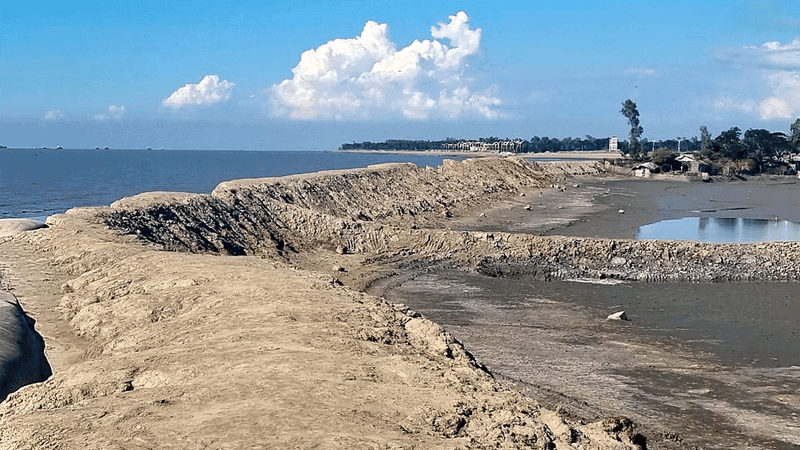
35 years after 1991 cyclone, coastal embankments still remain vulnerable
Today is April 29, a day of mourning for the people of Bangladesh's coastal belt. On this day in 1991, a devastating cyclone and tidal surge ravaged the country's coastal areas. More than three decades have passed, but the painful memories still haunt coastal residents. Meanwhile, the old fear remains—the coast is still not fully safe.
In the early hours of April 29, 1991, a catastrophic cyclone struck the coast including Cox's Bazar. A tidal surge of 20 to 30 feet submerged vast areas in an instant. According to official figures, around 138,000 people lost their lives, and over 10 million were left homeless . Nearly one million livestock also perished. Unofficial estimates put the damage even higher.
The 1991 cyclone destroyed 434 kilometres of earthen embankments that once protected coastal paddy fields from seawater, and another 858 kilometres of embankments were left in dire need of repair .
Thirty-five years later, concern has resurfaced as embankments in many coastal areas remain vulnerable. Experts believe the risks have increased due to climate change, rising sea levels, and the degradation of natural protective systems.
In Maheshkhali and Kutubdia, residents live in fear as embankments continue to be breached by tidal surges. According to the Bangladesh Water Development Board, of the 40 kilometres of embankments in Kutubdia, 6.5 kilometres are damaged, with about 800 metres recently breached . On the western side of the island, collapsed embankments have washed away hundreds of houses .
Dhalghata union in Maheshkhali was one of the worst affected areas in 1991. Local UP member Nurul Islam Basi said he himself was swept away by the tidal surge that night. Some 33,000 people now live in this area. He fears the entire area will be at risk if the embankment is not repaired before the monsoon.
Dhalghata resident Afroza Begum said 19 members of her family died that night. Even now, when April 29 approaches, she breaks down in tears.
Residents allege that 12 to 13 kilometres of embankment in Kutubdia remain incomplete. Tidal water is flooding residential areas, causing extreme suffering.
Executive Engineer of the Cox's Bazar Water Development Board, Md Nurul Islam, said embankments are being redesigned considering the impact of climate change. Their height and width are being increased compared to the past to withstand future disasters.
According to Water Development Board sources, of the total 596 kilometres of embankment in Cox's Bazar, about 25 kilometres remain open and nearly 50 kilometres are damaged. Repair work is ongoing.
Experts say protecting the coast means protecting Bangladesh. Sustainable and environment-friendly planning is needed to ensure the security of coastal areas, not just infrastructure development. Emphasis must also be placed on mangrove forest creation and conservation.
On this day, various programmes are being held across the coast to commemorate those who died in the 1991 cyclone. But alongside remembrance and mourning, coastal residents have one question: how long will this risk remain?
Leave A Comment
You need login first to leave a comment