

44 small coffins and a locked file: Who is responsible for structural murder?
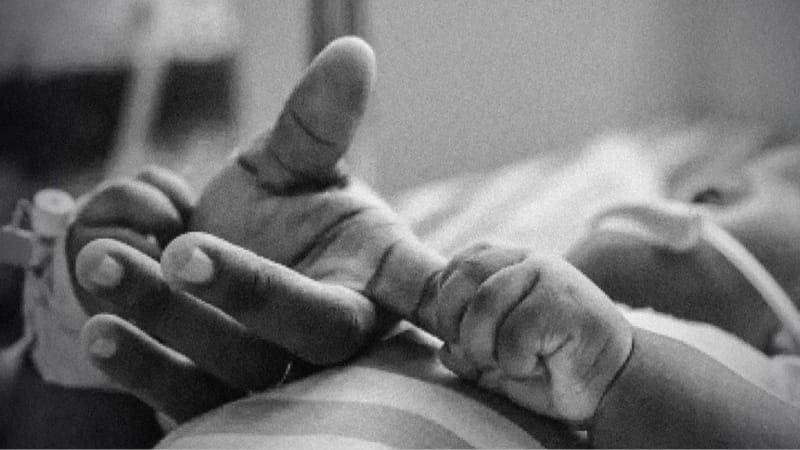

When two-and-a-half-year-old Nusayba from Chatmohar in Pabna passed away on March 12, her father received a call from the Intensive Care Unit (ICU) of Rajshahi Medical College Hospital exactly four days later. He was informed that a bed had been allocated for Nusayba. This ‘posthumous call’ regarding a bed for a deceased child is a significant indictment of our governance in the 21st century. The same unfortunate situation has occurred with Nahid from Terokhadia and 10-month-old Jihad from Durgapur, who have been denied access to a mechanical ventilator despite waiting endlessly. The disheartening admission from the medical team indicates that there have been 53 deaths in the past two and a half months; of these, 44 young lives were lost prematurely in the two weeks from March 10 to 24 due to insufficient intensive monitoring. The greatest irony of progress is that just a few kilometers away from where children are dying daily due to inadequate treatment, a modern specialized children's hospital with 200 beds, constructed at a cost of approximately Tk35 crore in the Ghora Chattar (Behrampur) area of the metropolis, has been fully operational since 2023. Despite having state-of-the-art facilities, including 56 intensive monitoring beds and a central oxygen system, the hospital is awaiting approval for its manpower structure (organogram) due to bureaucratic delays. This official inaction has become more significant than the lives of children today. It is particularly astonishing that the 12-bed child intensive monitoring center currently functioning in the main hospital lacks official approval; it is being operated under its own special management. Is a file concerning a manpower structure on the administrative desk of a state capable of executing large-scale projects worth thousands of crores of taka more important than the lives of 44 children?
A thorough investigation reveals that the current deadlock is attributed not only to bureaucratic delays but also to the conflicting interests of a powerful profit-driven syndicate. With the government-run specialized hospital shut down, the influx of ICU patients is now directed towards the prominent private medical facilities in Rajshahi. Even more alarming is the fact that the technical warranty period for modern medical equipment, valued in crores of taka and installed three years ago, is nearing its expiration. A robust judicial inquiry is urgently required to ascertain accountability for the significant financial losses the state is incurring due to the licensing issues of the equipment and the non-functional sensors before they are utilized. Furthermore, it is crucial to investigate whether any personal interests are behind the government's expenditure of over 40 million taka in the last decade on maintaining an external division in an inappropriate rented facility since 2012. In contemporary political discourse, this situation is not merely a case of negligence but rather a calculated instance of 'structural violence'. A significant concern arises regarding the priorities of the state. We have observed that it was feasible to expedite the arrival of specialist doctors and equipment from abroad for the treatment of the recently deceased former Prime Minister Begum Khaleda Zia. If the state possesses the goodwill, it is certainly not an insurmountable challenge to recruit specialist doctors, nurses, and technicians from various regions of the country, or even from abroad, to initiate emergency services. However, does the humanitarian crisis in Rajshahi hold little significance for policymakers simply because it is a divisional city outside of Dhaka? Is the administration's passive stance, despite coverage in national media, merely a manifestation of 'regional discrimination'? Addressing the question of why the lives of marginalized children are not afforded equal consideration is an urgent matter that transcends capital-centric development and mindset.
The stagnation of Rajshahi Children's Hospital represents not merely an administrative shortcoming, but also a blatant infringement of legal and human rights. As stipulated in Articles 15(a) and 18(1) of our Constitution, it is the fundamental duty of the state to provide medical care to its citizens. The tragic reality of children perishing in the corridors, despite the availability of necessary infrastructure, constitutes a direct breach of this constitutional obligation. I humbly appeal to the High Court - in light of this inhumane circumstance, to safeguard the public interest, the Honorable High Court ought to issue a suo moto rule and demand an explanation as to why this hospital has not been ordered to resume operations immediately. Should the shortage of personnel be the primary hindrance, the government has the option to deploy the Army or Air Force Medical Corps (AMC) under the ‘In Aid to Civil Power’ framework to address this crisis. In accordance with sections 4 and 6 of the Public Health (Emergency Provisions) Ordinance, 1944, the government is empowered to assign the administrative oversight of any medical institution to a competent authority for the sake of public health. Given the current state of emergency, it is feasible to temporarily reopen the locked hospital with the assistance of an expert team from the Army Medical Corps. This action would not only mitigate the depreciation of medical equipment valued in crores of taka but also liberate the general populace from the grip of syndicate operations. The locked gates of Rajshahi Children’s Hospital pose a significant moral dilemma for our collective conscience today. Let the 44 small coffins serve as a wake-up call for our policymakers. We cannot afford to witness another Nusayba receiving that tragic call from her father four days posthumously. It is imperative that we dismantle the bureaucratic barriers and the chains of regional discrimination, swiftly opening the gates of this hospital to safeguard the future of North Bengal.
Author: Shamiul Alim, rights activist and writer; President, Youth Action for Social Change (YASC)
Leave A Comment
You need login first to leave a comment