

Are youths really apolitical?
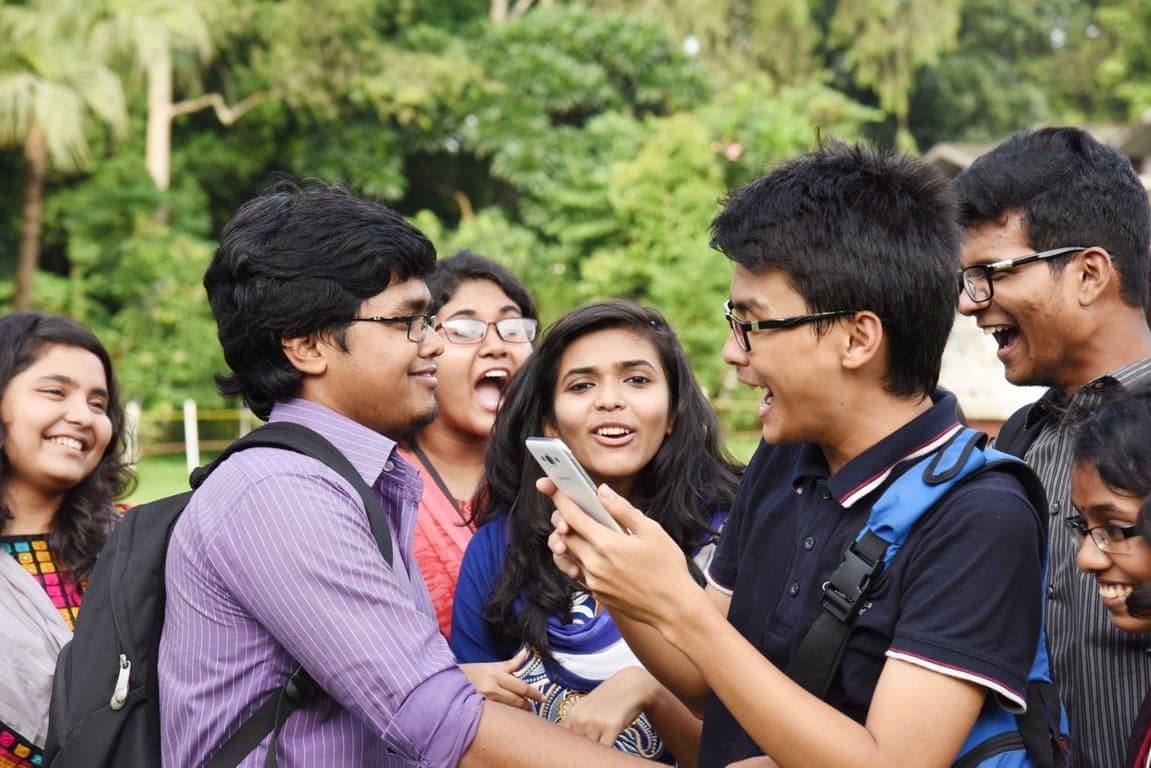

In recent time, youths in Bangladesh face two major accusations --they are apolitical and they don't study. Is it? If so, will it be possible for the generation to build a smart Bangladesh? If the youth are really averse to politics and education, then who would take the helm?
Most of our leaders, thinkers and policy makers are now above sixty. Many of them are even older. After the demise of the veteran politicians and scholars or in their absence, youths must take up their role and lead the country. Is it really possible for the apolitical and ignorant generation to move forward the country? How would that be possible? So, in such circumstance, we must ask ourselves: Are they really apathetic to politics and knowledge?
Before thinking about the topic, we must need to understand the connection of youth with age and who would be called young?
In such case, I must recall the lyrics of one of the popular song by Kabir Sumon, 'Chollish perolei chalshe (Presbyopia is a part of aging, especially after 40)'. Once upon a time, it was a bitter reality that people used to loss vision gradually after 40. Adults over 40 considered to be old-age people as age marks appeared on the body. If someone died at the age of 60, he was considered old enough to die.
But the average life expectancy of people in Bangladesh is now 72 years, much higher than before. Due to the increase in financial capacity, improvement in quality of life,better eating habits, improvement in medical science, health awareness etc. So there is no opportunity to say 'Chollis perolei chalshe'. So, adults above 40 are no longer old-age people. Rather, many people have gained better physically capacity even at the age of 60; they are living a productive life. Even after retiring from work, they are engaging themselves with various activities; doing business; getting involved in social and political activities.
So, at least right now, no age-limit is applicable in this ground. Nowadays, anyone can hold a potential or influential position in a political party and he can hold it until his death or no matter he is 90-year-old or not in a sound physical condition. The country's constitution, laws and party regulation cannot prevent him from playing his role.
So, the question is about this politics: What kind of politics we are practicing or which highway should be taken to move forward in the coming days. It depends on the youth of today whether to take to the highway or take to the streets.
People of Bangladesh are nostalgic about the past like Shah Abdul Karim's song: ' Age ki sundor din kataitam (I used to spend lovely days before)'. Another familiar saying: 'Jai din bhalo, ase din kharap (past is good and present is bad)' can also be mentioned here. So, people are always dissatisfied with the present. Yesterday was always good for people.
And for this very reason, Bangladeshis are nostalgic about sixties when the topic of politics, especially student politics and student movement comes up. Young Bangalis led 52's language movement, 66's six-point movement, 69's Mass uprising' and the greatest achievement of Bangali, the Liberation War; More precisely, the students, had taken the charges of all successful movement--these examples come to the fore. Along with this, the role of student society in the anti-Ershad movement demanding democracy in the late eighties and early nineties are celebrated widely.
A large section of the general public deems that the student body, as patriotic and dedicated as it was in the fifties and sixties, has now deviated from that. Is it? If that is the case, who took to the streets demanding democracy during the military-controlled civil government in 2007-08; If so, who formed 'Gonojagoron Mancha' (mass-upsurge stage) demanding punishment for war criminals in 2013? Who waged the road safety movement in 2018? Who staged movement to demand reform of quota in government jobs? These all are the result of youth movement.
My question is: why would they take to the streets if they are not political? Another important question is, what percentage of the youth was in these movements and did a large number of them take to the streets against their will or do they feel that they should be involved in such democratic movements? Do their parents and teachers want it? No, here is the question.
The point is: If politics only means joining the procession of Awami League or BNP in order to serve personal interest, then it is a better sign that youths are not in touch with such politics. But if politics means going beyond the party signboards and protesting on the streets for the interest of the country and the people; shaking the state machinery—and that is what a large section of the youth is doing.
They often come under the influence of party-based politics as any political party would love to attract such a quarter of youths who are able to realize their demands. That attempt had been made during Gonojagoron andolon' (mass-upsurge) . That attempt was also made during the road safety movement in 2018. That attempt had also been made in the anti-quota movement in government jobs.
It may not be an offence. Because any political party wants to take any organized power in its pocket. If that is not possible directly, they support the movement on behalf of the party. That’s why ruling party always keep public universities under the control of their student bodies. Ruling party’s student wings establish supremacy at dorms and the administration is also used in this purpose. By creating factionalism among the teachers, patronage was given to the government party-backed section.
Their intention is establishing supremacy over the entire university—so that the organized section of the students cannot in any way create a movement under a non-partisan body or under the banner of any other party on national issues which will create an embarrassing situation for the government.
So, because of such practices, a negative impression about politics has been created among the youths that good boys do not get involved in politics. Politics means conflict. Politics does not lead to knowledge. If you don't study, you won't get good results and no good job and cannot earn handsome amount. So, the longing for a better career, money, a luxurious and peaceful life is the main reason behind youths' apolitical stance.
Politicians tactfully form such a state structure to run the country as per their wish where the youth would remain silent after witnessing hundreds of injustices being instigated by the mantra of 'We Hate Politics'. A large part of them are somehow want to leave the country after higher secondary level. They keep themselves busy with mobile phones and other things and the state power also wants this. Authorities know that when youths take to the streets saying 'we want justice', there must be injustice. So, the authorities want youths keep silent on serious issues so that they must not get embarrassed. The power or system then creates an unfavorable situation for the young generation which will discourage the youths to join politics. The authorities intentionally motivate students to take apolitical stance by spreading ideologies like: politics should be banned in educational institutions.
So, now the most important part is whether the youths, especially the students are aware of such motive of the state power. It is important whether they are being detached from the country and the people luring with the promise of a better life and livelihood.
Leave A Comment
You need login first to leave a comment