A late afternoon with Meherun Runi and eternal regret
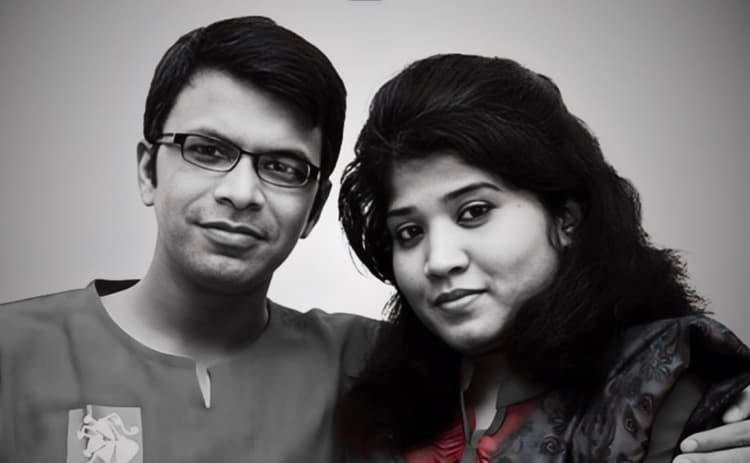
Following the regime change in 2024, it was widely anticipated that the entire nation would witness a just investigation and trial regarding the highly publicized Sagar-Runi murder.
Post-mass uprising anarchy is still visible in Bangladesh. The state machinery is still largely inactive in the backdrop of the changes. In this vacuum, at least partially, the rule of the insane continues.
As a short winter day, on that Thursday the sun dipped below the horizon and the sky turns darker too early. On the afternoon of December 16, 1971, the Pakistani commander of the eastern region, AK Niazi, and Chief of Staff of the Indian Army's Eastern Command Major General JFR Jacob were sitting in an emergency meeting at the Dhaka Cantonment. The meeting decided that the Pakistani army would surrender in the open field, among the people. Brave freedom fighter and the then Deputy Chief of Staff of the Liberation Forces, Abdul Karim Khandker, witnessed that historic moment as a representative of Bangladesh.
Jean Eugene Paul Kay was a 29-year-old young man from a wealthy family in France, one of the wealthiest countries in Europe. At that age, he was supposed to be busy with his profession, beloved, and his own life, or be drunk in all the famous French bars. But what a strange humanity, he hijacked a Pakistan International Airlines plane, risking his life. He joined the Bengali liberation struggle. This incident created a stir in France and the whole of Europe. When the mediator spoke to Jean Kay, he demanded that 20 tons of medicine and relief materials be sent for the Bengali refugees who had taken refuge in India! At one point in the hostage incident, the security guards shot him in the chest. He was seriously injured but survived. Later, when detailed information about the matter was published, the French government sent relief medicine for the Bengali refugees.
The Rayerbazar area, located on the outskirts of Dhaka city, was once quite desolate. It was a low-lying wetland along the riverbank. During the dry season, several brick kilns operated in this area, which was commonly known to the people of Dhaka as “Itkhola” (brick kilns). In newly independent Bangladesh, the bodies of the nation’s finest sons were discovered in the shallow, circular pit resembling a pond of one such abandoned brick kiln. These bodies bore marks of extreme brutality—chests and backs riddled with bullets, hands tied behind their backs, fingernails uprooted, various limbs crushed, bodies perforated by gunfire, deep bayonet wounds, and half-decomposed remains. These were the bodies of enlightened individuals—freedom-loving Bengali professors, doctors, lawyers, journalists, and professionals from other walks of life.
On Monday morning, I was utterly shocked after watching a video clip. Filmed from a distance, the video showed towering flames rising above the trees, lighting up the night sky. At first glance, I thought the footage was from Ukraine or Gaza. But soon I realised I was wrong. According to various media reports, it was not a scene of destruction from abroad, but from Savar, on the outskirts of Dhaka—where students of Daffodil International University had vandalised and set fire to the campus of City University. As the day went on, the horror of the incident became even clearer.