
Bangladesh currency strengthens 11.6% against Indian Rupee in 2 years
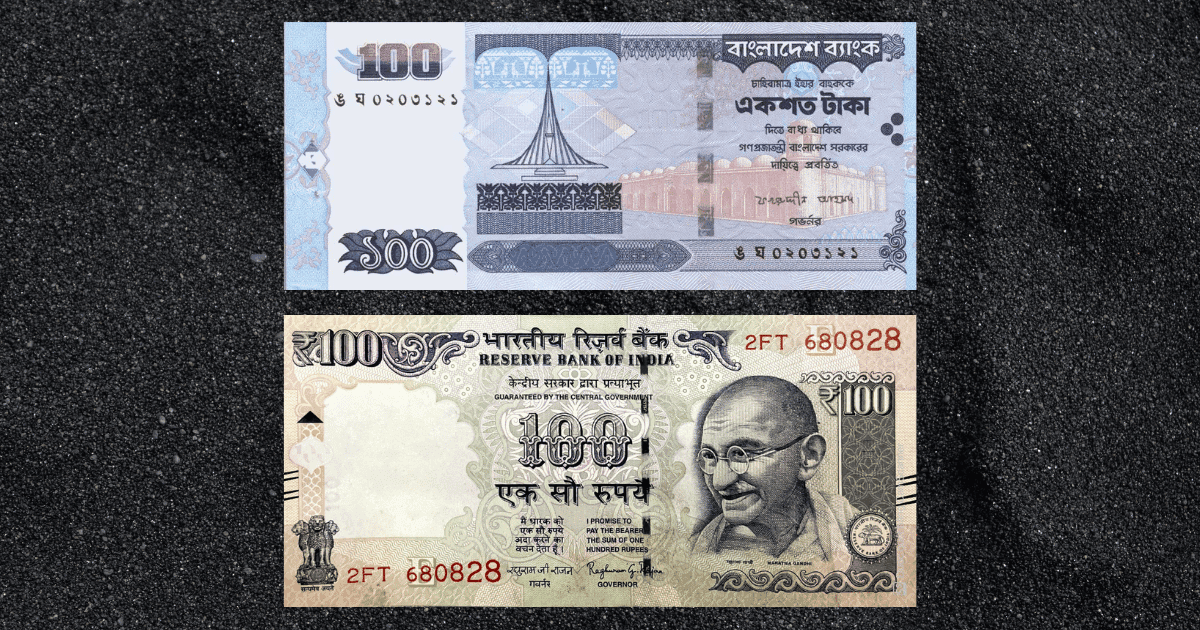

The Bangladeshi currency has strengthened significantly against the Indian rupee over the past two years. Compared with September 2024, one taka now buys more Indian rupees. According to the latest exchange rate, the taka has appreciated by around 11.6 percent against the Indian currency over the two-year period. In the past year alone, the appreciation was around 7.6 percent.
An analysis of exchange rates shows that on September 22, 2026, one Bangladeshi taka was worth around 0.781 Indian rupees. On the same day in 2025, the rate was approximately 0.726 rupees. On September 22, 2024, one taka was worth around 0.700 rupees. This means the taka’s purchasing power against the Indian rupee increased by approximately 7.6 percent over the past year.
The taka’s stronger position is also evident when the exchange rate is viewed in reverse. On September 22, 2026, it took around Tk 1.28 to buy one Indian rupee. A year earlier, the same amount of Indian currency cost approximately Tk 1.37. In other words, the cost of buying one Indian rupee fell by around 9.72 paisa over the past year. Two years earlier, on September 22, 2024, one Indian rupee was worth approximately Tk 1.43.
The latest Bangladesh Bank data also reflects the taka’s stronger position against the rupee. According to data published on September 22, the cross rate for the Indian rupee stood at Tk 1.2807 to Tk 1.2825. On the previous working day, September 21, the rate was Tk 1.2789 to Tk 1.2796. This indicates that the taka has continued to maintain a relatively strong position against the Indian currency in recent trading.
Bangladesh Bank Executive Director and spokesperson Arif Hossain Khan said the taka’s appreciation against the Indian rupee could have an impact on trade and economic relations between the two countries. In particular, Bangladeshi businesses may face somewhat lower costs in local currency when importing goods and services from India. Since importers now need fewer taka to purchase the same amount of Indian goods, they may gain some financial advantage.
However, a stronger taka does not necessarily mean that the prices of imported goods will fall by the same proportion. International commodity prices, transportation and supply costs, duties and taxes, as well as pricing decisions by importers and traders, also influence the final prices of goods. Therefore, even when the exchange rate is favorable, how much of the benefit reaches consumers will depend on broader market conditions.
The taka’s stronger position against the rupee may also provide some relief to Bangladeshis travelling to India. They may need relatively fewer taka to cover expenses in the local currency, including hotels, food and transportation. However, Bangladesh Bank’s spokesperson also noted that the overall cost of travelling abroad depends not only on exchange rates but also on other expenses and prevailing market conditions.
Leave A Comment