

Bangladesh FM Khalilur reaches New Delhi
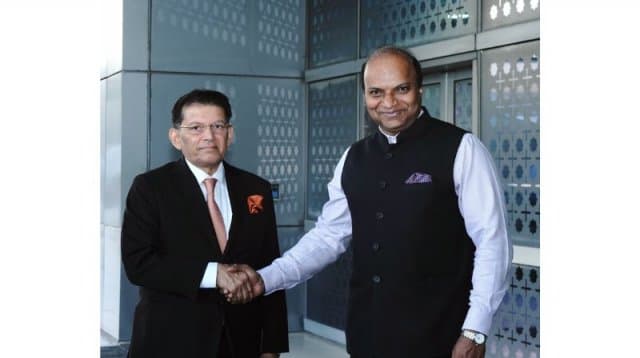

Foreign Minister Khalilur Rahman has reached New Delhi aiming to “restart” relations with India under a new political reality in Dhaka, nearly two decades after the BNP last held power.
He was received by B Shyam, head of the Bangladesh-Myanmar Division at India’s external affairs ministry, and Bangladesh High Commissioner to India Riaz Hamidullah.
Indian External Affairs Ministry spokesperson Randhir Jaiswal shared photos of the arrival and said, “Warm welcome to FM Khalilur Rahman of Bangladesh on his arrival in New Delhi [Tuesday].
“India and Bangladesh share warm and historic ties anchored in strong people to people relations. The visit will further bolster India Bangladesh partnership.”
Khalilur reached the Indian capital on Tuesday en route to Mauritius for the Indian Ocean Conference.
Although the visit carries most elements of a bilateral tour, the government is describing it as a “courtesy visit” during transit.
Officials at the foreign ministry said the trip aims to normalise ties that had stalled during the one-and-a-half-year tenure of the interim government.
According to India’s external affairs ministry, Khalilur is scheduled to hold a series of meetings on Wednesday afternoon with his Indian counterpart S Jaishankar, Commerce and Industry Minister Piyush Goyal, and Petroleum and Natural Gas Minister Hardeep Singh Puri.
He is also expected to meet India’s National Security Advisor Ajit Doval, foreign ministry spokesperson SM Mahbubul Alam said.
After the Delhi meetings, Khaliluri will fly to Port Louis, the capital of Mauritius, on Thursday morning.
According to BBC Bangla, he and Jaishankar are scheduled to travel on the same Air Mauritius commercial flight.
Prime Minister’s Foreign Affairs Advisor Humaiun Kobir is accompanying the minister, as he has on other recent overseas visits.
A senior foreign ministry official said on Monday that ties between the two countries had stalled following the July Uprising, adding that India may not have fully accepted the political changes in Bangladesh.
“We want to restart the relationship from there and move forward based on mutual benefit,” the official said.
Before the visit, Indian High Commissioner to Dhaka Pranay Verma met Prime Minister Tarique Rahman on Monday.
After the meeting, advisor Humaiun said detailed discussions would follow, describing the visit as “a beginning to open the path of dialogue”.
Officials said the agenda will include longstanding issues such as the Ganges and Teesta water-sharing agreements, trade, and border killings, alongside future cooperation areas.
The 30-year Ganges water-sharing treaty, signed on Dec 12, 1996, is set to expire this December.
Any decision on its renewal during the visit will guide the next steps, the official said.
Dhaka is also expected to raise the issue of extraditing former prime minister Sheikh Hasina, who faces allegations of crimes against humanity and a death sentence.
The return of accused individuals in the Sharif Osman Bin Hadi murder case, arrested in Kolkata, will also be discussed.
During the Awami League tenure, both sides had described bilateral ties as being in a “golden chapter”.
However, relations grew strained with the interim government led by Muhammad Yunus after the fall of Hasina’s government in the 2024 uprising.
Dhaka accused Hasina of attempting to destabilise Bangladesh from India, while New Delhi raised concerns over minority safety and urged action.
Bangladesh, in turn, criticised Indian media for “false and exaggerated” reporting.
The tensions also saw reciprocal diplomatic summons, disputes over border issues, and statements by Hasina from New Delhi.
Trade frictions emerged as well.
On May 17, 2025, India announced a halt to imports of Bangladeshi garments and processed food through land ports.
India had earlier indicated it preferred to work with an elected government rather than the interim administration.
A shift in Delhi’s stance became visible after the death of former BNP chairperson Khaleda Zia.
Indian Prime Minister Narendra Modi expressed condolences in a letter and signalled willingness to work together.
Jaishankar later visited Dhaka and met Tarique.
Following the national election, a BNP-led government assumed office on February 17.
India’s Lok Sabha Speaker Om Birla attended the swearing-in ceremony.
On Mar 20, Riaz Hamidullah met Jaishankar, marking a renewed diplomatic engagement nearly a year after tensions intensified.
Leave A Comment
You need login first to leave a comment