
Bangladesh seeks new markets for pharmaceuticals, IT products in New Zealand

Bangladesh has taken new initiatives to reduce its heavy reliance on the ready-made garment sector in the New Zealand market by expanding exports of non-apparel items, including pharmaceuticals, information technology, jute, leather, and sustainable textiles. Alongside this diversification, Dhaka is also seeking investments from Wellington in key sectors such as agritech, dairy processing, green energy, and cold-chain infrastructure.
To achieve these goals, Bangladesh has proposed three immediate steps to enhance direct communication between business communities, organize virtual B2B meetings, and improve coordination at the governmental level. Both sides have also agreed to establish a bilateral business council and organize trade fairs.
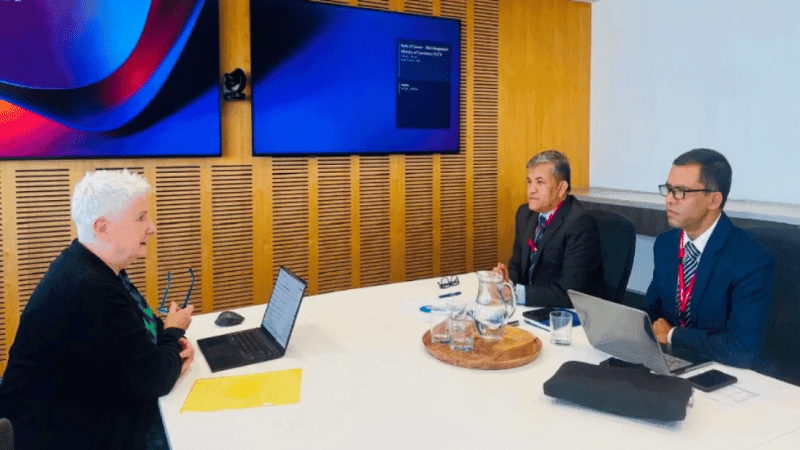
Md. Kamal Hossain, Public Relations Officer of the Ministry of Commerce, shared this information. The proposals were made during a meeting with New Zealand Trade and Enterprise (NZTE). Rachel McGuckian, NZTE Market Manager for South-East and East Asia, discussed potential areas for bilateral trade and investment expansion, while the Bangladeshi delegation was led by Commerce Secretary Md. Ataur Rahman.
During the meeting, it was revealed that bilateral trade between Bangladesh and New Zealand currently stands at approximately $450 million annually, with Bangladesh exporting about $147 million, primarily consisting of garments. Conversely, Bangladesh mainly imports dairy and metal products from New Zealand.
To make trade more balanced and diversified, Bangladesh aims to boost non-apparel exports. Specifically, cooperation from NZTE has been sought to create new opportunities in the New Zealand market for pharmaceuticals, eco-friendly jute goods, leather products, sustainable textiles, and the IT sector.
The high manufacturing capacity of Bangladesh's pharmaceutical industry was highlighted during the discussions. The Bangladeshi side noted that local pharmaceutical companies manufacture products while adhering to international standards and certifications, creating an opportunity to supply generic medicines and vaccines to the New Zealand market at competitive prices. Interest was expressed in expanding the presence of Bangladeshi products in New Zealand's health and pharmaceutical sector by leveraging this potential.
The information technology sector was also presented as a promising export avenue. The meeting noted that Bangladesh has over 650,000 tech professionals. Leveraging this workforce, proposals were made to establish business partnerships with New Zealand tech companies in software development, financial technology, and digital services.
Beyond exports, increasing New Zealand's investment in Bangladesh received significant focus. New Zealand companies were invited to invest in dairy processing, specialized nutritional products, cold-chain logistics, agritech, advanced manufacturing, renewable energy, and green technologies.
The advantages and facilities available for foreign investors in Bangladesh's special economic zones were also underscored. Bangladesh stated that by manufacturing and investing in the country, New Zealand firms can expand their business not only locally but also into the larger markets of South and South-East Asia.
To transform these discussions into practical business initiatives, Bangladesh proposed three swift actions. First, establishing direct communication between NZTE's South-East and East Asia team and the Bangladesh Investment Development Authority. Second, arranging virtual business meetings between exporters from Bangladesh's pharmaceutical, IT, and leather sectors and potential buyers and businesses in New Zealand. Third, strengthening institutional communication on bilateral trade and investment cooperation by enhancing coordination with New Zealand's Ministry of Foreign Affairs and Trade.
Discussions also focused on forming a bilateral business council as a regular communication platform for the private sector of both countries. Both sides agreed on organizing trade fairs and increasing participation in fairs held in each other's countries.
The meeting emphasized building a mutually beneficial economic relationship by combining Bangladesh's manufacturing capabilities and large market scale with New Zealand's expertise in technology, agriculture, and high-value product manufacturing.
Leave A Comment