

Oxford study
Bangladesh to be among world’s 6 hottest countries by 2050
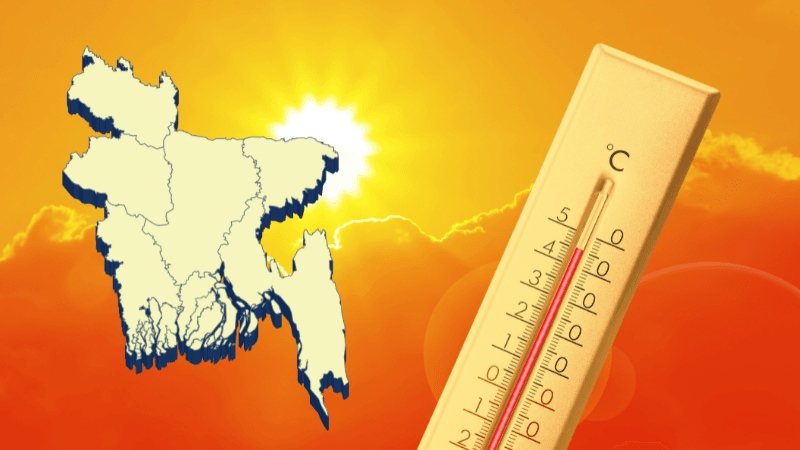

Bangladesh is expected to be among the six countries most severely affected by extreme heat by 2050 due to climate change, according to an international study led by scientists from the University of Oxford in the United Kingdom.
The research, published on Monday in the journal Nature Sustainability, says that alongside Bangladesh, India, Nigeria, Indonesia, Pakistan and the Philippines will face severe crises caused by extreme heatwaves. Scientists warn that the global heatwave crisis is intensifying rapidly, with direct impacts on daily life, public health and the overall economy. If the current rate of fossil fuel use continues, the number of people exposed to extreme heat could almost double within the next 25 years.
According to the study’s data, if global warming reaches 2 degrees Celsius above pre-industrial levels, about 41 percent of the world’s population, or 3.79 billion people, will be living under extreme heat conditions by the middle of this century. In 2010, the figure was only 23 percent, or 1.54 billion people. Researchers used the “cooling degree days”, CDD, index to assess the risk, which measures how much cooling is required annually to keep indoor temperatures at safe levels in a specific location.
Regions requiring more than 3,000 CDDs per year have been classified as “extreme heat-prone” zones. Oxford researcher Dr Jesus Lizana warned that Bangladesh’s national average temperature does not reflect the real level of risk, as most of the population lives in densely populated areas where annual cooling demand far exceeds 3,000 CDDs.
In the context of Bangladesh, extreme heat is emerging as a new and silent killer. While the impacts of climate change in the country have long been associated with sea-level rise, cyclones and floods, intense heatwaves are now becoming equally deadly.
Medical experts say heatwaves are significantly increasing the risks of heatstroke, cardiovascular complications and kidney disease. Children, older people and low-income working populations, who often lack access to adequate cooling or air conditioning, are the most vulnerable. As a result, overall work capacity and productivity are also declining sharply.
The study further notes that demand for cooling will rise most rapidly in low- and middle-income countries in tropical and subtropical regions. In contrast, colder developed countries in the north are expected to see reduced demand for heating as winters become milder.
Researchers also warned of a “cooling trap”. As extreme heat increases demand for air conditioning, electricity consumption rises. If that electricity is generated by burning fossil fuels, carbon emissions will increase, further heating the planet. Failure to break this cycle could push the situation further out of control.
Scientists stressed that keeping global warming within 1.5 degrees Celsius could significantly reduce these risks. To achieve this, they emphasised the urgent need to cut carbon emissions, expand the use of renewable energy and adopt heat-resilient technologies in urban planning and housing design.
Leave A Comment
You need login first to leave a comment