
Bangladesh's first female prime minister, Khaleda Zia, passes away
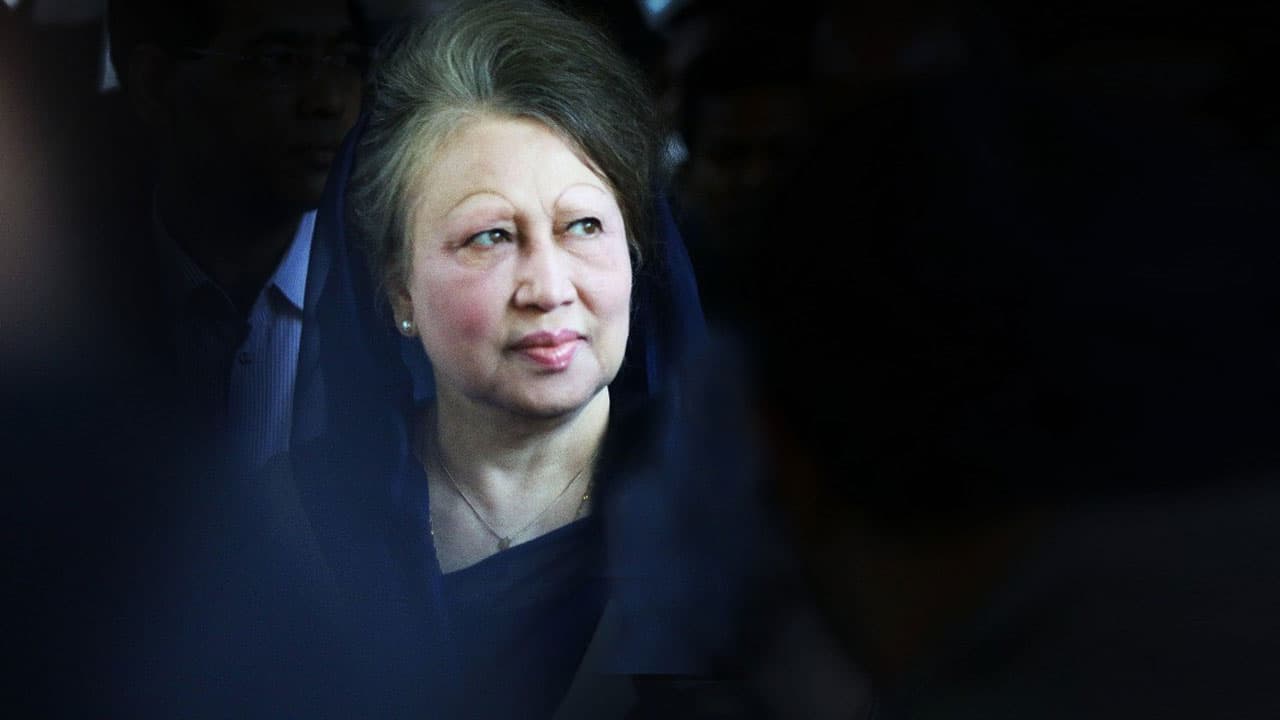

Bangladesh's first female prime minister, Khaleda Zia, has passed away.
She breathed her last at 6am on Tuesday after a prolonged illness, said her personal physician and BNP National Standing Committee member Professor Dr. AZM Zahid Hossain.
Khaleda Zia, aged 80, had advanced cirrhosis of the liver, arthritis, diabetes, chest and heart problems, her doctors said.
“Our beloved national leader is no longer with us. She left us at 6am today,” the Bangladesh National Party said in a post on Facebook on Tuesday.
Begum Khaleda Zia's eldest son and BNP acting chairman Tarique Rahman, his wife Dr. Jobaida Rahman, granddaughter Zaima Rahman, younger son's wife Sharmila Rahman Sinthi, younger brother Shamim Eskandar, younger brother's wife, elder sister Selina Islam and other family members were present at the hospital at the time of her death.
In addition, BNP Secretary General Mirza Fakhrul Islam Alamgir and all the doctors of the medical board formed to treat Begum Khaleda Zia were present at the time.
Physicians had said on Monday night that Zia's condition was "extremely critical". She was put on life support, but it was not possible to provide multiple treatments at the same time given her age and overall poor health, they said.
An announcement said that the schedule of Begum Khaleda Zia's namaz-e-janaza will be announced later. However, BNP standing committee member Salahuddin Ahmed said that Khaleda Zia's janaza may be held at Manik Mia Avenue tomorrow, Wednesday.
She became Bangladesh's first female head of government in 1991 after leading the BNP to victory in the country's first democratic election in 20 years.
She returned to the post of prime minister in 2001, stepping down in October 2006 ahead of a general election.
Begum Khaleda Zia earned the title of 'Uncompromising Leader' from the countrymen for her impeccable contribution to the struggle for establishing democracy in Bangladesh.
Begum Khaleda Zia transformed the BNP, founded by her husband, martyred President Ziaur Rahman, into a mass party through street protests. She was the Prime Minister of Bangladesh for three terms. The news of her death has cast a shadow of deep mourning across the country. This loss of her passing can never be compensated.
The people of Bangladesh will remember Begum Khaleda Zia with deep respect. The 'Uncompromising Leader' Begum Khaleda Zia will remain a beacon of light in the struggle for democracy and human rights throughout the ages.
Begum Khaleda Zia (born 15 August 1945) is one of the most influential political figures in Bangladesh. She is the first female Prime Minister of Bangladesh and the second female Prime Minister in the Muslim world after Benazir Bhutto of Pakistan. She served as the Prime Minister of Bangladesh for two terms—from 1991 to 1996 and from 2001 to 2006.
Khaleda Zia's birth name was Khaleda Khanam Putul. She was born in Dinajpur. Her father, Iskander Majumder, was a businessman and her mother, Begum Taiba Majumder, was a housewife. After matriculating from Dinajpur Government Girls' High School, she studied at Surendranath College. In August 1960, she married Ziaur Rahman, an officer in the then Pakistan Army. Later, she became known as 'Khaleda Zia' after her husband's name.
When Ziaur Rahman became the President of Bangladesh in 1977, Khaleda Zia became known as the First Lady of the country. Her political career began when Ziaur Rahman was killed in a military coup on May 30, 1981. In 1982, she joined the BNP and quickly rose to the leadership of the party. She played an important role in the democratic movement against the military ruler Ershad.
When the BNP won the 1991 parliamentary elections, Khaleda Zia became Prime Minister. The parliamentary system of government was re-established in Bangladesh in her first term. When the four-party alliance won the 2001 elections, she became the head of government for the third time and served until 2006.
She also played an important role in her political career as the leader of the opposition. She was the leader of the opposition in the 7th Parliament and led the movement against the Awami League government in parliament and on the streets.
In her personal life, she is the mother of two children. Her eldest son, Tarique Rahman, is the acting chairman of the BNP, and her younger son, Arafat Rahman Koko, died in 2015.
During her long political career, Begum Khaleda Zia has received several international recognitions. She was named in Forbes magazine's list of influential women leaders and was honored by various foreign organizations for her role in promoting democracy.
Leave A Comment
You need login first to leave a comment