

Boro crops at risk amid diesel shortage
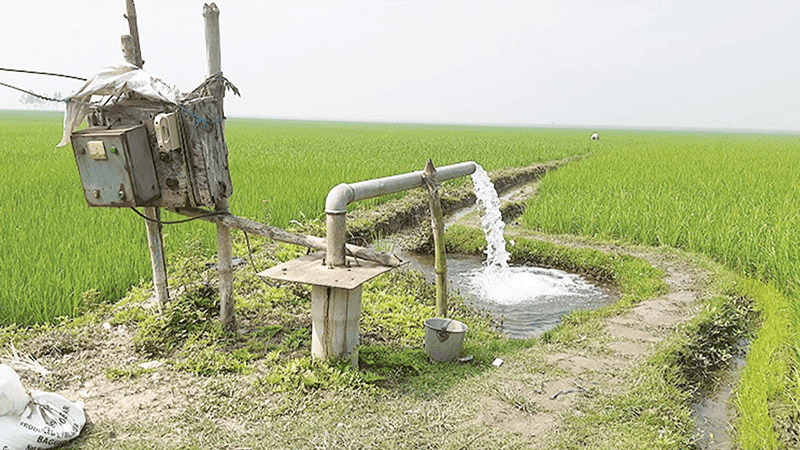

The Boro season typically runs from December to June. Irrigation activities, especially in the northern region and Sylhet's haor areas, are impossible without diesel-powered pumps. However, due to limited fuel supply caused by the Middle East conflict, farmers are facing a crisis in irrigating their Boro crops, putting the harvest at risk.
Diesel has virtually disappeared from retail markets across various parts of the country. Many farmers are standing in long queues and still unable to get adequate fuel.
Farmers report that currently, each buyer can purchase only two litres of diesel. Some shopkeepers are also charging extra, taking Tk 5–10 more per litre.
According to the Department of Agricultural Extension, the country has 754 deep tube wells, 10,39,337 shallow tube wells and 1,84,384 low-lift pumps in operation.
The Boro cultivation target is 50.54 lakh hectares. As of March 8, cultivation has been completed on 48.53 lakh hectares. In the Rangpur region, 5.09 lakh hectares have been cultivated, where about 35-40 per cent of land in Lalmonirhat, Kurigram, Rangpur, Nilphamari and Gaibandha depends on diesel-powered irrigation.
Farmers say crops are at risk as they cannot irrigate in areas without electricity. Mostak Ali, a farmer from Aditmari in Lalmonirhat, said, "I need 13 litres of diesel daily for 33 bighas of land. Getting only two litres, I cannot irrigate."
In Rajshahi, out of 31,274 irrigation pumps, 26,506 or about 85 per cent are diesel-powered. Abdul Gafur from Bogura said, "Irrigation is needed two to three times a week. Now diesel costs around Tk 110 per litre, expenses have multiplied."
Sirajul Islam, additional director of DAE Rangpur, has warned that insufficient irrigation could seriously threaten Boro production.
Farmers in Sylhet's haor areas say fields have dried up due to low rainfall. Sudhin Biswas from Hakaluki Haor said, "More irrigation is needed now, but there is no diesel."
DAE Director General Abdur Rahim said the situation is being monitored at the field level. Arrangements will be made to ensure fuel supply to farmers and pump owners on a priority basis.
Economists say the government's decision to limit fuel supply is understandable, but agriculture must be given top priority. Over 60 per cent of Boro cultivation depends on diesel-powered irrigation. To protect production, diesel for agriculture needs to be subsidised.
Leave A Comment
You need login first to leave a comment