
Broker-backed harassment at Basila passport office
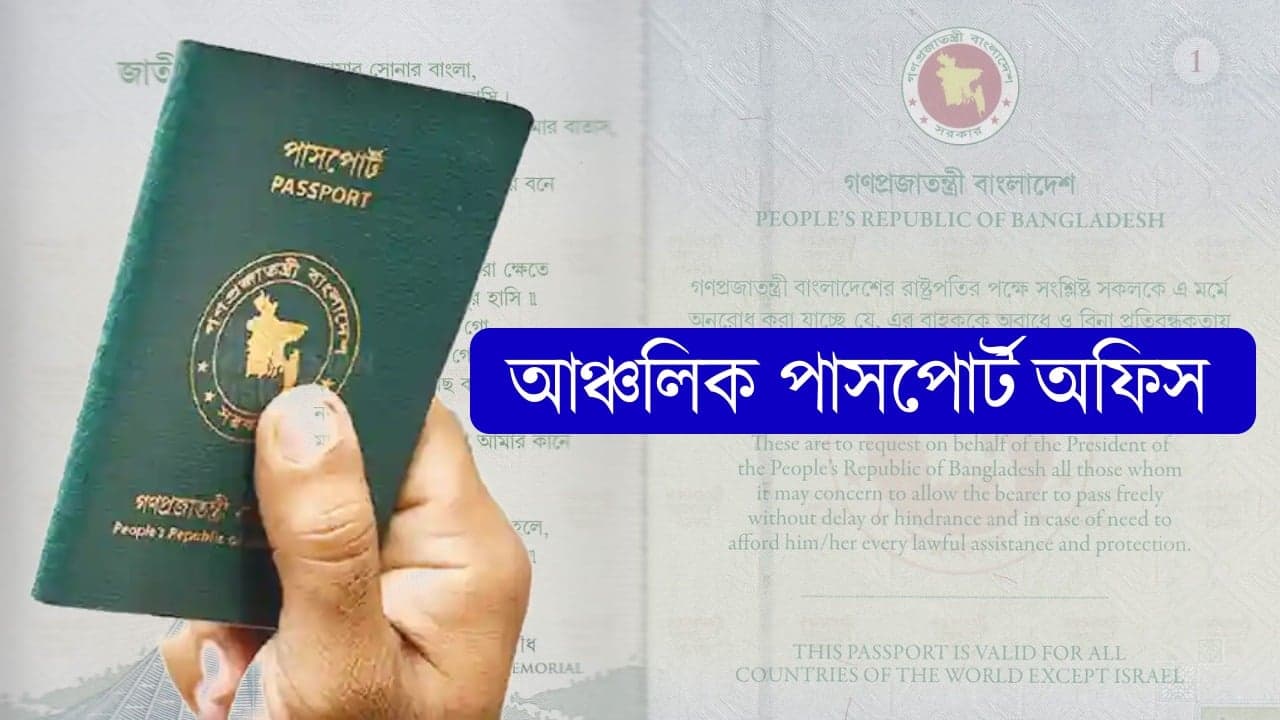

So, you have a task to do. You'll get a launch ticket for Chandpur. And after going, bring the documents." With a sarcastic smile, the government employee, busy at the passport office, directed the purposeful service-seeker with a tone of dismissal, gesturing with his hand from the other side of the glass wall to move away. After a moment of hesitation, the disappointed person walked away, perhaps to catch the launch to Chandpur; however, the imprint of disappointment and bewilderment was not confined to his face alone. Holding documents in hand, he joined the line, standing amidst the sweltering heat of fifty-degree Celsius faces of other frustrated citizens. If this picture from the passport office seems normal to the reader, one must understand that the problem runs deeper.
In the past few years, Bangladesh has made significant advancements in infrastructure, notably with projects like the Padma Bridge, Dhaka Metro Rail, Bangabandhu Satellite, and the upcoming Rooppur Nuclear Power Plant. However, one major milestone in Bangladesh's progress is its adoption of information technology for citizen services. Many bureaucratic tasks have been made accessible through digital platforms, such as obtaining tin numbers and national identity cards. Upgrading to e-passports now requires only your national ID number, simplifying the appointment process significantly. The website is user-friendly, making navigation easy even for those not proficient in English. The system automatically sends follow-up instructions and necessary documents via email as PDF files (although there have been issues with Bengali Unicode script breaking in the forms, which it is hoped the administration will address). Service fees can be paid online or through bank drafts, reducing the chances of administrative errors and making life easier for citizens. While these online services have streamlined processes and made life more convenient, challenges arise when transitioning from online to offline services, often resulting in frustrating experiences for citizens.
The website's automated system determined based on my address that I needed to go to Basila in Mohammadpur. Typically, I'm accustomed to handling passport-related matters in Agargaon; however, without following the system's appointed appointment, there was no alternative. Additionally, I was curious about experiencing a new office. Upon reaching Basila, I immediately noticed the discomfort evident on people's faces. I had a feeling that getting the job done would take time. The office space itself didn't seem well-planned either. It seemed like someone had rented a house or building for an office. The setup of the counters and information kiosks was such that forming a proper line was challenging. The conduct of the kiosk staff left much to be desired. Observing their behavior, it seemed as though people felt greatly annoyed when approaching them (even though they were being directed to him from other counters). Despite possibly carrying out their duties correctly, their demeanor and attitude were not conducive to service delivery.
Even the service seekers seemed disheartened. "Sister, is there any point in waiting so long?" After enduring many moments of patience, one woman finally asked another woman standing behind her. It wasn't just the women's line; people were jostling against each other in the men's line as well. In Western government offices, there's no concept of lining up based on gender, but observing the crowd, I understood why separate lines were arranged based on gender. There was no proper ventilation or air conditioning control. If there were two fans, only one would work, creating discomfort. Surviving a little in the scorching heat amidst the crowd and commotion, my concerns were elsewhere.
The female counter staff at the service center was continuously cautioning people. Not having the fan working added to her discomfort, evident from her visibly distressed state. Due to work-related stress, she was handling her station at a sluggish pace, exacerbating the frustration of the crowd. "There's no shortage of fools among them," someone said in exasperation. Another angrily replied, "They haven't hired competent staff; is that our problem? This suffering is the fate of these people. People don't realize that." "Haha, that's right," many softly agreed with him. Some began making sarcastic remarks: "This is your Digital Bangladesh. Do you understand? The illusion of Bangladesh."
As the disgruntled crowd continued to murmur and grumble, a line formed in front of the counter. At times, I noticed the line inching closer to the counter. It was precisely at such moments, when I approached the counter and uttered, "I'll plant sugarcane, and you'll sow jaggery," that it was time for the service provider to caution me. Cautioning was quite natural, particularly considering the nature of their work. Such a large number of people and such an environment demand crowd management tactics, especially in small places like the Basila office, where backup arrangements are essential.
The behavior of both the officers and the staff at this location poses a problem. In North American government offices and vehicles, there are posters with "zero tolerance" written on them, stating: "Swearing, threats, or any act of violence will not be tolerated. Anyone giving verbal abuse to members of staff will be asked to leave the premises!" If we think about bringing this kind of disciplinary etiquette into Asian countries, we should remember that in Japan, for instance, if a train is delayed, the conductor himself comes in front of the passengers, apologizing. Even if we can't reach Japan's level, there's no reason not to strive for improvement.
Showing companionship with a service seeker to exhibit humane conduct falls under the responsibility of a government employee just as much as rendering service does. In North American offices, there are various signs indicating that violence or abusive behavior will not be tolerated. Back in the office, managing the commotion on top of carrying out one's duties and dealing with officers who say, "Bring this document, bring that document, you have to go to this office, you have to follow this person," often pushes people beyond their limits.
An attempt by one service seeker to explain to others standing in line was quite interesting. He said, "You should ask the officers about these things. They're Ansar; what can you expect from them?" His pun went over the heads of the impatient crowd, but it surely reached the ears of the Ansar officer. In such adverse times, expressing a little resentment in response to genuine camaraderie, he said, "At least one person understands my situation! Brother, I'll buy you coffee for your words!"
The scenario at the passport office was chaotic, to say the least. Among the four counters, two were designated for receiving applications divided by gender. Similarly, the two counters for passport issuance were also divided by gender. However, amidst the line for passport issuance for women, there stood a young girl, possibly accompanied by her guardian. Assuming that the guardian had come to collect her daughter's passport due to the absence of any minor being allowed to collect passports, the officer glanced at the passport, then at the girl, and finally glared disapprovingly at the respectable gentleman.
His serene demeanor was momentarily replaced by a look of suspicion, as if he had just caught a thief red-handed. Despite the line for women being shorter, he took matters into his own hands, retrieved the passport himself, and handed it over to the girl, all the while giving the gentleman a disdainful look. I, on the other hand, if I were the officer, would have directed the gentleman to the back of the men's line, perhaps not wanting to offend the elder gentleman more than necessary.
Eventually, the officer returned the application, realizing that the birth certificate was required, despite the email document stating that an NID card and passport would suffice. The mistake in the online form probably necessitated the birth certificate. However, whether it was really necessary or not was doubtful, as the officer had been searching for the information, which was already in the previous passport.
I was asked to proceed to the letter dispatch area. Upon reaching there, a stranger approached me, offering to expedite the approval of my file for a certain amount of money. Although unsure of the veracity of his claims, I had no desire to investigate the matter. Firstly, because I did not want to involve myself with unknown individuals, and secondly, why should I encourage such misconduct?
Leaving the office with my documents, I encountered yet another incident. A polite lady bypassed the line, taking her son inside first. When questioned, she calmly presented her reasons: "1. It's not easy to get leave from work, and 2. I work for Bangladesh Betar (sorry, BTV)." For a long time, I had observed people enduring the chaos and frustration of waiting in line, but she moved freely from the passport office to this room. Perhaps she was familiar to someone here. Or maybe being a member of Bangladesh Betar (sorry, BTV) granted her some special privileges that ordinary citizens like us did not have. Because everyone else, including their bosses, found it difficult to get leave, but she was calmly navigating through the chaos without facing any consequences.
The correction of errors in the application took a frustratingly long time. During the photo-taking process, it was indicated that photocopies of the previous passport and national ID card were required. This crucial information was only received when it was time to take the photo. If we had known this beforehand, we could have made arrangements. There was a photocopy shop conveniently located near the office (as we didn't have this information, at least the availability of such a shop was beneficial).
Breaking through this bureaucratic maze repeatedly was tolerable for me, but I was concerned about those who are elderly or have mobility issues. I received another lesson: it's not just about providing evidence, but in any official work in Bangladesh, it's advisable to have multiple copies of the same evidence.
The frustration continued. I applied for express delivery for passport renewal, thinking it would be a quick process, only to return home empty-handed. Amidst the chaos, I found myself sandwiched between two batters in a cricket match, feeling as if I were being tossed around like a ping-pong ball. I thought about how challenging this must be for those unfamiliar with the process or coming from remote villages.
After a few days, I received a text on my mobile: my passport was ready for pickup at the regional office. Off I went again, armed with documents. The same divine comedy ensued. The crowd, the pushing and shoving, the discontent, it was all there. Some even made harsh comparisons to earlier days regarding the efficiency of the staff. Upon reaching the counter, I learned that the passport wasn't at this office; I had to go to Agargaon. I felt disheartened. "But it's written here," I protested. "Where is it written?" How would I know whether the text message included the exact address of the regional office or how would I confirm it? Such incomplete information causes immense frustration for those not residing in Dhaka or living abroad. Couldn't they have sent a text with the pickup office's address? I hope the administration incorporates this feature into their program.
As I headed to Agargaon, I feared facing another circus. But Agargaon surprised me. It wasn't just Ansar, there were members of the armed forces acting as guards. With efficient management, a structured system, and albeit slightly stern but competent officers, everything proceeded smoothly. Despite the crowded atmosphere, I got my passport in less than an hour. Some might say, "The Agargaon office is big, and with military personnel present, such excellent arrangements are possible." But will those who suffer through endless hassles and frustration every day listen to such reasoning? What value do these justifications hold for someone seriously ill needing urgent treatment abroad, for whom obtaining a passport quickly is essential?
My friend, who works in a government office abroad, was sharing stories about his workplace. Once, his colleagues requested their supervisor for the provision of free tea or coffee in their office, similar to corporate offices. However, the supervisor didn't agree because providing such amenities would incur additional expenses, which ultimately come from taxpayers' hard-earned money through various taxes. While my friend was willing to bear the essential expenses for services to taxpayers, like providing necessary facilities, he found providing tea or coffee unnecessary. He expressed, "There are two or three coffee shops nearby. You can go during breaks and have coffee at your own expense. It's not on the taxpayers' bill." He emphasized that files aren't just numbers; they represent individuals' lives and dreams. He reiterated the importance of being public servants and serving with dignity and respect.
Not everyone may think the way my friend's office does. However, since their efficiency is constantly evaluated, officers are compelled to conduct themselves appropriately. Otherwise, there might be issues with promotions. Moreover, if any employee faces repeated complaints from service recipients, there's a possibility of dismissal.
You might think I'm dreaming of utopia, which is not possible in a country like Bangladesh. If you hold such beliefs, dear reader, you're not a part of the solution but rather a contributor to the problem. If even ten percent of the population keeps pushing for accountability and transparency in various government offices, change will come sooner than expected. The administration also has a responsibility here. They should ensure that all government employees carry out their duties with accountability, and those failing to do so should face consequences.
I've achieved what I set out to do. Holding my passport in hand, I felt a sense of pride. The use of biometrics and birth dates on the front page of the principal identity document provides an added layer of security, reflecting our beloved red and green flag fluttering proudly on the passport's corner. To those who have planned their journeys with this passport, I wish them safe travels.
I believe the primary responsibility of a state is to enhance the quality of life and thinking of its citizens. It's not just about providing degree-based education or increasing GDP but about fostering holistic education, ethics, tolerance, and cooperation in the next generation. If the quality of government services improves, not only will we have a smarter Bangladesh, but we'll also raise smarter Bangladeshi citizens. A representative/diplomat of the country will emerge, embodying high standards, not only within the country but also in the global arena. Bringing about such significant changes in policy education won't happen overnight. I wish to awaken a sense of responsibility in everyone and urge for exemplary punishments for rule-breakers.
The authority to regulate the behavior of a passport officer with their patrons, the taxpayers, has been bestowed upon whom? Why isn't there adequate provision for the public in a local passport office? Why isn't there a clean restroom available? The administration, by providing incomplete information, is wasting the time and money of the citizens. This unnecessary reality is causing a tremendous loss of time, effort, intellect, and money for the entire nation, the calculation of which is almost impossible.
I hope that only with satellites, metro rail, Padma Bridge, Rooppur, and beautiful passports, Bangladesh's development and transformative changes will not be confined. The people themselves, and especially their government servants, will propel this change towards a renaissance that will establish Bangladesh as a progressive contributor to the integrated global community of the future.
Dear readers, please consider this article as a constructive criticism and an attempt at constructive critique. Do not hesitate to point out flaws and shortcomings, if you believe that our beloved Bangladesh should experience transformative changes and sustainable development.
Author: Poet, writer and social thinker
Leave A Comment