

1971 killing of intellectuals
Bruised and battered Selina Parvin in shallow pit of abandoned brick kiln
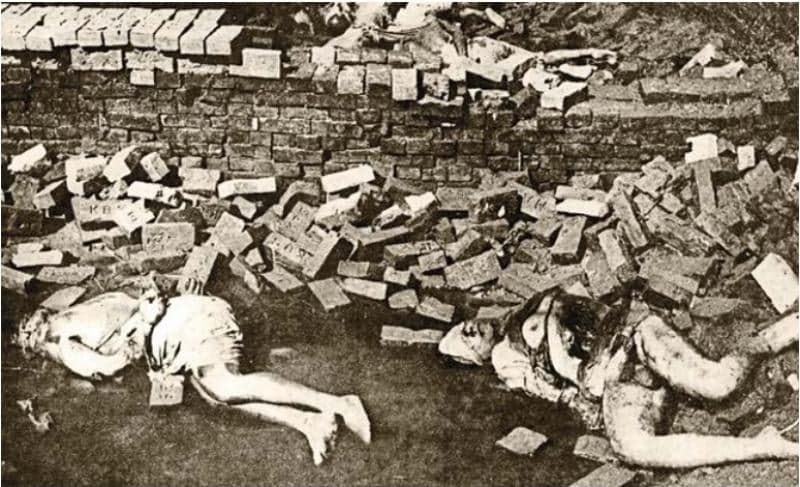

The Rayerbazar area, located on the outskirts of Dhaka city, was once quite desolate. It was a low-lying wetland along the riverbank. During the dry season, several brick kilns operated in this area, which was commonly known to the people of Dhaka as “Itkhola” (brick kilns). In newly independent Bangladesh, the bodies of the nation’s finest sons were discovered in the shallow, circular pit resembling a pond of one such abandoned brick kiln. These bodies bore marks of extreme brutality—chests and backs riddled with bullets, hands tied behind their backs, fingernails uprooted, various limbs crushed, bodies perforated by gunfire, deep bayonet wounds, and half-decomposed remains. These were the bodies of enlightened individuals—freedom-loving Bengali professors, doctors, lawyers, journalists, and professionals from other walks of life.
The discovery of these bodies in the wetlands of Rayerbazar took place on December 17, 1971, during the celebrations of victory. The air of Dhaka was then filled with the joy of a newly independent Bangladesh. Family members of those who had been missing for several days rushed to identify the bodies of their loved ones. Due to severe torture and partial decomposition, identifying the bodies was extremely difficult. However, one body was easily identified—it was that of journalist Selina Parvin.
Martyr Selina Parvin was the editor of the literary magazine Shilalipi. However, she had been involved in literature, culture, and journalism long before that. She was a politically conscious citizen with an uncompromising stance on Bengali nationalism and the rights of the Bengali people. Prior to Shilalipi, Selina Parvin was associated with the weekly literary and cultural magazine Lalona. This women-focused weekly was edited by Muhammad Akhtar. Selina Parvin worked as a reporter for the magazine and was also responsible for overseeing its commercial and advertising sections. In 1971, the publication of Lalona was discontinued. At that time, Selina Parvin became fully engaged with her own magazine, Shilalipi.
At the same time, while remaining in besieged Dhaka, she began assisting freedom fighters. She provided financial support, shelter, food, and warm clothing to Dhaka-based guerrillas and other freedom fighters. On the question of national liberation, she was uncompromising and often quite outspoken. This is precisely why she fell into danger—and ultimately paid the price with her life.
Selina Parvin came under the scrutiny of Rao Farman Ali, one of the principal planners of the intellectual killings. In 1971, any form of publication required approval from the Pakistani military authorities. While seeking approval for Shilalipi, Selina Parvin attracted the attention of the Pakistani military establishment. The magazine frequently used rural Bengali motifs and ornaments in its cover designs and layouts, which displeased General Rao Farman Ali, the chief advisor to the military government of occupied East Pakistan. He advised her to abandon Bengali cultural elements and publish the magazine in line with Pakistani ideology. Selina Parvin refused to comply and continued preparations to publish the magazine in her own way.
The proposed cover of the final issue of Shilalipi featured the flag of independent Bangladesh. That issue, planned with the national flag of Bangladesh, was never published. Before it could be released, Selina Parvin was brutally murdered by the killers.
On the eve of defeat, the brutal occupying forces, with the assistance of their local collaborators—the Al-Badr force—abducted Selina Parvin from her residence on New Circular Road. At that time, Al-Badr operatives were using a microbus to pick up identified intellectuals from different parts of Dhaka. Recounting the incident of Selina Parvin’s abduction, prominent women’s rights activist Maleka Begum wrote in her memoirs:
“On 13 December at around 10:30 in the morning, a few men came and said she had been summoned to the Ministry of Foreign Affairs and must go. Suman (Selina Parvin’s only son) was eight years old at the time and remembers everything. He says his mother had oiled his hair and sent him to the rooftop with his uncle, while she sat on the floor cooking. She said she would go after the curfew was lifted. They did not give her the chance. Suman wanted to go with her, but permission was denied.”
Another horrifying account of Selina Parvin’s murder is found in the book Shaheed Buddhijibi Kosh (Martyrs’ Dictionary of Intellectuals). The book contains testimony of the tragic events of 13 December 1971 as narrated by Selina Parvin’s son, Suman Jahid, who witnessed his mother being taken away.
He wrote:“I kept watching my mother through the crack of the door, somewhat blurred. While cooking, my mother used to keep a towel tucked at her waist to wipe her hands. They took that towel from her waist, then blindfolded her and tied her hands behind her back.”
(Page 447, Shaheed Buddhijibi Kosh)
He further stated: “On 13 December, my mother was abducted from our home in the afternoon. She was subjected to severe torture afterward—something I learned nearly 35 years after the Liberation War. I came to know about this from freedom fighter Delwar Hossain, who was also taken away. He survived because my mother was killed. He managed to escape by freeing his hands from behind, removing the blindfold, and running away.”
While leaving with the abductors, Selina Parvin told her four-year-old son Suman that she would return quickly after finishing her work. But she never returned. Along with other intellectuals, her mutilated body lay among the dead at the time of victory. Her lifeless body found its final resting place at the Rayerbazar brick kiln killing field. Because she was wearing a white sari along with white shoes and socks, the martyr was easily identified.
Leave A Comment
You need login first to leave a comment