
Chalan Beel's tourism dream on a water canvas
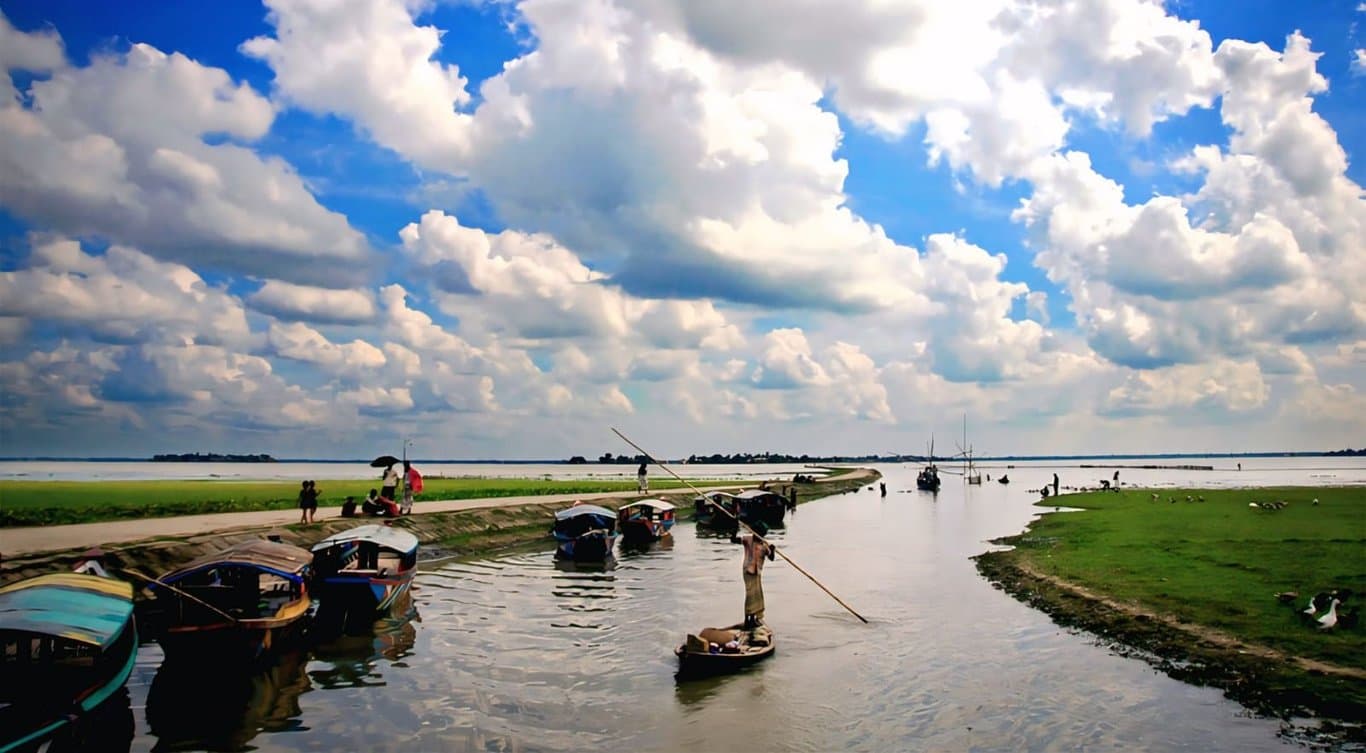

When the monsoon sky wipes away the bluish melancholy of clouds and turns into watercolour, Chalan Beel also changes its familiar form. A vast expanse of water stretching to the horizon, boats floating in the distance, the splash of oars, the bustle of fishermen and the fragrance of water lilies and lotus—together they make it seem not like a beel but a vast water portrait painted by nature's own hands.
Chalan Beel's beauty, however, is not limited to the monsoon alone. In autumn, the reflection of the blue sky falls on the mirror of water; in late autumn, the golden smile of ripe paddy spreads all around; in winter, the chirping of guest birds drifts through the blanket of fog. With the change of seasons, Chalan Beel's form changes, and each season becomes a different travel experience.
Spread across the vast tracts of Natore, Pabna and Sirajganj, Chalan Beel is essentially a vast aquatic network of rivers, canals, beels and wetlands. Various rivers and waterways, including the Atrai, Baral and Gumani, turn it into an extensive waterway during the monsoon. Sailing by boat, sometimes through a river, sometimes through a beel, it feels as if one has entered an endless water kingdom.
Alongside this expanse of water, Chalan Beel has a rich history and heritage. The Chalan Beel Museum, established in 1978 at Khubjipur in Gurudaspur, preserves ancient artefacts, inscriptions, terracotta, fishing equipment and various memories of the life and culture of the beel banks. Nearby are the Chapila Shahi Mosque, the shrine of Ghashi Dewan in Singra, the zamindar house in Tarash and ancient structures in Chatmohar, among various historical relics. If the rivers and beels, biodiversity and these heritage sites can be linked in a tourism route, Chalan Beel could become one of the most attractive destinations in the northern region.
The potential for eco-tourism centring on Chalan Beel has also come to the fore anew. In August 2026, Minister for Civil Aviation and Tourism Afrozah Khanam, visiting Tarash, spoke of assessing the feasibility of an eco-tourism project centring on Chalan Beel. If planned initiatives are implemented, new areas of employment could be created around boat trips, local food, trained guides, handicrafts, agricultural products and folk culture.
However, before tourism, the most important question is saving Chalan Beel. Due to encroachment, siltation, reduced navigability, obstruction of water flow and unplanned structures, its natural environment and biodiversity are under threat. If the very water body around which the dream of tourism revolves shrinks, that dream too will one day be lost.
Therefore, tourism development in Chalan Beel must be nature-friendly. Alongside safe boat trips, bird watching, eco-friendly cottages, local food and folk cultural events, strict measures must be taken to control waste and plastic. At the same time, historical structures must be included in an integrated tourism plan.
Chalan Beel is not just a wetland; it is a living story of soil, people, fish, birds, boats, folk songs and a way of life. If that story can be kept alive and a new door of tourism opened in harmony with nature, a new dream for a region can be painted on this vast canvas of water.
Leave A Comment