

Children trapped in screens: Urban childhood and autism awareness
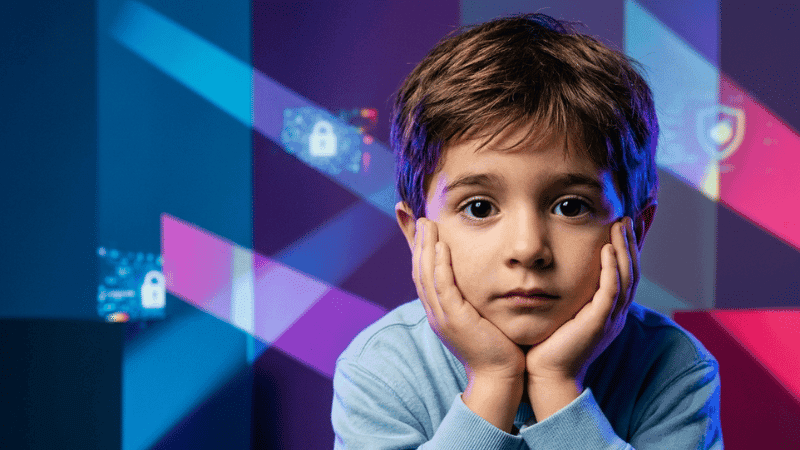

Today is April 2 — World Autism Awareness Day. Every year on this day, we discuss the rights of people with autism and their inclusion in society. But alongside autism awareness, there is another serious problem we must pay attention to — the harmful effects of today's "urban childhood" and device-dependent lifestyle on children. It is time for science-based research on how excessive screen use is blocking children's normal development and making autism-like symptoms worse.
We are, with our own hands, pushing the next generation toward deep unrest. From morning to night, a 3–4 year old child spends more than half the day in the artificial world of a mobile phone or tablet. They do see the sky — but not the open blue sky outside the window. Instead, it is an animated sky inside a screen. Children are learning about butterflies, flowers, and birds through colored pixels. As a result, they are being deprived of their natural right to smell fresh earth and feel the open air. This disconnection from the real environment is a serious blow to a child's brain and social development.
A large part of the games and videos children watch on screens contain violence and negative content. Constantly engaged in virtual worlds of war, fighting, and destruction, children unknowingly start carrying those qualities into real life. They begin to think that winning means defeating or destroying others. This toxic competition damages their inner human empathy and sensitivity. Parents also feel a false sense of satisfaction by pushing their children into this race. But this unhealthy competition is actually harming children's mental balance — making them withdrawn and lonely.
Medically, autism is a complex condition related to brain development, caused by a combination of genetic and environmental factors. However, some experts are now pointing out that excessive screen use can create behavioral problems similar to autism — sometimes called "virtual autism." After spending long hours alone in front of screens, children forget how to make eye contact. They experience speech delays and feel awkward in social situations. While experts still debate whether screen time directly causes autism, it is certain that excessive screen use makes existing autism symptoms worse. When parents hand a phone to a child just to keep them quiet, they are actually narrowing the child's path to learning normal communication.
It is widely recognized that a child's own culture, language, and arts are important for healthy development. But what kind of environment are we actually creating at home? From the morning, foreign cartoons and cultures take over — through the TV, mobile, tablet, YouTube algorithms — all pulling children away from their roots. As a result, many children feel more comfortable speaking in foreign accents or a mixed language rather than their mother tongue. Instead of traditional folk characters, mechanical superhero figures are filling their minds. This cultural imitation blocks the formation of a child's own identity and pushes them into a kind of restless rootlessness.
The responsibility for this crisis does not belong to one person alone — but both the state and families must take action. Theoretical discussions alone will not solve anything. We need practical steps:
Co-viewing: Instead of leaving children alone in front of screens, parents should sit with them, discuss what they are watching, and prevent a one-sided relationship with screens.
Family Playtime: Every day, at least one hour of "parent-child play time" should be set aside with no digital devices.
Social Networks: Neighbors should come together to create small play groups for children and bring back a "neighborhood play culture."
Cultural Connection: Play local songs, poetry, and folk stories at home. Good local content can also be shown on devices — but preferably on a TV's large screen rather than a small phone screen.
World Autism Awareness Day reminds us that every child has the right to grow up in a healthy and normal way. Let our commitment be this — we will not hand our children over to technology alone. We will create a warm, sincere, and human environment for them. Remember: the artificial light of a screen must never become a substitute for the open blue sky. Do we want a generation that is disconnected, emotionless, and increasingly mechanical? Or do we want a healthy, thoughtful, and creative future? The decision is ours. Ensuring our children's right to healthy development is not an act of charity — it is a moral duty for our own survival.
Mehedi Hasan Shoeb: Journalist, writer, and children's organizer.
Leave A Comment
You need login first to leave a comment