
Climate change and Climate justice: Why Bangladesh deserves global support
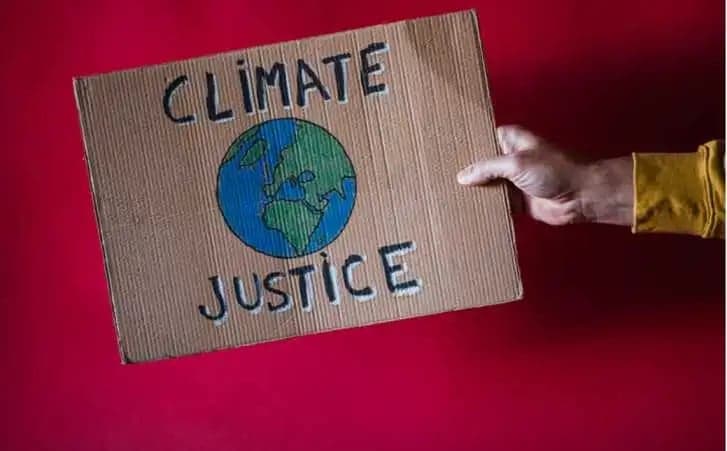

The climate crisis exposes deep inequalities in our world. Some of the countries and communities that have contributed the least to global greenhouse gas emissions are facing the most severe consequences of climate change. Bangladesh is one such example.
As the world observes World Environment Day on 5 June, it is important to reflect not only on protecting our environment but also on addressing the growing inequalities created by climate change. The climate crisis is no longer just an environmental issue; it is increasingly becoming an issue of justice, equity, and human rights.
The recent warning from the World Meteorological Organization (WMO) is significant because it reminds us that climate change is no longer a distant future concern. It is already affecting lives, economies, ecosystems, and human security across the world.
Communities are experiencing stronger floods, longer droughts, more intense heatwaves, growing risks to food and water security, and increasing health challenges. For countries like Bangladesh, these impacts are especially severe. Coastal populations, farmers, and urban communities face rising risks, yet Bangladesh has contributed very little to global greenhouse gas emissions.
This raises a fundamental question of climate justice: why are those who have contributed the least to climate change suffering the most from its impacts?
Bangladesh's Vulnerability
Bangladesh is one of the most climate-vulnerable countries in the world. Every year, millions of people experience:
Severe Flooding and Riverbank Erosion: Entire villages and vast areas of agricultural land are being washed away overnight as rivers continue to erode their banks.
Cyclones and Storm Surges: Powerful cyclones and tidal surges regularly breach coastal embankments, causing widespread destruction to homes, livelihoods, and infrastructure.
Salinity Intrusion in Coastal Areas: Increasing salinity is creating severe shortages of safe drinking water and reducing the productivity of agricultural land.
Extreme Heatwaves and Drought: Rising temperatures and prolonged droughts are disrupting agricultural activities, particularly in the northern and western regions of the country.
Crop Loss and Food Insecurity: Climate-related disasters are causing significant crop damage, threatening food security and placing additional pressure on the national economy.
Loss of Homes and Climate-Induced Displacement: Many people are losing their homes and sources of livelihood, forcing them to leave their communities and become climate migrants.
As a result, communities lose homes, livelihoods, educational opportunities, and health security because of a crisis they did not create.
This is not only an environmental problem. It is also a matter of human rights, fairness, and social justice.
Historical Responsibility of Industrialized Nations
The current climate crisis is largely the result of more than a century of industrialization in high-emitting countries. Many developed nations built their economies through the extensive use of coal, oil, gas, and industrial processes that generated massive greenhouse gas emissions.
Developing countries like Bangladesh are now bearing the consequences through environmental damage, economic losses, and human suffering.
This creates a strong ethical responsibility for high-emitting nations to support vulnerable countries in adapting to climate change and recovering from its impacts.
The Importance of the Loss and Damage Fund
One of the key outcomes of recent United Nations climate negotiations has been the establishment of the Loss and Damage Fund.
This fund is intended to support countries like Bangladesh in addressing climate-related losses and damages. Such support can help communities recover, invest in adaptation measures, support climate migrants, and strengthen resilience.
Compensation for climate-related losses should not be viewed as charity. It is a matter of accountability and global responsibility.
What is now required is effective and timely implementation.
Climate Migration in Coastal Bangladesh
Rising sea levels and salinity intrusion are forcing many coastal families in Bangladesh to move to urban and semi-urban areas. This creates additional pressure on cities and generates new social and economic challenges.
Climate migration affects education, health services, employment opportunities, and community stability. Addressing these challenges requires not only national efforts but also international cooperation and financial support.
Ethical Responsibility versus Political Interest
Although climate action is regularly discussed in international forums, implementation is often slowed by political and economic interests.
Climate-vulnerable countries like Bangladesh continue to call for fair, transparent, and timely support from wealthier nations, rather than empty promises. The fundamental question facing the global community today is whether world leaders are willing to rise above short-term political interests and narrow economic considerations to prioritize humanity, ethical responsibility, climate justice, and the well-being of people.
Role of NGOs and Civil Society
In Bangladesh, NGOs and civil society organizations have been playing a highly commendable and forward-looking role in addressing the growing impacts of climate change and supporting vulnerable communities in their struggle to survive and adapt.
Working closely with communities at the grassroots level, they have been implementing a wide range of initiatives, including:
● Community-based disaster management and the formation of local volunteer groups.
● Strengthening early warning systems through a combination of modern technologies and local knowledge.
● Promoting climate-resilient agricultural practices and creating alternative livelihood opportunities.
● Building the resilience and adaptive capacity of vulnerable communities through field-level interventions and capacity-building initiatives.
At the same time, these organizations continue to advocate at both national and international levels for stronger climate policies and increased climate financing. Through their efforts, the voices of climate-affected and marginalized communities are being amplified in global discussions on climate action and climate justice.
Drawing from my long experience in the development sector and direct engagement with various international development partners, I have witnessed firsthand how climate change is affecting people's lives far beyond environmental degradation. It is undermining livelihoods, disrupting children's education, affecting public health, and weakening overall social protection systems.
Despite their limited resources and reliance on traditional knowledge and coping mechanisms, vulnerable communities continue to fight for survival and adaptation. However, the scale and intensity of the climate crisis are increasingly exceeding their individual capacity to respond.
This is why institutional support, international cooperation, and sustained climate financing are no longer optional—they are essential.
Youth Voices and Hope for the Future
Across the world, including in Bangladesh, young people are increasingly demanding stronger and more effective action against climate change. Their movement is rooted in the principle of intergenerational justice, which recognizes that the decisions made today—and the emissions produced by the current generation—will directly shape the future of generations to come.
In simple terms, if today's leaders fail to take timely and responsible action, it is future generations who will bear the greatest consequences. They will inherit a world facing greater environmental, social, and economic challenges.
In Bangladesh, young people are not remaining silent. They are taking the lead in raising climate awareness, promoting large-scale tree plantation, protecting the environment, and advocating for renewable and solar energy solutions through various community and social initiatives.
Their message to world leaders is clear and loud: climate change is not merely an environmental or scientific issue. It is a social, economic, and above all, a moral challenge that demands urgent and collective action.
The future that young people inherit will depend largely on the choices we make today.
Conclusion
Climate change is not merely an environmental crisis; it is one of the defining justice issues of our time. The farmer who loses his crops, the family displaced by riverbank erosion, and the child facing an uncertain future are not responsible for creating this crisis. Yet they are paying its highest price.
Countries like Bangladesh have repeatedly demonstrated remarkable resilience, innovation, and determination in the face of adversity. However, the scale and complexity of the climate crisis have now reached a point where no country, government, or community can address it alone.
The time has come to move beyond commitments and towards meaningful action. Climate justice will only be achieved when responsibility, resources, and opportunities are shared more fairly among nations and communities.
One day, history will ask us a simple but profound question: during the climate crisis, did we merely talk about the problem, or did we have the courage to take the right decisions for future generations?
The answer will depend on the choices we make today.
Leave A Comment