
COP31 awaits tangible progress beyond promises
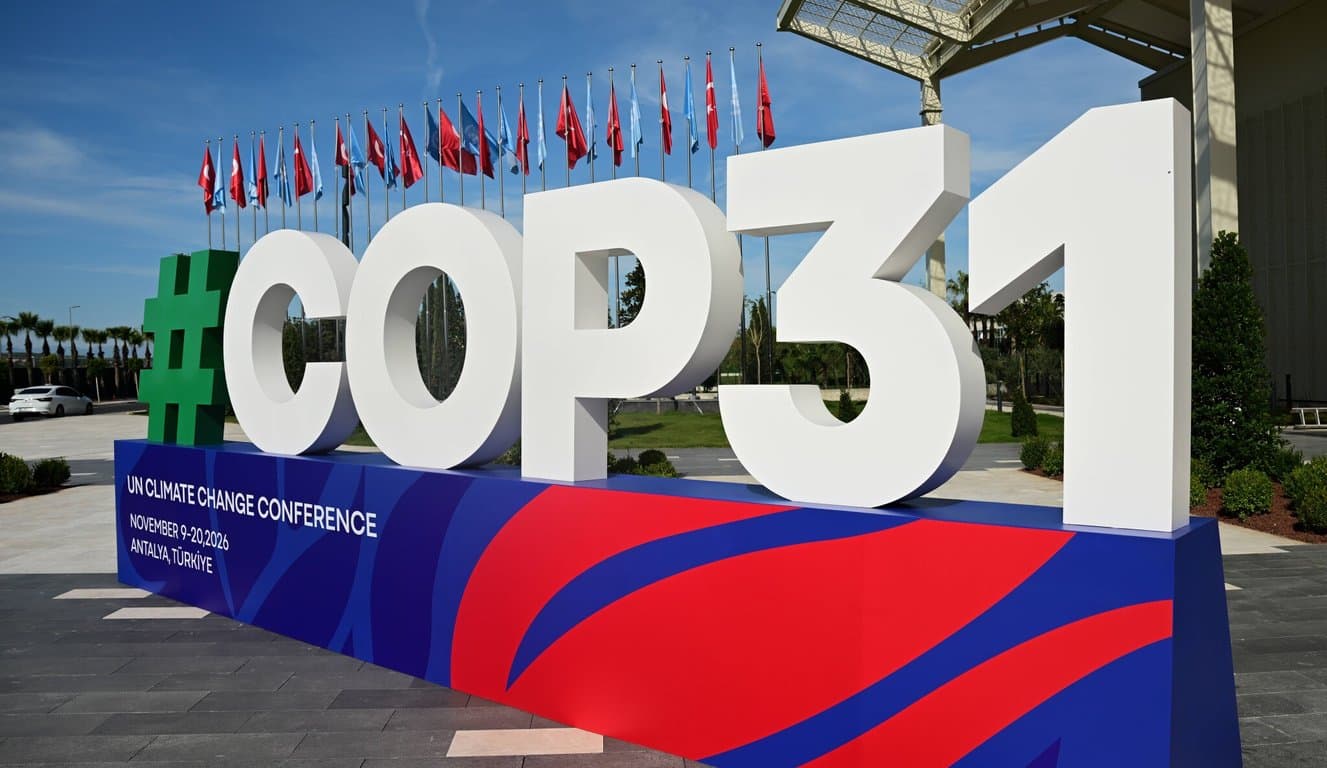

As the planet continues to warm under the growing impact of climate change, world leaders and representatives have gathered once again for an international climate summit. The familiar goals remain unchanged: reducing carbon emissions, supporting countries hardest hit by climate disasters and securing a liveable planet for future generations.
Yet despite successive pledges at previous Conferences of the Parties (COP), environmental disasters continue to intensify. Against this backdrop of uncertainty, the 31st United Nations Climate Change Conference, COP31, has begun in Antalya, Turkey. Although more than 100,000 participants are expected to attend, questions remain over whether the summit will deliver major decisions or tangible progress.
The conference, which began on Monday, is bringing together leaders and representatives from around 190 countries. The United States, however, is not sending an official delegation. Organisers hope this year's discussions will go beyond the formal announcement of promises and produce outcomes that ordinary people can feel in their daily lives.
Chris Bowen, Australia's climate and energy minister and president of the conference negotiations, said progress on delivering commitments to cut emissions and provide climate finance must go a step further than the outcomes of previous summits.
However, significant obstacles remain. Deep-rooted disagreements between wealthy and developing nations over responsibility for climate-related losses and damage, as well as the sources of funding, remain unresolved. Meanwhile, progress in reducing greenhouse gas emissions is slower than expected. The world has already exceeded the 1.5-degree Celsius threshold set under the 2015 Paris Agreement to limit global temperature rise above pre-industrial levels.
Adão Soares Barbosa, chair of the negotiating group representing the 44 least developed countries, said that even though the temperature threshold had been breached, it was crucial to limit how far temperatures rise beyond that level and how long they remain elevated.
He also stressed the need for accessible and predictable climate finance, stronger adaptation capacity and effective support for poorer countries affected by extreme weather events.
"This is not merely a matter of political decisions; it is a question of people's survival," he said. The success of the Paris Agreement, he added, would be measured not by the number of commitments made but by how many were implemented and how effectively vulnerable communities were protected.
This year's summit also features an unusual arrangement. While the conference is being hosted in Antalya, Turkey, Australia is presiding over the formal negotiations under an agreement between the two countries.
Australia wants to place particular emphasis on protecting the existence of small island nations in the Pacific. It says these countries receive just 0.2 per cent of global climate finance despite facing existential threats from rising sea levels and climate change.
Australia's own climate credentials, however, have come under scrutiny. More than 500 scientists and climate activists in the country have accused the government of pursuing a contradictory approach by advocating climate protection while continuing to approve coal and gas projects. As one of the world's largest exporters of coal and liquefied natural gas, Australia faces a significant challenge in reconciling these positions.
The absence of the United States has added another dimension to the discussions. For the second consecutive year, Washington is not sending an official delegation. The Trump administration has maintained that it is not involved in climate policies supported by other countries.
However, 20 Democratic members of the US Congress are attending the summit. They hope to help address political obstacles to expanding clean energy and controlling environmental pollution.
Meanwhile, the consequences of the climate crisis are already being felt far beyond the conference halls. More than 50,000 people died during this year's summer heatwaves in Europe. Smoke from wildfires spread across vast areas of North America, while glacier collapses and landslides in Nepal claimed more than 1,500 lives. Concerns have also grown over the prospect of a powerful El Niño event.
Scientists say its intensity has yet to reach its peak. At the same time, disruptions in energy markets caused by the Iran war have once again highlighted the risks of dependence on fossil fuels. In contrast, the cost of renewable energy sources such as solar and wind power continues to decline.
Against this backdrop, expanding the use of electricity-based technologies is also emerging as an important issue at COP31. One proposal under discussion could set a target of supplying 35 per cent of the world's total final energy consumption through electricity by 2035. The expansion of technologies such as electric vehicles and heat pumps is also on the agenda. However, opposition from countries heavily dependent on fossil fuels could stand in the way of such initiatives.
The relationship between climate change and public health has also received particular attention at this year's summit. The concept of "One Health" recognises that human, animal, plant and environmental health are interconnected rather than separate concerns. A disruption at any stage of agriculture or food production can have consequences throughout the wider ecosystem.
Kunrui Huang, a professor at China's Tsinghua University, has also highlighted how climate change is increasing the risks of zoonotic and parasitic diseases.
Bangladesh's traditional agricultural practices offer another illustration of this interconnected relationship. In the past, farmers cultivated crops in harmony with soil, water, insects, livestock and local biodiversity. But the expansion of chemical-dependent farming, corporate control and poorly planned food systems has gradually disrupted that balance. Indigenous rice varieties are disappearing, dietary habits are changing and the longstanding relationship between people and nature is increasingly under threat.
From Turkey's traditional fermented drink boza to Bangladesh's panta bhat, food also carries the history of climate, nature and culture. Climate change is disrupting supplies of millet, maize and wheat used to make boza, while the disappearance of indigenous rice varieties is erasing important chapters of Bangladesh's agricultural heritage.
Protecting the climate, therefore, means more than simply limiting temperature rises. It also means safeguarding people's food, culture, livelihoods and their relationship with the natural world.
UN climate chief Simon Stiell has also emphasised that climate change is now affecting every community and economy. The links between climate action, clean energy, employment and economic growth are becoming increasingly clear.
The central question, however, is how much of this understanding will translate from conference halls into action on the ground. The planet is no longer waiting for another round of climate pledges. It is waiting for meaningful action.
Leave A Comment