
Cry of innocent childhood behind closed doors: What is state’s responsibility?
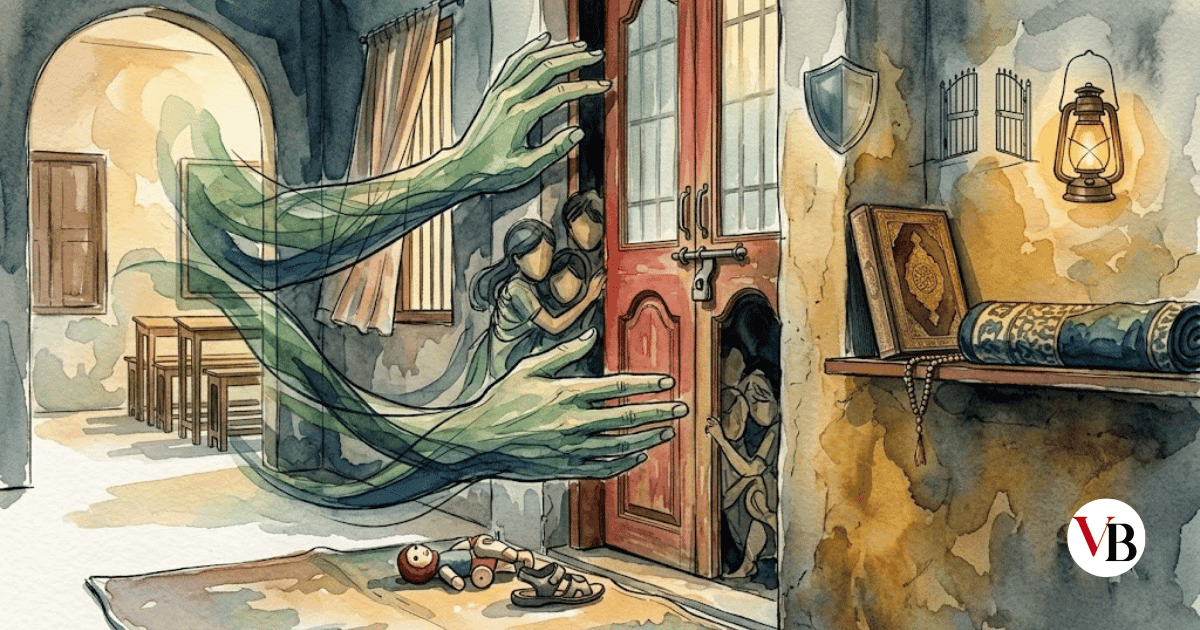

Urgent state intervention is essential to confront the disturbing culture of child sexual abuse, rape and institutional cover-ups concealed behind the sanctity of religious education.
A series of allegations involving the rape, sexual abuse and inhumane treatment of children at madrasas across Bangladesh has confronted the nation’s conscience with deeply troubling questions. When teachers at institutions meant to teach children religious values, morality and purity of character are accused of violating their students’ dignity, childhood and safety, what becomes of those institutions’ moral legitimacy? Can an institution established in the name of religious education become a safe haven for perpetrators? Does wearing religious attire, a turban or a beard, or identifying as an Islamic scholar, place anyone above the law?
Recently, the deputy principal of a madrasa in Tongi, Gazipur, was accused of sexually abusing a seven-year-old girl in Class One. According to a report published on 23 October 2026 by a leading English-language national daily in Bangladesh, the accused teacher threatened to beat the child if she disclosed what had happened. Terrified, the girl stopped attending the madrasa for three days. After she told her family, the teacher was arrested on the basis of the complaint and sent to jail through the court. The question is this: why should the presence of a religious teacher inspire terror rather than a sense of security in the mind of a seven-year-old child?
Even more shameful are allegations that the madrasa authorities sided with the accused teacher and filed a false case against the victim’s father for speaking out. The allegation that Tk 1.7 million was snatched is, according to the writer, fabricated and widely known to be so.
In the same month, a teacher and a person associated with the management of a residential Qawmi madrasa in Gacha, Gazipur, were arrested over allegations that an eight-year-old student had been raped on three consecutive nights. According to the case details, the accused teacher woke the child from sleep, took the child to an isolated place and sexually assaulted them, threatening physical violence if they told anyone. The allegations also point to an attempt to cover up the incident. If substantiated, the case would demonstrate not only an individual teacher’s criminal conduct but also a grave failure of the institution’s internal child-protection system.
In September, allegations emerged that a seven-year-old child had been subjected to repeated sexual abuse by a group of people over a period of six months at a madrasa in Savar. Ten people, including teachers and students, were named as accused in the case, and police arrested five of them. According to the allegations, some teachers were involved not in preventing the abuse but in the mistreatment of the child and efforts to protect those accused. What could constitute a more devastating betrayal of trust than a teacher, from whom a child expects protection, becoming the child’s abuser?
In September, a teacher was also arrested in Fatullah, Narayanganj, over allegations of repeatedly sexually abusing a 17-year-old student at a residential madrasa. Earlier, media reports had also covered the arrests of madrasa teachers accused of sexually abusing students in Kumarkhali, Kushtia, and Banshkhali, Chattogram. In some cases, children are allegedly intimidated; in others, religious authority is abused; elsewhere, attempts are reportedly made to settle allegations through informal mediation. Together, these incidents point to a deep institutional crisis.
This is not merely a series of isolated news reports. According to media-based monitoring published on 1 October 2026 by JusticeMakers Bangladesh in France, 72 incidents of rape and attempted rape of boys at madrasas were documented between January and September this year, involving 109 victims. The organisation’s monitoring identified allegations of rape or attempted rape against 81 madrasa teachers in 65 incidents. These figures reflect allegations documented through media reports, not crimes proven in court. Nevertheless, there is no moral justification for ignoring them.
Most troubling is the tendency at some madrasas to conceal allegations of abuse in the name of protecting the institution’s reputation. In some cases, families of victims are allegedly intimidated; in others, they are urged to remain silent in the name of social standing. Elsewhere, serious criminal allegations are reportedly reduced to disputes that can supposedly be settled through informal mediation. Yet child rape is not a private family disagreement. It is a serious criminal offence. Suppressing such allegations to protect the image of a religious institution represents a profound failure of morality.
This is where religious dogmatism and blind obedience can play a dangerous role. Addressing a teacher as Huzur does not make that person immune from allegations. A true Islamic scholar is distinguished by morality, humanity and character. It is wrong to conflate the crimes of those who abuse children under the cover of religion with the honour of religious scholarship itself. Wearing the mask of a religious scholar does not sanctify the actions of an oppressor.
The state must now overhaul child-protection systems within madrasas. Residential institutions, in particular, should be subject to mandatory registration, regular independent inspections, proper background checks for teachers, safe and confidential channels through which children can report abuse, and unrestricted communication between students and their guardians. Every allegation of sexual abuse must be investigated impartially, with child-sensitive judicial procedures and appropriate rehabilitation and support for victims.
The authorities of any madrasa found to have concealed allegations despite knowing about the alleged offences, or to have helped an accused person evade justice, must also be held accountable under the law. Where institutional complicity in serious crimes is established, the relevant madrasa’s registration should be revoked and its operations suspended. At the same time, alternative educational arrangements must be secured for innocent students.
It must be made clear that this is not a protest against madrasa education. It is a protest against those who exploit the religious standing of madrasas to shield child abusers. A person’s religious identity, not their crime, must never determine the course of justice; it is the alleged offence that must be investigated and adjudicated according to law. When a child’s cries are suppressed within a madrasa’s four walls, and the reputation of an accused teacher is treated as more important than the suffering of a victim, the very moral purpose of religious education is placed in jeopardy.
No Huzur’s status is more important than a child’s dignity, and no madrasa’s reputation is more valuable than a child’s life. The practice of concealing allegations of sexual abuse behind the veil of religion must end. Every child in every madrasa must be protected. And every oppressor who commits crimes behind the mask of religious respectability must face justice through the full and impartial application of the law.
[The author is a columnist and public relations professional]
Leave A Comment