

Decreased population of crows signaling warning from nature
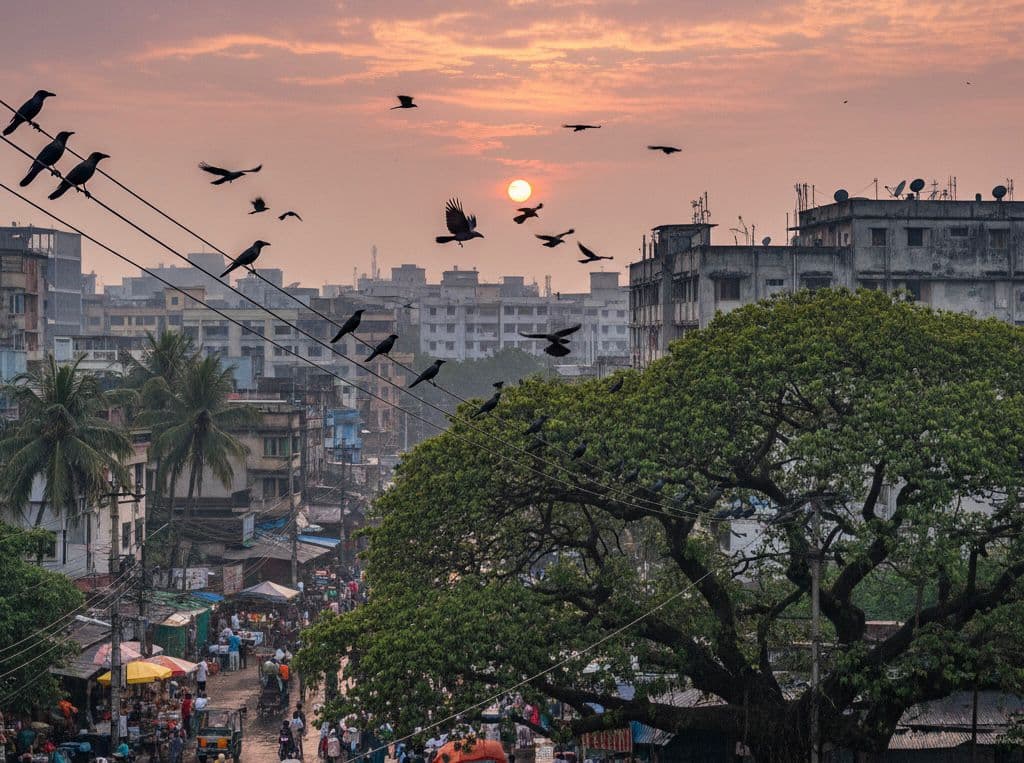

A few years back, the dawn in both cities and villages would commence with the presence of crows. Crows were prevalent in the bamboo gardens of the village, atop city rooftops, in roadside trees, and around marketplaces. However, this familiar sight is gradually changing. Currently, crows are not as visible as they once were, and their population is significantly declining in numerous regions. Environmentalists assert that the reduction in the crow population is not merely a crisis concerning birds; it signifies a substantial shift in the equilibrium of nature, which poses a threat to the surrounding environment. Crows serve as nature's health custodians. They contribute to environmental cleanliness by consuming dead animals, leftover food, and waste. A decline in the crow population could lead to rapid decomposition of waste in the city, resulting in the spread of pathogens, which poses risks for environmental pollution and public health.
Mokhlesur Rahman, a resident of Jamilnagar area of Bogura city, said that at one point, the calls of crows were frequently heard during the morning and afternoon hours. However, it has been approximately five years since these calls have been absent. The flocks of crows are no longer visible either. Occasionally, one or two crows may be spotted.
Sagar Hossain, a resident of the Rahmannagar area in the city, expressed his surprise when the topic of crows was brought up. He remarked, 'I have nearly forgotten the sound of crows. It has been many years since I last saw any crows.'
Taukir Ahmed, who lives in Bogilagari village within the Shibganj upazila of Bogura, noted that the population of crows has diminished in rural areas. Crows are no longer as prevalent as they once were. In the past, a flock of crows would often visit the courtyards of homes in search of food.
Abu Saeed, a lecturer in the Department of Geography and Environment at Bogura Government Azizul Haque College, informed Views Bangladesh that the number of trees in large cities is rapidly declining. Trees are also being cut down indiscriminately in rural regions. Consequently, the availability of nesting sites for crows is diminishing. Furthermore, plastic, industrial waste, chemicals, and food containing formalin are contaminating the city's garbage. As a result, crows are becoming ill and dying after consuming these substances, leading to a gradual decline in their population.
He further said that due to climate change, abnormal temperatures, irregular rains and cyclones are increasing the mortality rate of crow eggs and chicks. High temperatures disrupt bird reproduction. In addition, modern technology and electrical infrastructure such as mobile towers, high-voltage power lines and electromagnetic radiation have a negative impact on the navigation and behavior of birds.
The reduction in the crow population indicates a forewarning of the potential collapse of the urban ecosystem. This serves as a significant alert for the environment. Abu Sayeed remarked that neglecting this issue could lead to a more severe environmental crisis in the future.
SM Al Amin, the Deputy Assistant Agricultural Officer at the Department of Agricultural Extension in Kahalu Upazila, informed Views Bangladesh that crows function as natural pesticides in agriculture by consuming harmful insects present in the soil. Consequently, a decline in the crow population will adversely affect the agricultural ecosystem.
Lecturer Abu Sayeed stated that to safeguard all bird species, including crows, it is essential to increase tree planting efforts. Additionally, the preservation of existing trees is crucial. There should be a focus on enhancing waste management practices and implementing bird-friendly urban planning. Furthermore, steps must be taken to identify the underlying causes of this issue and address it by bolstering research on birds and wildlife.
Leave A Comment
You need login first to leave a comment