
Dhaka protests India's decision to host Sheikh Hasina's press conference
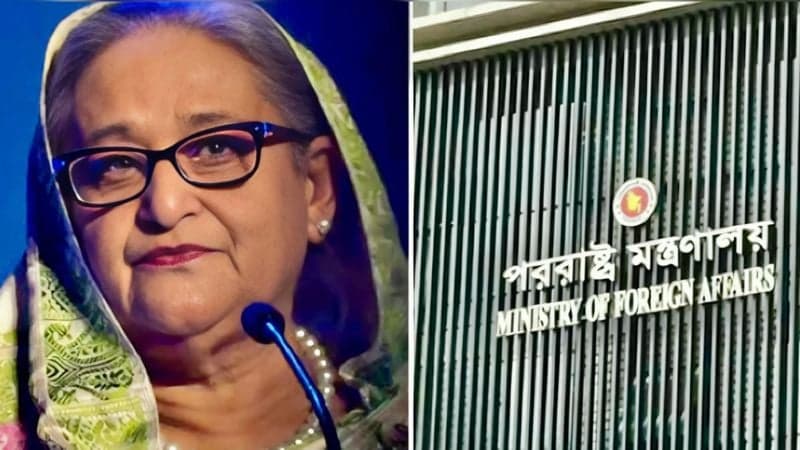

Bangladesh has expressed strong anger and disappointment over India's decision to allow ousted Prime Minister Sheikh Hasina to address a virtual press conference from New Delhi, describing the move as harmful to bilateral relations and disrespectful to the victims of the July Mass Uprising.
In a statement issued on Wednesday night (August 5), the Ministry of Foreign Affairs said Dhaka had conveyed its concerns to New Delhi in advance but was disappointed that the event was allowed to proceed.
Sheikh Hasina, who has been convicted of crimes against humanity in Bangladesh, addressed journalists virtually at a press conference organised by the Foreign Correspondents' Club, South Asia (FCC South Asia) in New Delhi on Wednesday, marking the second anniversary of the fall of the Awami League government.
According to Reuters, Hasina called for the ban on the Awami League to be lifted and reiterated her intention to return to Bangladesh in December despite the possibility of imprisonment or worse. She also declined to acknowledge responsibility or express remorse over the killings during the July Mass Uprising.
Her son Sajeeb Wazed Joy joined the event virtually, while former Education Minister Mohibul Hasan Chowdhury Nowfel attended in person. Cricketer Shakib Al Hasan delivered a recorded message before later joining the programme online.
In its statement, the Foreign Ministry said allowing Hasina and her associates to use Indian soil to make what it described as "hostile remarks" against Bangladesh constituted an affront to the country's sovereignty and a grave insult to those who died during the July uprising.
The ministry reaffirmed Bangladesh's commitment to maintaining a constructive, mutually beneficial and future-oriented relationship with India, based on sovereign equality, mutual respect and non-interference in each other's internal affairs.
However, it noted that India has yet to respond to Bangladesh's repeated requests for Sheikh Hasina's extradition under the 2013 Bangladesh-India Extradition Treaty, arguing that permitting her to make public political statements from India has deeply hurt public sentiment in Bangladesh and risks undermining bilateral ties.
The statement also rejected what it called attempts to deny internationally documented findings on the July-August 2024 violence, describing such efforts as an unsuccessful attempt to rewrite history.
Leave A Comment