

Dhanmondi 32 vandalism news in international media
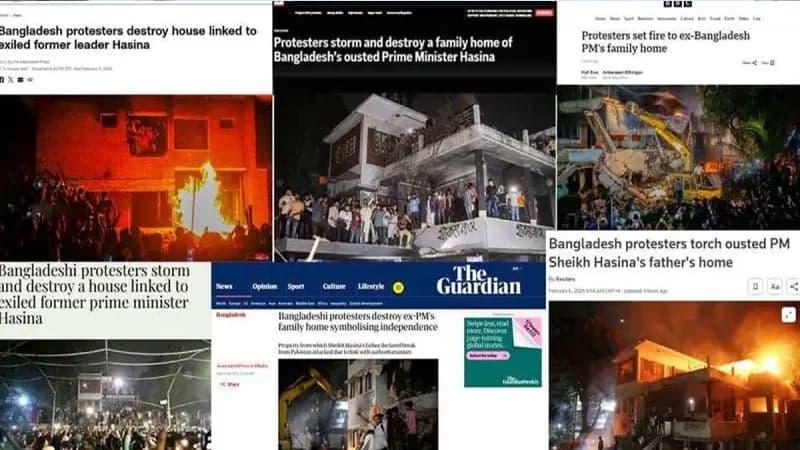

The demolition of the house of Sheikh Mujibur Rahman located at number 32 in Dhanmondi in the capital Dhaka is now the hottest topic of discussion in the whole country. Such a widely discussed incident has not happened since the mass uprising in July.
The house was attacked on the night of August 5 also; but it was somehow saved then. This time, it has been demolished. The house was demolished with the participation of thousands of people last night, and its demolition is still going on in the morning. The bricks, rods, iron, books – people took whatever they got from the house.
The international media has covered this news along with the country's media. The incident of the vandalism of house number 32 in Dhanmondi has gained importance in the international media. The destruction of number 32 has been reported by leading media outlets around the world, including Al Jazeera, BBC, CNN, Reuters, The Guardian, TRT World, Arab News, ABC News, Anadolu Agency, and AP.
Al Jazeera writes, “Thousands of protesters in Bangladesh have demolished and set fire to the home of the country’s founding leader, as his daughter, ousted former Prime Minister Sheikh Hasina, delivered a fiery social media speech calling on her supporters to stand against the interim government. The attack on Wednesday night was prompted by a speech Hasina planned to give to supporters from exile in neighbouring India, where she fled last August after a deadly student-led uprising against her 15-year rule. Critics had accused her of suppressing dissent.”
“The house in the capital, Dhaka, had been home to Hasina’s late father, Sheikh Mujibur Rahman, who led the country’s independence from Pakistan in 1971. He was assassinated there in 1975. Hasina later turned the home into a museum.”
“According to news reports, several thousand protesters, some armed with sticks, hammers and other tools, gathered around the historic house and independence monument, while others brought a crane and excavator to demolish the building on Wednesday night.”
“Protesters, many aligned with the Students Against Discrimination group, had expressed their fury over Hasina’s speech, which they viewed as a challenge to the newly formed interim government.”
Hasnat Abdullah, a student leader of the group, had warned media outlets against Hasina’s speech and announced on Facebook on Wednesday that “tonight Bangladesh will be freed from the pilgrimage site of fascism”, reports the Al Jazeera.
CNN reports, “Thousands of protesters in Bangladesh took out their anger at exiled former Prime Minister Sheikh Hasina on Wednesday by destroying a family home that came to symbolize the country’s independence — and now, they say, the authoritarianism they believe she led.”
“The attack was sparked by a speech Hasina planned to give to supporters from exile in neighboring India, where she fled last year during a deadly student-led uprising against her 15-year rule. Critics had accused her of suppressing dissent. The house in the capital, Dhaka, had been home to Hasina’s late father and Bangladesh’s independence leader Sheikh Mujibur Rahman, who declared the country’s formal break from Pakistan there in 1971. He was assassinated there in 1975. Hasina later turned the home into a museum.”
“They do not have the power to destroy the country’s independence with bulldozers. They may destroy a building, but they won’t be able to erase the history,” Hasina said in response during her speech, even as the demolition continued.
She also called on the people of Bangladesh to resist the country’s new leaders and alleged that they took power by “unconstitutional” means, the CNN report adds.
The Reuters reports, “Thousands of protesters set fire to the home of Bangladesh's founding leader as his daughter, ousted former prime minister Sheikh Hasina, called on her supporters to stand against the interim government.”
“The South Asian nation of 170 million people has struggled with political strife since Hasina was forced to flee to neighbouring India in August following weeks of protests against her rule in which more than 1,000 people were killed,” the report adds.
Analyzing the news broadcast in international media, it is seen that they are presenting news impartially. There is no bias in their media. They are reporting what is happening. However, the type of news of all international media is almost the same. There is not much difference between the news of CNN, Al Jazeera, BBC, Reuters.
Leave A Comment
You need login first to leave a comment