

EC to decide Awami League’s election participation: Yunus tells BBC
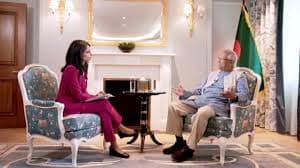

Professor Muhammad Yunus, Chief Adviser of Bangladesh’s interim government, addressed various issues including politics, reforms, elections, and the Rohingya crisis during a recent interview with the BBC while visiting the United Kingdom.
Professor Yunus, who received the British King Charles III Harmony Award on June 12 during his UK tour, spoke with BBC journalist Rajini Vaidyanathan ahead of the award ceremony.
When questioned about the interim government’s commitment to an inclusive election amid criticism that the Awami League (AL), led by Sheikh Hasina, is being barred from participating, Professor Yunus stated: “We have explained this many times. The UN Resident Coordinator in Dhaka recently clarified that ‘inclusive’ means participation of all people, not necessarily every political party. As long as citizens can vote, the election is inclusive.”
Regarding the strong public support for the Awami League, he said, “Let the people decide if they want to vote.” However, he noted that voters cannot vote for AL candidates if the party is not permitted to participate.
Professor Yunus clarified, “We have not banned the Awami League. Their activities, including election participation, have been temporarily suspended. This is a temporary measure. Whether they will be on the ballot depends entirely on the Election Commission’s decision.”
On the whereabouts of Sheikh Hasina, rumored to be in India, and the interim government’s plans to bring her back to face allegations, Yunus confirmed: “The trial has already begun and is ongoing. It will proceed through legal channels. We want her to face justice and will use all available international means to bring her back. This is a completely legal process.”
When asked about his dealings with Indian Prime Minister Modi regarding this, Yunus responded, “We will use international systems. We do not have the authority to apprehend her ourselves.”
Asked if he was upset with India for sheltering Sheikh Hasina and her associates—who face charges including crimes against humanity and corruption—he replied:
“Her presence in India isn’t the main issue for Bangladeshis. The problem is her voice, as she regularly addresses the Bangladeshi public through media.” When pressed if India should restrict her broadcasts, Yunus said, “That’s your suggestion.”
Regarding reports of arrests of hundreds of Awami League supporters since the interim government took over, Yunus strongly rejected claims that this was suppression of critics:
“To compare the interim government with the Awami League’s rule is shameful. It shows a misunderstanding of Bangladesh and its realities. The Awami League and the interim government are completely different.” When reminded these views were expressed by others, he insisted, “Even if someone said it, you have visited Bangladesh; I assure you, it is absolutely untrue.”
The interview concluded with discussion of the Rohingya refugee crisis. The BBC journalist, having visited camps in Cox’s Bazar, described severe conditions, limited freedom, food shortages, reduced aid, and poor education for children. She questioned why the interim government was not doing more.
“We are focusing on our internal challenges. The responsibility to address the Rohingya crisis lies with the international community.”
“I visited the camps with the UN Secretary-General, met over 100,000 Rohingyas, discussed solutions, and appealed to the world for help with their return. Repatriation is the only solution. Currently, efforts focus on food and aid, but no one discusses how to send them back.”
When asked about the refugees’ fear of Myanmar’s military regime and why Bangladesh wasn’t integrating the Rohingyas, Yunus said:
“That is not a solution. Locals around the camps are hostile because aid only goes to Rohingyas, who appear to live easily, while others must work hard.”
“The government does not allow permanent settlement outside the camps. We have many challenges and cannot take on another population. We acknowledge their suffering, but Bangladesh opened its borders with the understanding the international community would support them and resettle them elsewhere.”
Leave A Comment
You need login first to leave a comment