
Europe’s deadliest summer: Heatwaves leave more than 50,000 dead
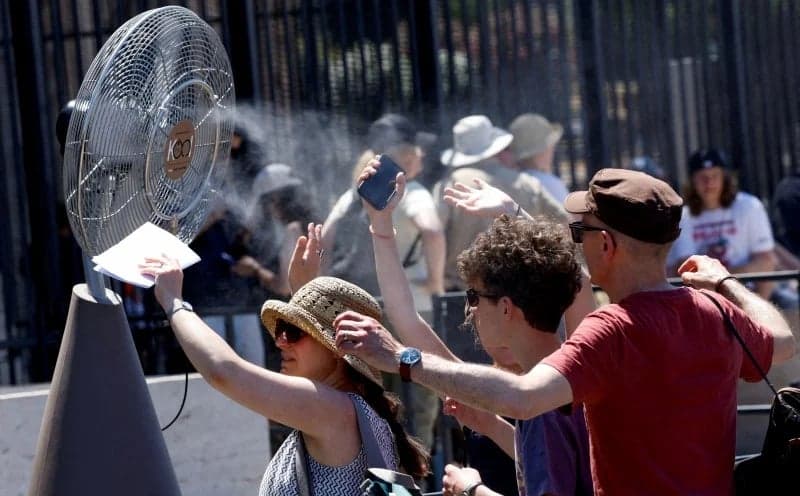

The summer sun seemed to pour fire over Europe. Scorching winds swept across communities, while life in cities became increasingly unbearable. Beneath the seemingly ordinary rhythms of the season, however, a silent wave of deaths was unfolding. Scientists estimate that more than 50,000 people died across Europe as a result of this year’s devastating heatwaves, making the summer of 2026 potentially the deadliest on record in terms of heat-related mortality across much of the continent.
The alarming figures emerged from two peer-reviewed studies published in the journal Nature Health. Researchers estimate that heat was responsible for 50,391 deaths, of which more than 32,600 were directly attributable to human-induced climate change. In other words, global warming caused by human activity has compounded the natural effects of high temperatures, substantially increasing the risk of death.
Clair Barnes, a researcher in extreme weather and climate change at Imperial College London and one of the study’s authors, said the summer of 2026 was likely the deadliest in terms of heat-related deaths in more than half of Europe’s regions. She warned that the world had moved further away from the path needed to prevent the most dangerous consequences of climate change. Without rapid and coordinated action, she said, the situation would deteriorate further.
Record-breaking temperatures, a mounting death toll
From late May to late August, unprecedented heatwaves swept across vast parts of Europe. Summer temperatures in western Europe averaged around 2.9C above the 1991–2020 mean. On some days, temperatures in individual countries rose as much as 12C above their historical averages.
Southern and western Europe bore the brunt of the heat, but the comparatively cooler north was not spared. Thousands of people died in countries including the United Kingdom. Those aged 85 and older accounted for the largest share of fatalities. Yet the danger extended well beyond the elderly: the study estimated that at least 800 deaths among people aged 20 to 44 were also associated with extreme heat.
To estimate the death toll, scientists analysed temperature data from 854 cities across 30 European countries. They then compared actual conditions with a hypothetical scenario showing what temperatures might have been like without human-induced climate change. Using models based on the relationship between temperatures and daily mortality from early June to late August, they calculated the likely number of heat-related deaths.
According to the researchers, the estimated toll this year was the highest in the past 26 years, surpassing the major heatwaves of 2022 and 2003.
The human hand behind a silent killer
Raquel Nunes, an associate professor in health and the environment at the University of Warwick, said the effects of extreme heat were not always immediately visible. That was why heat was often described as a “silent killer”. She said the estimated deaths among thousands of people under the age of 65 underscored the severity of the crisis.
The research also points to a growing contribution from human-induced warming. At the beginning of this century, fossil fuel-driven global warming was estimated to account for around 40% of heat-related deaths. That proportion has now risen to roughly two-thirds.
These figures represent more than the death toll of a single summer; they are a warning about the years ahead. Unless Europe reduces its dependence on fossil fuels and takes effective action to tackle climate change, summers like this could become increasingly frequent.
Barnes’s warning is clear: without a decisive shift away from fossil fuels, Europe faces summers that are hotter, more dangerous and increasingly deadly.
The flames of summer over Europe may eventually subside. But the deaths of more than 50,000 people leave behind a question that will not fade with the heat: when natural extremes are made more lethal by a crisis of human making, how much harder will it become to stop the next summer’s toll?
Leave A Comment