
Exports decline for third consecutive month, fall by 7.43 percent in Oct
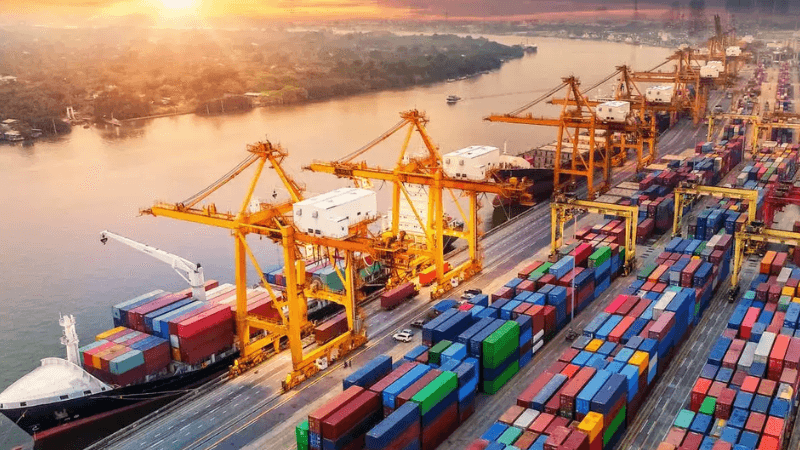

Bangladesh’s export performance has continued to fade during the first four months of the current fiscal year, with export earnings declining for three consecutive months. Despite some relief in overall economic activities, the persistent fall in export income has raised concerns. In October alone, exports fell by 7.43 percent.
According to data released by the Export Promotion Bureau (EPB), goods worth 3.82 billion US dollars were exported in October 2024–25, compared to 4.13 billion US dollars in the same month of the previous fiscal year. Exports had already fallen in September and August, by 4.61 percent and 2.93 percent, respectively.
In contrast, in July 2023, the export sector had grown by 24.9 percent. However, during the first four months (July–October) of the current fiscal year, exports have increased by only 2.22 percent. Experts note that in July 2024, political unrest—including road blockades, clashes, and curfews—had paralysed economic activities, yet exports still reached 3.82 billion US dollars. Ironically, although the political situation has been more stable over the past three months, export earnings have continued to decline.
BGMEA President Mahmud Hasan Khan said, “Due to the additional tariffs imposed by Donald Trump, the export sector came under pressure in July and August. However, the sharp decline in October is alarming. Policymakers must take caution.”
Rising Fashions Ltd Managing Director stated, “Since August last year, many export-oriented factories have shut down. Entrepreneurs are unable to import raw materials due to loan defaults, while bank interest rates have nearly doubled. Running a business in this situation has become extremely difficult.”
EPB data shows that Bangladesh exported goods worth 16.13 billion US dollars to the global market in the first four months of this fiscal year, compared to 15.78 billion US dollars during the same period last year — marking the second-lowest export growth in five years.
The country’s ready-made garment (RMG) sector, which accounts for over 80 percent of total exports, has also experienced a decline. In October, garment exports fell by 8.39 percent, according to EPB data. BKMEA President Mohammad Hatem commented, “The nation’s industry and economy are now in the ICU. About 80 percent of factories are running at a loss, and new orders are scarce. If the government proceeds with the LDC graduation process, the export sector will suffer even more.”
Back-to-back letters of credit (LCs) play a vital role in supporting export growth. According to the Bangladesh Bank, the opening of new LCs fell by 10.63 percent during the first quarter (July–September) of the current fiscal year. Settlement of LCs related to capital machinery, intermediate goods, and raw materials also decreased.
Private sector credit growth in Bangladesh has dropped to its lowest level in two decades, standing at just 6.29 percent at the end of September. Syed Mahbubur Rahman, Managing Director of Mutual Trust Bank, said, “Banks are not lending, and entrepreneurs are not borrowing. Bankers find it safer to invest in government bills and bonds rather than providing new loans. This is the main reason for the negative credit growth trend in the private sector.”
He added, “For the past one and a half decades, private sector credit growth was abnormally high due to widespread fraud and irregularities. Now, with several banks in the process of merger, the current slowdown in credit growth is quite natural.”
Overall, the decline in exports and sluggish private sector credit flow have posed a serious challenge to reviving momentum in the national economy.
Leave A Comment
You need login first to leave a comment