

From Ghazal to Pop: Legendary versatility of Asha Bhosle
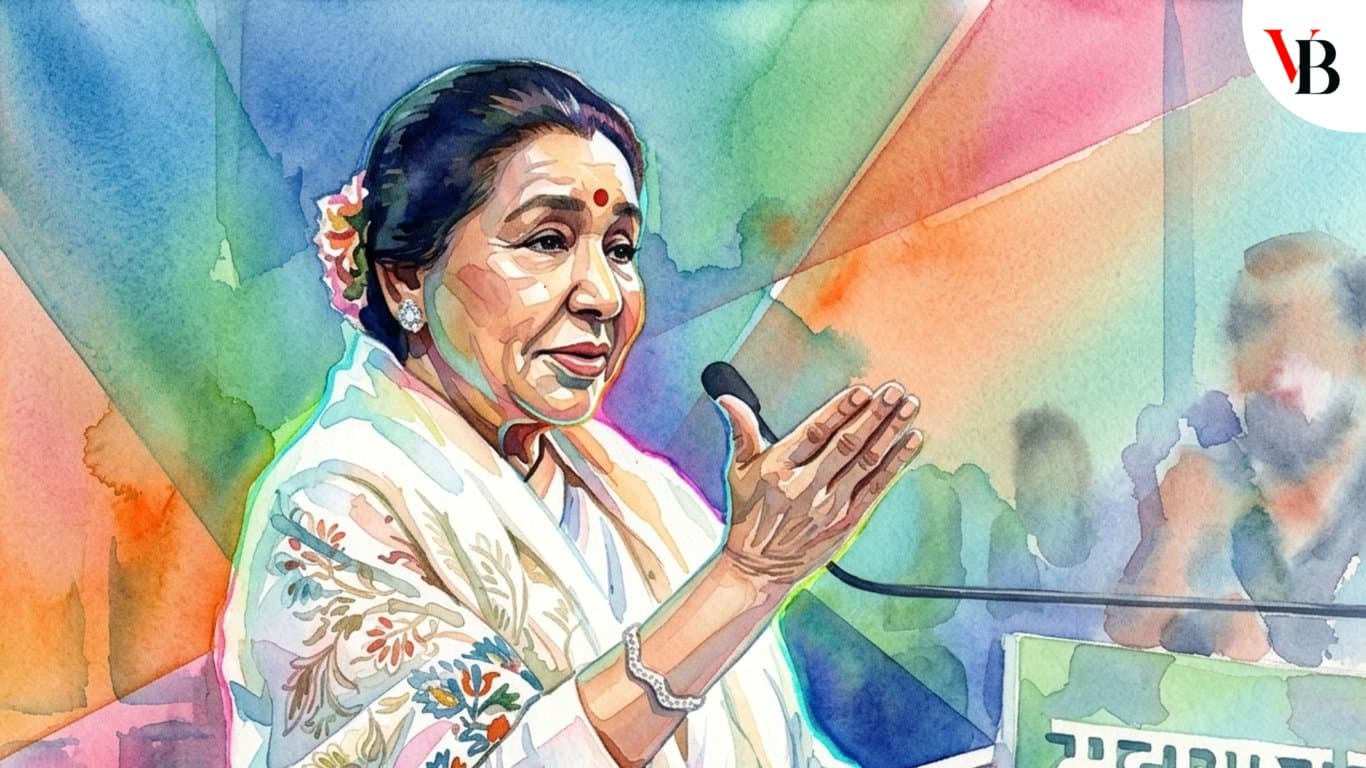

Renowned as the 'Queen of Playback Singing,' Asha Bhosle stands as one of the most versatile and celebrated voices in the history of South Asian music. Her extraordinary contributions across diverse genres—including film music, classical compositions, ghazals, pop, and modern songs—have firmly established her as a legend.
Spanning an illustrious career of nearly seven decades, Bhosle has recorded thousands of songs in multiple languages, captivating generations of listeners. Her ability to effortlessly adapt to different musical styles and eras has made her a timeless icon, securing a permanent place in the hearts of music lovers across the Indian subcontinent and beyond.
Born on September 8, 1933, in Sangli, Maharashtra, India, Asha Bhosle grew up in a renowned musical family. Her father, Deenanath Mangeshkar, was a distinguished classical vocalist and theatre figure. Surrounded by music from an early age, singing became an inseparable part of her life. Her elder sister, Lata Mangeshkar, also went on to become one of the most iconic voices in the Indian subcontinent.
After the death of her father, Asha Bhosle was compelled to take on family responsibilities at a very young age. She began singing in films early in life, marking the start of her career in Marathi and Hindi cinema during the 1940s. However, her journey was far from easy. Living in the shadow of her immensely popular elder sister, Lata Mangeshkar, she had to struggle hard to carve out her own identity.
Through her distinctive voice and remarkable versatility, Bhosle gradually established herself as a unique talent in the industry. A major turning point came in the 1950s and 1960s when she collaborated with music director O. P. Nayyar. Their partnership introduced a fresh, modern style of music, where her voice brought together playfulness, romance, and a contemporary flair that set her apart from her peers.
Songs like 'aiye meherbaan', 'ude jab jab zulfein Teri' became hugely popular, propelling her to widespread fame and solidifying her position in the music industry.
Later, the musical partnership between Asha Bhosle and music director RD Burman created a new chapter in Indian music history. Together, they introduced a fresh wave of modern and experimental sound that reshaped film music and pushed creative boundaries.
This iconic duo produced several evergreen hits, including 'piya tu ab to aaja', 'dum maro dum,' which remain immensely popular among listeners even today. Their collaboration not only defined a distinctive musical era but also influenced generations of composers and singers.
Beyond their professional success, their close association eventually turned into a personal relationship, which later culminated in marriage.
Asha Bhosle expanded far beyond the boundaries of film music, establishing herself as one of the most versatile vocalists in South Asian music. Her repertoire spans ghazals, bhajans, pop, qawwalis, and even international music, showcasing her exceptional adaptability and artistic range.
She also collaborated with celebrated ghazal singer Ghulam Ali, bringing a refined depth to ghazal performances and adding a new dimension to the genre. Beyond South Asian music traditions, Bhosle has lent her voice to English and several other foreign-language songs, further highlighting her global appeal and musical versatility.
Her ability to move effortlessly across genres and languages has cemented her status as one of the most dynamic and wide-ranging voices in the history of playback singing.
Asha Bhosle’s music enjoys equal popularity across Bangladesh and other countries of the Indian subcontinent, reflecting her wide regional appeal. She has also performed numerous songs in the Bengali language, which have been widely appreciated by listeners.
Her voice carries a unique blend of emotion, liveliness, and versatility, allowing her to connect deeply with audiences across generations. This enduring charm has helped her remain one of the most beloved and influential singers in the region, with a legacy that continues to inspire music lovers in Bangladesh and beyond.
Over her long and illustrious career, Asha Bhosle has received numerous awards and honors recognizing her immense contribution to music.
She has won prestigious accolades including India’s National Film Awards as well as multiple Filmfare Awards. Her excellence has also earned her recognition on the international stage, further highlighting her global influence as a playback singer.
In acknowledgment of her outstanding contribution to Indian arts and culture, the Government of India honored her with the civilian awards Padma Bhushan and Padma Vibhushan, two of the country’s highest national distinctions.
Asha Bhosle’s greatest strength throughout her musical career has been her remarkable adaptability. She possessed a rare ability to reinvent herself with changing times and evolving musical trends.
From the black-and-white films of the 1950s to contemporary pop music, she maintained equal success across eras and genres. Her versatility allowed her to remain relevant even as musical styles transformed dramatically over decades.
Bhosle has also collaborated with younger generations of musicians, continuously updating her style while preserving her distinctive identity. This ability to stay contemporary while honoring tradition has made her one of the most enduring figures in the history of playback singing.
In her personal life, Asha Bhosle experienced several ups and downs. She married at a young age, and her early married life was marked by challenges and instability. Later, she rebuilt her life with renewed determination, overcoming personal setbacks through resilience and strength.
These life experiences added greater emotional depth to her singing. The feelings of struggle, endurance, and renewal are often reflected in her performances, helping her connect more deeply with listeners. Her personal journey, intertwined with hardship and perseverance, has ultimately enriched her artistry and made her voice even more expressive and impactful.
The musical legacy of Asha Bhosle spans an extraordinary range of memorable songs across Bengali, Hindi, and ghazal genres, reflecting her unmatched versatility.
Bengali Songs:
Some of her most loved Bengali numbers include 'chirodini tumi je amar,' 'amar swapno tumi,' 'ekbar bolo tumi amar,' 'aji e probhate robir karon,' 'tumi je amar,' 'kine de reshmi churi,' 'kon se aloer swapno niye,' 'ei poth jodi na shesh hoy,' 'ke prothom kache esechi,' and 'mone pore ruby roy.'
Hindi Songs: Her iconic Hindi repertoire features evergreen hits such as 'piya tu ab to aaja,' 'dum maro dum,' 'in aankhon ki masti,' 'chura liya hai tumne jo dil ko,' 'Aaiye Meherbaan,' 'Ude Jab Jab Zulfein Teri,' 'Yeh Mera Dil,' 'Dil Cheez Kya Hai,' 'Radha Kaise Na Jale,' and 'Zara Sa Jhoom Loon Main.'
Ghazal Songs: In the ghazal genre, her notable performances include “Dil Cheez Kya Hai,' 'In Aankhon Ki Masti,' 'Mera Kuch Saaman,' 'Jhuki Jhuki Si Nazar,' 'Aaj Jaane Ki Zid Na Karo,' 'Raat Yun Dil Mein Teri,' 'Chupke Chupke Raat Din,' 'Dikhai Diye Yun,' and 'Faasle Aise Bhi Honge.'
Through these diverse works, Asha Bhosle continues to remain one of the most influential and beloved voices in South Asian music history.
Asha Bhosle’s songs are not merely a source of entertainment but an integral part of the cultural heritage of the Indian subcontinent. Her voice captures a wide spectrum of emotions, reflecting time, society, and the diverse experiences of human life.
Bhosle is not just an artist—she is the name of an era. Her contribution has elevated South Asian music onto the global stage, leaving behind a rich legacy for future generations to cherish and build upon. As long as her songs continue to be heard, she will live on in the hearts of millions.
The famous lyric written by Gauri Prasanna Mazumder and sung by the legendary singer beautifully reflects her timeless artistry: 'sobar mukhe hashi hoye / moner moto jhoro / andhokare alo dite / pujor prodip hoye jwolo.'
Leave A Comment
You need login first to leave a comment