
Girls’ gender equality and social justice are imperative
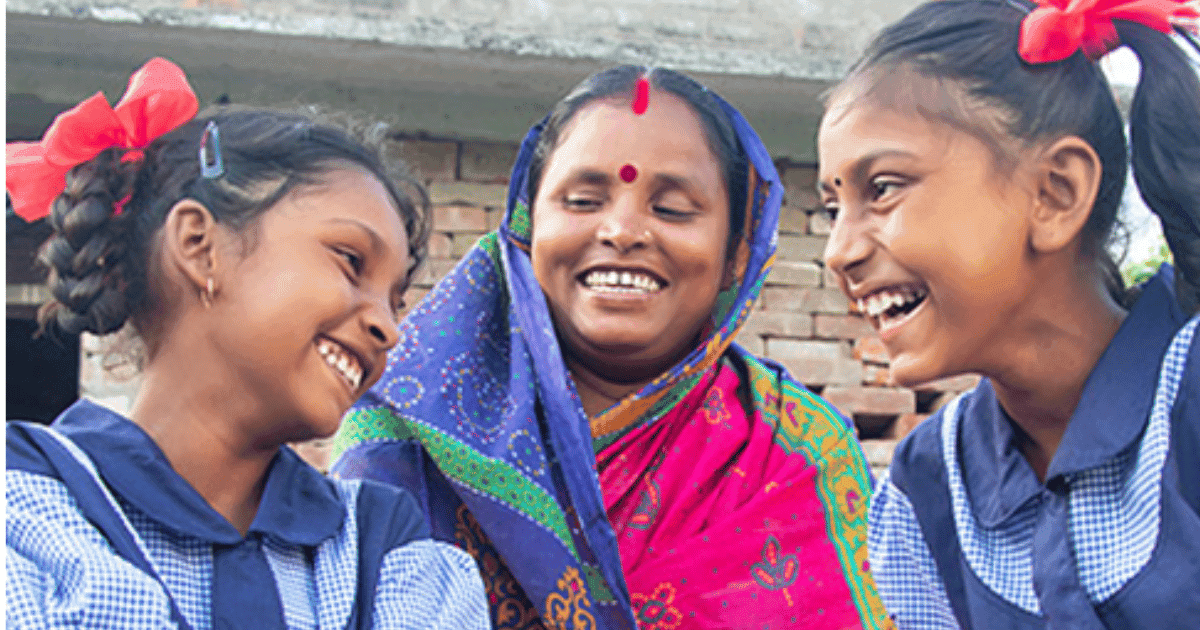

In Bangladesh, every year we observe Daughters Day / National Girl Child Day on September 30, and Internatioanl Girl Child Day on October 11. Government of Bangladesh and other stakeholders organize different events to observe the day with due importance.
The official data released by the Bangladesh Police Headquarters recently that 15,717 children reported missing between January and July 2026. Some of them were rescued, and some are still untraced. A sharp, disproportionate rise in cases involving girls. Officials and human rights experts attribute missing cases among girls primarily to trafficking for sex trade, forced child marriages, and domestic abuse, Media reports pointed out.
So the logical question is: Why is the Daughters Day imperative and what are the way forward? Rights activists recommended:
• Ensuring girls' gender equality and social justice require dismantling systemic discrimination, expanding access to education, and protecting young people from violence and harmful practices.
• Closing the gap where millions of girls are denied schooling due to poverty, child marriage, or unsafe and unhygienic school environments.
• Ending child, early, and forced marriages, as well as physical and sexual violence.
• Reforming discriminatory laws and building gender-responsive justice systems that protect girls' rights.
• Fostering safe spaces, such as girls' clubs and mentorship programs, to build leadership and self-advocacy skills in early life.
Daughters Day is very important because there are many reasons and significance. For example, daughters in Bangladesh, South Asia and other countries of the world are not treated equally as boys. daughters are less prioritized than the boys in every sector.
Daughters are discriminated, ignored, neglected, not offered same facilities, same food, same educational opportunities, same reproductive health rights (SRHR), same chance to talk and decision making, same freedom like the boys.
So, all of these are social injustice. And we must put an end to it. Because due to ignorance we are unnecessarily making great mistakes and injustice to our daughters, those are totally unacceptable.
Gender inequality occurs when one gender is given preferential treatment over another due to sex or gender-based prejudice.
Recently these issues were discussed with proper attention at a day long workshop in capital city Dhaka. It was organized by the Green Mind Youth Forum, a nongovernment voluntary organization as part of observance of the Daughters Day.
PRIORITISE DAUGHTERS’ HUMAN RIGHTS
At the workshop, child rights activist and project director of Green mind Youth forum Nazrul Islam said, “ Every daughter needs to be mentored and taught the proper values that will improve herself worth. A daughter needs to be provided for, cared for, cherished and loved equally like a boy. A daughter needs to be affirmed repeatedly that she is priceless.”
“Parents, care-givers, governments and the society at large owe her these since her birth. So, invest equal wealth like boys in daughters' education, their health and wellbeing, never make them brides before the age of 18. Because child marriage snatches away daughters' dreams, deprives them of human rights, pushes back the nations, and hampers the national and international development.”
“Even we will not be able to achieve the Sustainable Development Goals (SDGs) if our daughters are left behind.
So, we must ensure that no girl is left behind. We should work together through comprehensive efforts that girls with disabilities, those who are climate migrants of coastal and disaster-prone region, hilly and char areas, affected with hunger and poverty are deserve priority attention to serve. Every daughters' safety, security, and equal rights at every family, society, everywhere in Bangladesh, South Asia, Global South and across the globe are imperative as a whole,” Nazrul added.
ENSURE GIRLS’ DIGNIFIED MENSTRUATION
Discussants highlighted that according to UNICEF, every month, around two billion women and girls across the world menstruate. Millions of these girls, women, transgender men and non-binary persons are unable to manage their menstrual cycle in a dignified, healthy way.
The onset of menstruation means a new phase and new vulnerabilities in the lives of adolescents. Yet, many adolescent girls face stigma, harassment and social exclusion during menstruation.
In Bangladesh, and South Asia including Nepal, India and others there are many harmful superstitions about menstrual periods that the daughters face and that make their lives dangerous due to ignorance and superstitions!
Kalpona Sultana, community organizer of the Child Rights Forum said, “ We should come forward, and start from today to listen to our daughters, their dreams, hopes, aspirations, demands, liking and disliking, educational subject preference, eating habits, recreations, cultural and literary choices, dress up among others. And to allow them equally like boys in decision making for their wellbeing. Regarding menstrual period of the daughters--dignified menstruation is a matter. That is why all the daughters must get proper knowledge about their reproductive health, menstrual period management, and menstrual hygiene issues.”
So, taking the issues into account, all the parents, guardians, teachers, health workers, government, civil society organizations, development partners and Media, all the stakeholders must come forward to find out sustainable solutions, the experts observed.
“Let us talk about social justice. There are many reasons that social justice means to us in many ways. Daughters' human rights are interlinked with social justice. In fact, social justice is the concept of fairness. That includes fairness in healthcare, employment, housing, gender equality, and many more issues. In a socially-just society, human rights are practiced equally by both women and men, equally respected, and discrimination is not allowed to flourish. The origin of the terminology'social justice' was most likely first used in the 1780s. As the industrial revolution wound down, American legal scholars applied the term to economics. Today, its use has expanded significantly and applies to all parts of the society. It's seen through the lens of traits like race, class, sexuality, and gender,”
Aroti Rani Saha, a professor of Economics at Rajshahi University narrated. Rabeya Hayat, a professor and researcher at the Chittagong University remarked in her keynote speech that for social justice to become a reality, four pillars must be built: 1) human rights, 2) access, 3) participation, and 4) equity. Social justice can't be achieved without these four principles.So, all of us must ensure social justice for our daughters from our families first. Then at the society and country and the globe at any cost.
Social justice is a broad field with many branches. Within the field, we can explore topics including feminism, racism, climate change, poverty, hunger, women empowerment, environment protection, peace, among others. Mainly we should learn, work and practice all the Sustainable DevelopmentGoals (SDGs) to accomplish social justice, and gender equality,” Rabeya concludes.
VIOLENCE AGAINST GIRLS
The workshop organizers shared some latest gloomy scenario with data and information. They stressd that violence against girls remains a severe human rights crisis, with thousands of abuse, rape, and exploitation cases reported by human rights groups and police department each year.
According to police record, 14,602 incidents of violence against women and children in the first eight months of 2026. Local human rights organizations, such as Ain o Salish Kendra (ASK), report hundreds of child rape cases involving young girls each year. Many victims are under the age of 12.
UNICEF states that nearly half of Bangladeshi women aged 20 to 24 were married before their 18th birthday. Child marriage puts young girls at high risk for physical harm and health problems.
Rapes, gang rapes, and sexual harassment occur in communities, homes, and even schools that girls unnecesarily face many times in their lives. A large majority of children suffer physical punishment or mental stress from parents, teachers and relatives. Some abused children face severe physical torture, kidnapping, or murder.
Girls are not receiving the support they need to thrive and are continuously disadvantaged by inattention and broad inequalities that limit their tremendous potential.
Adolescent girls are far more likely than adolescent boys to be without education, employment, or training, and to engage in unpaid domestic and care work, research shows.
GENDER INEQULAITY AND SDGS
Girls’ gender inequality has a substantial impact on the SDGs. Poverty and an absence of access to financial, medical, and educational opportunities affect girls more than boys.
Though girls and boys on average face similar challenges in early childhood, gender disparities become more pronounced as children grow. Adolescent girls, due to expected gender roles, may face a disproportionate burden of domestic work, expectations to be married, risks of early pregnancy, as well as sexual and gender-based violence.
Fulfilling SDG 5, which is concerned with achieving gender parity and promoting independence among women and girls, is important to accomplishing the SDGs and developing sustainable practices. Progress towards achieving SDG 5 has been uneven, and significant challenges remained. Gender equality enhances productivity and economic outcomes could increase GDP by up to 34%. In fact, all the SDGs are interlinked with each other.
Climate change exacerbate gender inequalities by reinforcing traditional gender roles and limiting girls’ opportunities. Ensuring gender equality in environmental policy promotes sustainable and equitable development. The performance of environment related to SDGs are highly dependent on gender equality, UN WOMEN reports.
Globally, 650 million girls and women alive today have been married as children and over 200 million have undergone female genital mutilation. The onset of the COVID-19 pandemic has deepened existing gender inequalities, especially for the most marginalized children, according to studies.
Leave A Comment