

Government wants reforms of Digital Security Act: Minister
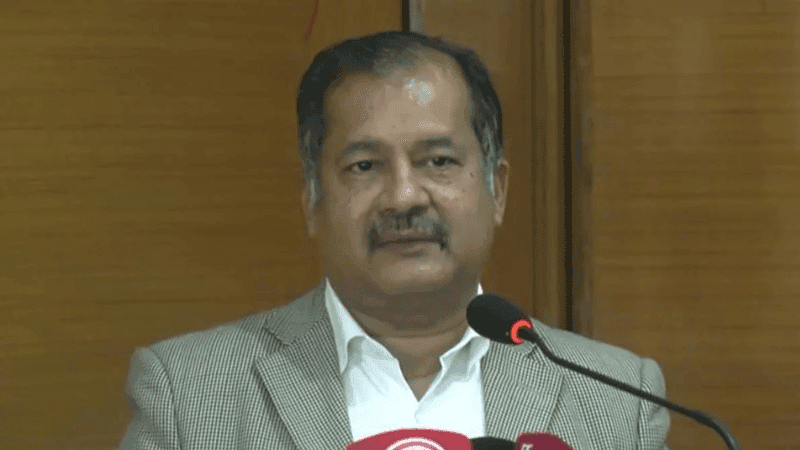

Information and Broadcasting Minister Zahir Uddin Swapon today said the government is set to take immediate steps to reform the country's media landscape, aiming to turn abstract promises into concrete action.
"It is essential to move beyond theoretical discussions and start practical work with all stakeholders," he said while addressing a discussion titled "Bangladesh Reform Tracker: Relevance of Media" at the Economic Reporters' Forum (ERF) auditorium in the capital.
The ERF and the Citizen's Platform for SDGs, Bangladesh jointly organised the discussion.
Convener of the Citizen's Platform for SDGs Dr Debapriya Bhattacharya along with top executives from various media outlets spoke on the occasion. The session was presided over by ERF President Doulot Akter Mala.
Highlighting the critical moment for reform as a new minister under a new government, Swapon identified several priority areas for immediate attention, including the Media Reform Commission, protection for journalists, journalist welfare, and policy development.
He said the government is considering restructuring the Media Reform Commission, potentially along the lines of the British model. "A framework is being developed to ensure justice for persecuted journalists. The Ministry is also reviewing retirement benefits, age limits, and pension structures for journalists," he added.
Swapon stressed the need for a clear advertisement policy and transparency in newspaper circulation figures.
He also said that discussions with media bodies, including the Editors' Council and associations of television channel owners and digital communication stakeholders, have already begun.
"We are trying to start work very quickly to make our promises tangible," he said, noting plans to consult the Editors' Council, television channel owner associations, and other digital communication stakeholders.
He acknowledged that the definition of information has changed drastically since the ministry's inception, especially with the advent of Artificial Intelligence (AI) and the global war of narratives.
Reflecting on the political changes of August 5, 2024, the Minister said the government has learned from past mistakes. He emphasized that critiques and investigative findings by journalists should be viewed as assets for governance
He urged the integration of 'Reform Trackers' into the official decision-making process to ensure better outcomes in the current technological era.
The Minister concluded by reiterating that a proper structural environment must be created so that all media professionals can work freely and without fear of harassment.
During the event, a Memorandum of Understanding (MoU) between the ERF and the Citizen's Platform was inked on 'Bangladesh Reform Tracker' for enhancing collaboration in tracking, monitoring, and promoting reform activities systematically.
Speaking at the event, Dr. Debapriya Bhattacharya highlighted the launch of a 'Reform Tracker' and an 'Electoral Manifesto Watch' designed to evaluate the progress, challenges, coordination, and financing of reform initiatives.
The initiative aims to link institutional reforms with political commitments to assess their actual impact on the lives of common people, he added.
He emphasized the necessity of uniting three key groups, like citizens, media professionals, and the working class or entrepreneurs.
He further said that the CPD recently consulted with major entrepreneurs to identify sustainability issues that require consistent monitoring.
Dr. Debapriya also noted that journalists outside Dhaka often face undervaluation and financial difficulties and the partnership aims to build their capacity to bring local economic grievances and regional issues to the national stage.
Leave A Comment
You need login first to leave a comment