

Govt adopts 7-point strategy to cope with global energy crisis
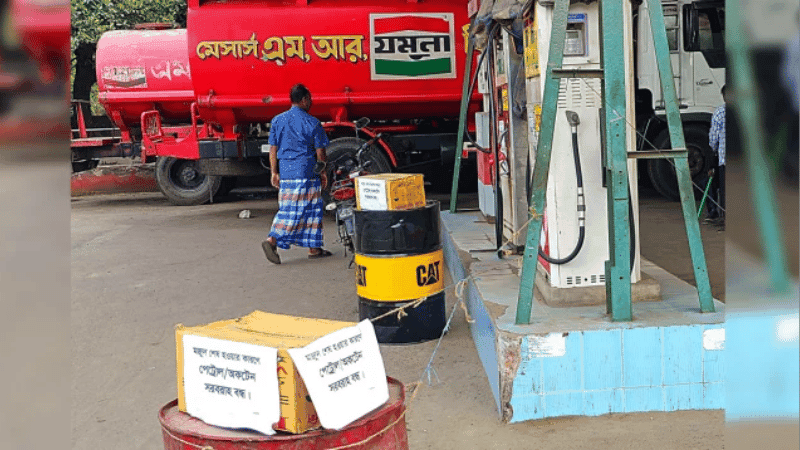

Bangladesh may be one of the countries affected by the global energy crisis, says a report in the Telegraph. The impact of this situation is already clear in Dhaka. People have to stand in lines for hours at petrol pumps, educational institutions have been advised to limit activities, and government officials have been given restrictions on electricity use during the day. Public transport in the capital has reduced, delivery workers are sitting. The report says that normal life in the capital has almost come to a standstill.
Bangladesh imports about 95 percent of its oil and gas needs, two-thirds of which comes from Gulf countries including Saudi Arabia, the United Arab Emirates and Iraq. The Telegraph reports that Bangladesh has imported about 170,000 tons of crude oil and diesel this month, compared to 332,000 tons in the same period last year. That is, imports have almost halved.
At the end of March, the state-owned Eastern Refinery had about 80,000 tons of crude oil in stock, which can last only 17 days. Diesel and gasoline stocks are also limited. As a result, the government is taking steps worldwide to procure new fuels.
Common people's suffering
The biggest blow of the crisis has been on the common people. Long lines have been seen at petrol pumps across the country, including the capital Dhaka, since dawn. In many places, ordinary people have to return empty-handed without getting fuel after waiting all day.
Drivers say that half of their day is wasted due to long waits at the stations. Income has decreased by almost half. Small traders say that their profit margins have come down to almost zero due to the increase in the cost of transporting goods. Irrigation work in the agricultural sector is also being disrupted, as the fuel shortage in diesel-powered irrigation pumps has spread to remote areas.
Energy experts say that this crisis in Bangladesh is not only a reflection of the global situation, but also a result of long-standing structural weaknesses. As domestic energy production is practically negligible, import dependence has put Bangladesh in the most vulnerable position to global market fluctuations.
Economists believe that the strategy of stabilizing prices through subsidies, although effective in the short term, will put pressure on the government's revenue management in the long term. They also warn that such crises may occur more frequently in the future if investment in the renewable energy sector is not increased.
Meanwhile, discussions are underway in India to prevent oil wastage by imposing a lockdown. The fuel crisis in the Philippines has taken a terrible shape — 365 petrol pumps have closed and oil prices have more than doubled. India, Pakistan and Sri Lanka have also extended public holidays due to the oil crisis. Australia has made public transport free to reduce the use of private cars.
When the government was one and a half months old, and when major economies were suffering from oil crises due to global political crises, some crises were visible in Bangladesh, but they did not become extreme. Behind this are 7 effective steps taken by the government—
1. Rationing system introduced
During the crisis, a certain amount of oil has been supplied according to the type of vehicle, so that everyone can get some fuel.
2. Appointment of 'Tag Officers'
The government has appointed tag officers to supervise the supply and sale of oil at petrol pumps in various districts. Their job is to monitor irregularities in oil supply, excess stockpiling or black marketing.
3. Initiative to introduce fuel cards
The government has planned to introduce fuel cards to bring transparency in oil distribution. Only a certain amount of oil can be taken through the card of a specific vehicle or institution.
4. Oil price control and subsidy
Even though prices have increased in the international market, the government is trying to keep fuel prices stable by providing a subsidy of 167 crore taka every day to prevent sudden price increases in the domestic market.
5. Campaign to prevent theft and black marketing
The government has started strict surveillance to prevent oil theft and black marketing. 208,000 liters of illegally stored oil have been recovered in nationwide operations and action has been taken against those involved.
6. Energy conservation initiatives
To reduce fuel consumption, measures such as extending the weekend, starting online classes and home offices are being considered. This will make it possible to reduce oil consumption by reducing vehicle movement.
7. Importing oil from alternative sources
To deal with the crisis, Bangladesh has imported a significant amount of diesel from India. In addition, plans are being made to import 600,000 metric tons of diesel from Russia to procure fuel at a comparatively lower price.
The Telegraph report said that the risk of completely running out of fuel is not certain at present as new shipments are likely to arrive. However, industry sources say that some informal syndicates are further aggravating the crisis by withholding supplies.
Forecast of the future situation
Experts fear that the next few months may be more difficult for Bangladesh. If fuel prices increase further in the international market, it will become increasingly difficult for the government to continue subsidizing.
However, there is some hope. If the plan to import 600,000 metric tons of diesel from Russia at a relatively low price is implemented, the pressure may ease in the short term. In addition, as new shipments are likely to arrive, the risk of completely running out of fuel is not certain, according to those concerned.
The Telegraph report also said that some informal syndicates are further exacerbating the crisis by withholding supplies. In this situation, only the government's swift and effective action, as well as the formulation of a long-term energy policy, can protect Bangladesh from future crises.
Leave A Comment
You need login first to leave a comment