
Has the state lost guardianship of its citizens?
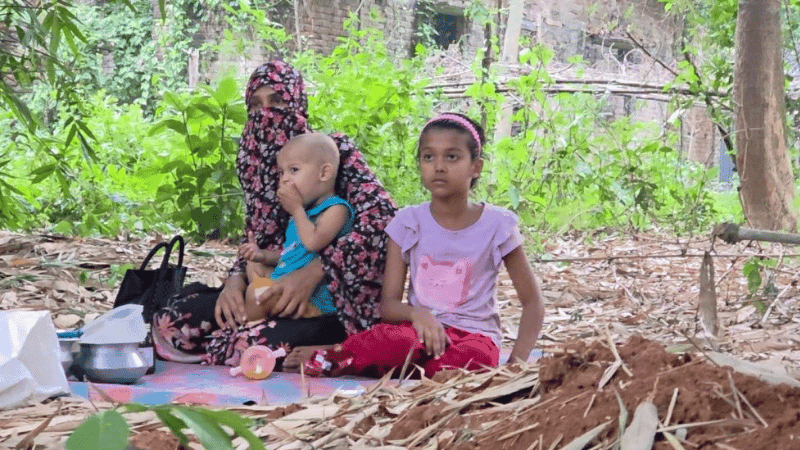

The measure of a state's strength is not determined by its GDP or large-scale projects, but rather by how well it safeguards its most vulnerable citizens during times of peril. When a widowed mother with a 9-year-old child and an 18-month-old breastfed infant seeks refuge beside a grave overnight in the village of Uttar Laskarchala in Kaliakoir, Gazipur, all the labels of our development vanish in an instant. This scenario is not merely a tale of chilling cruelty; it represents a profound moral failure of the 'guardian' entity of our state.
This incident has revealed a harsh reality. When Sujan Mahmud's wife, Sonia Begum, was forcibly removed from her home following her untimely death, depriving her of her rightful inheritance, it transcended a mere domestic issue. It constituted a direct assault on the sovereignty of the state and the civil rights of its citizens.
Impunity under the guise of 'arbitration' culture
The local administration's involvement in the Kaliakoir incident was unexpectedly apathetic. When law enforcement refers to ‘resolution’ in light of the explicit legal guidelines, it becomes evident that we are not upholding the rule of law, but rather the dominance of the ‘powerful’.
As stipulated in Section 10 of the Domestic Violence (Prevention and Protection) Act, 2010, the aggrieved individual's right to remain in their own home is indisputable. Nevertheless, when a woman is forced to spend the night by a grave, disregarding that law, the law's existence is rendered merely theoretical.
The police station's inclination to ‘resolve’ matters is, in fact, a tactic aimed at shielding the offender. When the state resorts to negotiation to guarantee the safety of its citizens, the pleas of the victim are prolonged. This represents a form of structural oppression, wherein the protector inadvertently facilitates opportunities for the perpetrator.
Lust for property and decaying social values
Disputes regarding inheritance or inherited assets are not a novel phenomenon within our societal framework. However, when an infant is utilized as a means to resolve such disputes, and the family is compelled to spend the night beside the grave of the deceased, it becomes evident that we have descended to the lowest point of social values. Under Muslim inheritance law, the entitlements of Sujan Mahmud's wife and children to the estate left behind are clearly defined. Nevertheless, the manner in which they were forcibly removed, despite their legal rights being acknowledged, is reminiscent of medieval savagery.
When journalism is under threat
Another concerning element of this incident is the obstruction of truth disclosure. When journalists strive to support the victim and unveil the truth, they face threats. This behavior is orchestrated by a well-structured group that believes they control both the state and society.
The intimidation of journalists in plain sight of the administration signifies that a particular faction is openly asserting their superiority over the law. Furthermore, this boldness is interpreted as a form of implicit approval from the administration's apathy.
Three urgent questions for the state
This tragedy has thrown three big questions before us:
First, why did the state's supposed protection fail to reach Sonia Begum's doorstep during this crisis?
Second, why are local officials not accountable for ensuring the proper implementation of the Family Protection Act?
Third, can we even hear the cries of orphaned children behind the mega narrative of development?
Remedy and expectation
The solution to this incident extends beyond merely returning Sonia Begum to her home. It is imperative that the perpetrators face severe punishment, deterring any avaricious individual from ever daring to harm a widow or an orphan in the future. Immediate action is required to apprehend the accused, including Kafil Uddin, and to ensure a swift trial.
Furthermore, organizations such as the Upazila Social Service and the Women's Affairs Department must transcend their theoretical obligations and actively engage at the grassroots level.
The grand structure of development cannot erase the sorrow of an orphaned child. When Sonia Begum stands by her husband's grave, seeking justice, we all share in the responsibility for that injustice. The state must demonstrate that it serves not only the powerful and affluent but also acts as a sanctuary for every vulnerable citizen. Let the tragedy in Gazipur not fade into the annals of injustice; instead, let it mark a significant step towards reforming our inadequate administrative and judicial systems.
We must acknowledge that the earth that cradles the deceased will ultimately judge the living offenders. Are we prepared for that reckoning?
Md. Shamiul Alim Shawon
Writer and Development Worker (Best Youth Award Winner)
Founder-President, Youth Action for Social Change (YASC), Rajshahi
Leave A Comment