

Hilsa fishing ban in Padma-Meghna ends at midnight
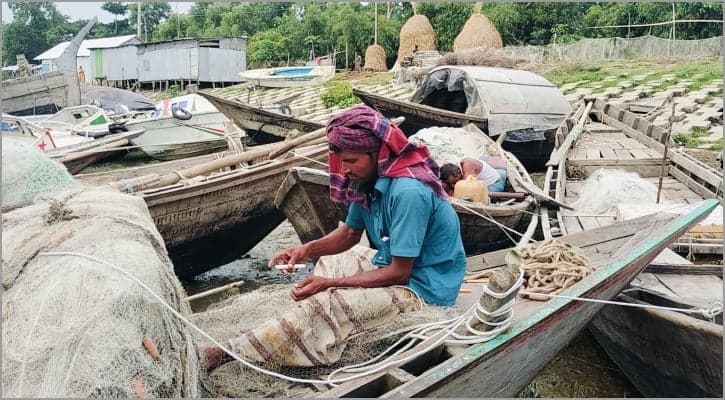

The two-month ban on catching, selling, and transporting jatka (hilsa fry) in the Padma and Meghna rivers will end at midnight tonight, allowing thousands of fishermen to return to work.
Around 50,000 fishermen including 44,035 registered—have prepared their boats and repaired their nets in anticipation of resuming fishing activities.
A visit to several fishing hubs, including Ananda Bazar, Lalpur, Bishnadi, Safarmali, Kanudi, Bishnupur, Tilabari, Boro Station Molhead, Puran Bazar Ronagoal, Harishobha, Dokanghar, Baharia, Laxmipur, Hanarchar, Harina, and Akhoner Haat, revealed bustling scenes as fishermen readied themselves for the reopening.
The ban, enforced from March 1 to April 30, covered a 70-kilometre sanctuary stretch from Shatnol in Matlab North to Char Bhairabi in Haimchar upazila of Chandpur, as part of a government effort to conserve hilsa stocks.
District Fisheries Officer Golam Mehedi said the government supported affected fishing families by distributing 40 kg of rice per family across four phases during the ban.
Strict enforcement by the district task force, Coast Guard, and River Police resulted in 300 fishermen being jailed in mobile court drives. Authorities also seized approximately 10.9 lakh meters of illegal fishing nets and 6.5 metric tonnes of jatka, imposing fines totalling Tk 3 lakh.
Dr Anisur Rahman of the Chandpur Fisheries Research Institute noted a decline in hilsa movement in the region, attributing it to river shoaling and environmental degradation. He stressed the importance of halting water pollution and unregulated sand extraction to ensure sustainable fish populations.
The annual ban is a key component of the government’s strategy to boost hilsa production and protect juvenile fish during the critical breeding season.
Leave A Comment
You need login first to leave a comment