

Historic Six-Point Day today
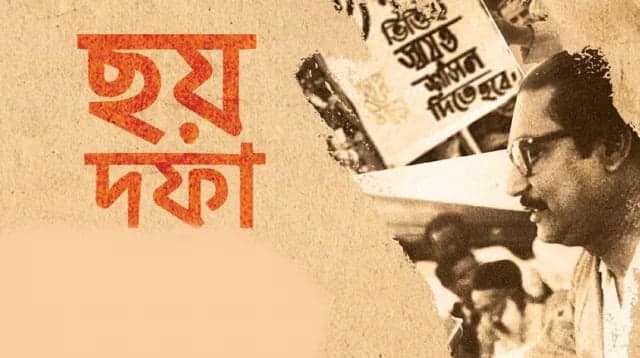

On June 7, 1966, a nationwide mass movement was launched in support of the Six-Point Programme, widely regarded as the “Charter of Freedom” for the people of then East Pakistan. The movement marked a decisive turning point in the Bengali nationalist struggle, providing a clear roadmap toward self-rule and, ultimately, the independence of Bangladesh.
The Six-Point Programme was formulated and presented by Bangabandhu Sheikh Mujibur Rahman as a blueprint for securing political and economic rights for Bengalis under Pakistani rule. The movement later evolved into a broader struggle for autonomy, paving the way for key events such as the Agartala Conspiracy Case, the Eleven-Point Movement, the Mass Uprising of 1969, the 1970 general election, and eventually the Bangladesh Liberation War.
The Six-Point demands were first presented on February 5, 1966, at a conference in Lahore held in the wake of the Tashkent Declaration. Bangabandhu Sheikh Mujibur Rahman requested that the proposals be included in the conference agenda, but the organizers rejected the demand. In protest, he withdrew from the conference and publicly unveiled the Six-Point Programme during his stay in Lahore.
Upon returning to Dhaka, he secured formal approval of the Six-Point Programme and related political initiatives from his party’s executive committee on March 13, 1966.
A series of protests and hartals were subsequently organized to press for the implementation of the demands. During one such strike, police and members of the then East Pakistan Rifles opened fire on unarmed demonstrators, killing 11 people, including Monu Mia, Shafique and Shamsul Haque, in Dhaka and Narayanganj.
As public support for the movement grew, so did Bangabandhu Sheikh Mujibur Rahman’s popularity. The military regime led by Ayub Khan arrested him on May 8, 1966.
The movement gained new momentum on June 7, 1966, and later inspired the Eleven-Point Movement and the Mass Uprising of 1969. In the 1970 general election, the people of East Pakistan overwhelmingly voted for the Awami League. However, the Pakistani rulers refused to transfer power to the elected representatives, prompting Bangabandhu Sheikh Mujibur Rahman to lead a broader movement for independence, which culminated in the birth of an independent and sovereign Bangladesh through the Liberation War of 1971.
The core demands of the Six-Point Programme included granting provincial governments authority over all matters except defense and foreign affairs, establishing separate but freely exchangeable currencies for East and West Pakistan, giving provinces the power to levy and collect taxes, maintaining separate foreign exchange accounts for the two regions, and creating a paramilitary force and a naval headquarters in East Pakistan to enhance regional security.
Leave A Comment
You need login first to leave a comment