

'India wants to see democratic, stable, peaceful and inclusive Bangladesh'
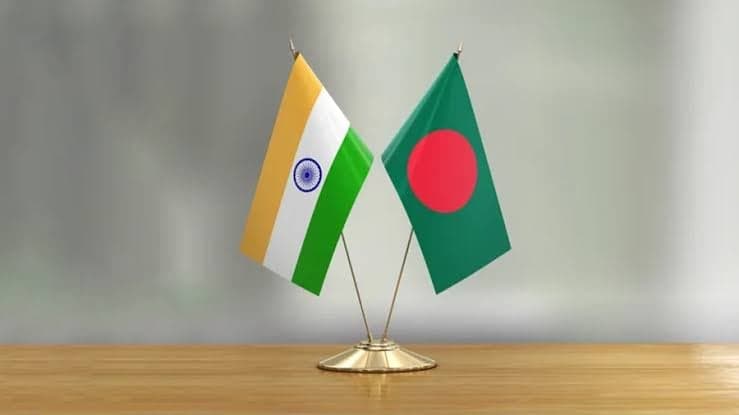

India considers the continued release of Islamic extremists convicted of serious crimes and the deterioration of the law and order situation in Bangladesh as a matter of 'grave concern' for regional and global security.
The neighboring country is also interested in seeing a democratic, stable, peaceful and inclusive Bangladesh.
On Wednesday (March 26), the meeting of the Standing Committee on Foreign Affairs of the Indian Lok Sabha discussed the future of relations between the two countries.
The meeting said that the stability of Bangladesh is a major issue for the region. The issue of constructive and cooperative relations with the neighboring country in securing its own borders was also given importance.
A 'background note' titled 'Future of India-Bangladesh relations' was presented at the meeting in New Delhi, where, in addition to India's strategic relationship with the interim government of Bangladesh and regional security issues, the 'rise of extremism', 'attacks on minorities' and economic growth were highlighted.
The note also highlighted the formation of a new political party by the students who led the July Movement.
It says, 'The chief adviser to the interim government of Bangladesh, Muhammad Yunus, has indicated that elections will be held in December this year. Accordingly, the BNP, Jamaat and other parties have started preparing.
'However, the timeframe for reforms before the elections remains unclear. On the other hand, the 'pressure' of the big parties on the government to hold elections soon is increasing'.
The background note says, 'Crimes against women and minorities, vandalism of property, and illegal chaos by creating 'mobs' are regularly taking place in Bangladesh. Army Chief General Waqar-uz-Zaman has publicly warned about these incidents and said that such factionalism and conflict are a threat to the country'.
It says, 'Increasing incidents of extremist groups taking advantage of the political vacuum to bring religious issues to the public', 'These groups cherish the ideology of the 'Islamic Caliphate'.'
The note begins by saying, 'Since the formation of the interim government in August 2024, India has been maintaining constructive engagement with Bangladesh under a framework of mutual interests and priorities. India is keen to see a democratic, stable, peaceful and inclusive Bangladesh. It wants a people-centric bilateral relationship.'
The note states that India's expectations regarding the need to ensure the security of minority communities, including Hindus, have been conveyed to Bangladesh and repeatedly raised with the authorities of the interim government.
It says, 'The issue has been repeatedly raised with the interim government of Bangladesh. On December 10 last year, the Bangladesh government reported the arrest of 70 people in 88 incidents of attacks on minorities. The Indian government has consistently urged the Bangladesh government to take firm steps to ensure the rights, political and social inclusion of minorities. But Muhammad Yunus' government has not only denied the 'systematic oppression' of minorities but has also tried to downplay the scale and nature of the violence against Hindus since August 2024. Chief Advisor Yunus and other advisors have claimed that the atrocities against minorities are a media exaggeration. Instead of acknowledging them as communal incidents, they have tried to 'justify' them by saying that they were 'victims of political revenge killings' because the Awami League did it.
Leave A Comment
You need login first to leave a comment