
Korotoa river under threat from encroachment, pollution by TMSS
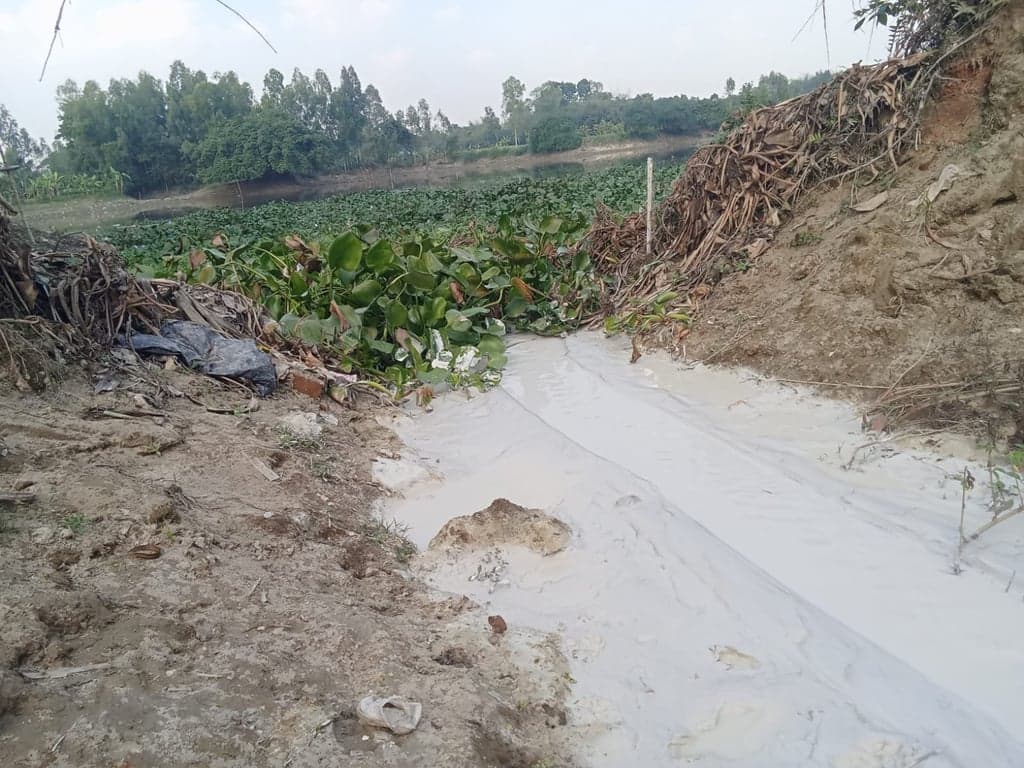

The Korotoa River in northern Bangladesh is facing severe environmental degradation due to alleged encroachment and industrial pollution, with local residents and stakeholders blaming several industrial facilities operated by Thengamara Mohila Sabuj Sangha (TMSS).
Once a lifeline for northern communities—supporting fishing, navigation, and livelihoods—the river is now described by locals as “dying,” with sections reportedly filled, polluted, and emitting foul odors due to untreated industrial discharge.
Local residents in Bogura claim that TMSS-run industrial units along the riverbank are among the major contributors to the river’s deterioration. They allege that wastewater from facilities, including ceramic and paper manufacturing units, is being directly discharged into the Korotoa and its connected waterways, turning the water dark and toxic.
Fishermen in the Sujabad area of Shahjahanpur upazila said fish stocks have drastically declined over the years. “There was a time when large rohu and katla were common here. Now the river is almost lifeless,” said local angler Nasir Pramanik, adding that industrial pollution has made fishing impossible.
During field visits, wastewater discharge channels were observed near industrial facilities linked to TMSS, with claims that chemical-laden effluents are entering the river system through drains and adjacent canals. In some areas, river-adjacent land and canals appear to have been filled, according to local accounts.
Experts say uncontrolled industrial waste, along with unregulated domestic discharge, is a key factor behind river pollution. Water resources engineer Sabrina Rashid Saeoty, currently based in Canada, said strict enforcement of environmental laws, proper waste treatment systems, and public awareness are essential to prevent further degradation of rivers like the Korotoa.
Earlier government and regulatory reports have also flagged concerns over encroachment and pollution in the Korotoa basin. A 2018 inspection by the National River Conservation Commission reportedly identified land grabbing, illegal structures, and waste dumping along parts of the river. A 2019 district administration list also mentioned encroachment on nearly 4.90 acres of Korotoa river land in the Shahjahanpur area.
However, local residents say enforcement actions have remained limited despite repeated allegations and official listings.
Speaking to Views Bangladesh, TMSS Managing Director Hosne Ara Begum rejected the allegations of river encroachment, saying the organization operates within legal boundaries and that some land issues were resolved during river excavation works.
Bogura Deputy Commissioner Md. Taufiqur Rahman said river pollution falls under the jurisdiction of the Department of Environment, while district authorities continue routine drives against illegal encroachment.
Despite official assurances, locals say Korotoa continues to suffer from unchecked pollution and encroachment, with its ecological condition worsening each year, especially after the monsoon season when foul odor and discolored water become more pronounced.
Leave A Comment