
M A Manzur's involvement in assassination of President Ziaur Rahman still unclear
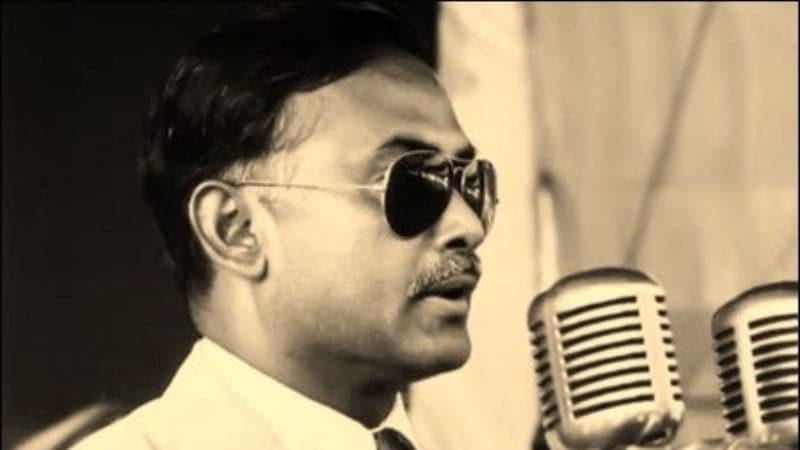
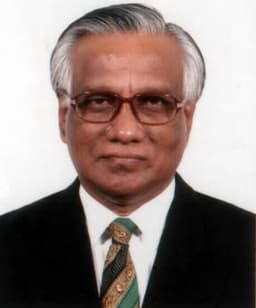
President Ziaur Rahman was violently assassinated by a faction of army officers at the Chattogram Circuit House during the early hours of May 30, 1981. This marked the second assassination of a President of the People's Republic of Bangladesh within a decade following the nation's independence. A key figure in this incident was Major General M.A. Manzur. It is important to note that after the assassination of President Ziaur Rahman, M.A. Manzur assumed responsibility for the entire event and orchestrated a rebellion in Chattogram. He also put forth four demands, which included the declaration of martial law. Furthermore, he proclaimed the establishment of a revolutionary council. However, M.A. Manzur soon lost control amidst the unfolding events. Subsequently, he was also brutally killed in the Chattogram Cantonment on June 2. Former army officer Major General (Retd.) Amin Ahmed Chowdhury Bir Bikram candidly discussed these events in 2012, 31 years after the assassination of President Ziaur Rahman. It is essential to highlight that Major General (Retd.) Amin Ahmed Chowdhury was a close associate of President Ziaur Rahman, both professionally and personally. He fought alongside Ziaur Rahman during the Liberation War in 1971.
This interview was conducted by Rahat Minhaz, an Assistant Professor in the Department of Mass Communication and Journalism at Jagannath University, at Amin Ahmed Chowdhury's residence in Gulshan for a publication. Notably, Major General (Retd.) Amin Ahmed Chowdhury Bir Bikram passed away due to old age on April 19, 2013.
In which position and where were you working in May 1981?
At that time, I was working as a Colonel in the Bangladesh Army as the Commandant of the School of Infantry in Jalalabad Cantonment, Sylhet.
When and how did you get the news of the assassination of President Ziaur Rahman?
That day, the GOC of Cumilla, Major General Samad, was in Sylhet. In the morning, I went with him to the shrine of Hazrat Shahjalal (RA). There, we received this news through wireless around 7:30 in the morning. We were very shocked by this news. Major General Samad then comforted me.
What do you think was the reason behind this rebellion or the assassination of President Zia?
It was a period of upheaval. Ziaur Rahman aimed to implement further political reforms. He was also intending to initiate changes within the administration. As a result, he became unpopular with many individuals. Furthermore, during his political career, Zia associated with several anti-independence leaders, notably Shah Aziz, among others. This provoked the ire of freedom fighter officers and members of the army. It can be concluded that Ziaur Rahman ultimately lost his life as a consequence of various circumstances.
Does it mean that Ziaur Rahman was in a very difficult situation?
Ziaur Rahman did not believe in the democratic spirit of the 60s. The spirit with which Bangabandhu led the Bengali nation to the path of independence. He could not trust the socialist revolution of the Jasad. At the same time, he did not want to run the country with an Islamic spirit like Turkey. As a result, there was confusion about him among the army, common people and politicians. Which strengthened the opposition forces of Ziaur Rahman. They found a field for conspiracy.
How much of a role do you think the personal conflict between President Ziaur Rahman and GOC Manzur played behind this incident?
Manzur and Zia shared a close friendship. Following the Sepoy-People's Revolution on November 7, 1974, Zia summoned Manzur back from India. During that period, they collaborated closely. Nevertheless, a dispute emerged regarding the spheres of influence involving Shawkat, Manzur, and Ershad. Manzur aspired to become the army chief, but Shawkat, being approximately two and a half years his senior, was favored by Zia for the position. Frustrated by the arrogance and conflict between the two, Zia ultimately appointed Ershad as the army chief. This decision left Manzur furious. However, it was inconceivable that Manzur would resort to killing Zia out of this anger.
So who was behind the assassination of Ziaur Rahman?
Look, the report of the Judicial Commission on this murder has not been published. So it is difficult to say anything clearly about it. However, analyzing the course of events and various aspects at that time, it can be said that those who were behind this incident were very clever. They killed not two birds with one stone, but three birds. Ziaur Rahman, Manzur and officers in the army who believed in the spirit of the liberation war. After the murder of Ziaur Rahman, 13 people were hanged and 10-12 others were sentenced to various terms of imprisonment, and a kind of purge was carried out within the army. In which more than a hundred freedom fighter officers were forced to leave the army. The ruling class of that time benefited fully.
Who are they?
It is challenging to articulate clearly. Nevertheless, General Ershad was expected to retire in 1981. Furthermore, there were discussions about an unplanned meeting between the army chief and Lt. Col. Motiur, who was responsible for the assassination of Ziaur Rahman. However, at that time, Motiur was scheduled to leave the country for a course. It is possible that Ershad met with him concerning that matter. On the other hand, there may not have been any conspiracy involved in this situation. Additionally, a few days prior to President Ziaur Rahman's assassination, Manzur had a discussion with Ershad. This topic was also a point of conversation during that period. Although Manzur had a strong aversion to Ershad, it is rumored that he expressed his unwillingness to salute Ershad on several occasions. Given this context, the reason for Ershad's meeting with Manzur remains a mystery, one that has yet to be unraveled even today.
But what exactly did GOC Manzur want to do through this rebellion or failed coup or killing Zia?
Manzur was an intelligent and skilled officer. His credentials as an officer met international standards. Nevertheless, I remain perplexed as to why he became involved in the assassination of Zia. It seems implausible to execute a coup by eliminating President Zia in Chattogram. Furthermore, Ziaur Rahman was not a significant adversary of Manzur. Yet, I find it difficult to ascertain the exact reasons behind this incident. Additionally, I harbor doubts regarding whether Manzur genuinely intended to kill Zia. I firmly believe that such immature reasoning is not characteristic of an officer of his caliber.
How did you get the news of the death of GOC Manzur? Did everyone believe what was broadcast on television and radio about his death at that time?
The news of his death was widely broadcast on television and newspapers. It was said that he was killed by a group of angry army personnel. But the matter was a pure lie. He was shot dead by an officer at close range. It is still not known on whose orders this officer killed him. It may never be known. This is a matter of regret.
(Interviewee Rahat Minhaz is an assistant professor in the Department of Mass Communication and Journalism, Jagannath University.)
Leave A Comment