
Migration: A never ending discussion issue
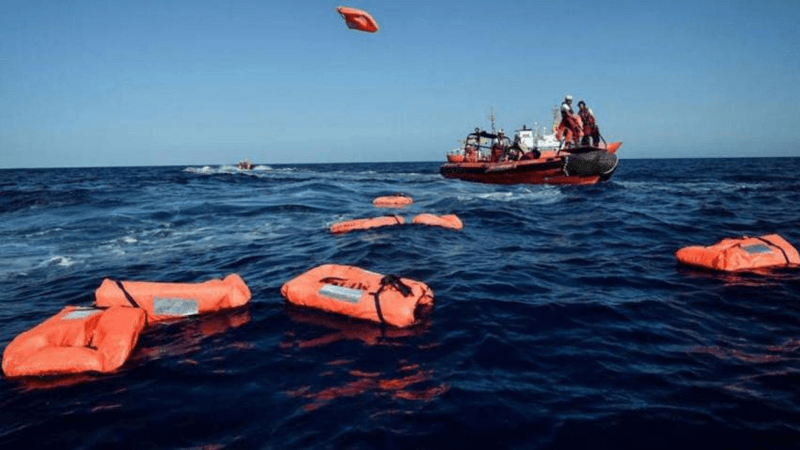
I was shocked after listening the plights of poor Bazlur Rahman (28) of Manikganj district in Bangladesh. He recently returned home after three weeks from Uganda, an African country. He sold his total land adjacent to his village home and paid Taka one million to a broker / agent of a fake travel agency in Dhaka to be a migrant labor in Italy. But the broker cheated and send him to Uganda in the name of Italy! Bazlur was arrested there by the police and sent back to Bangladesh after 17 days in prison.
I heard not only his story through a neighbor but also other men and women they were cheated and returned home after a series of sufferings, loss of money and harassment.
In Bangladesh, stories like Bazlur are common. There are thousands of men and women sold their properties, took loans with high interest, and handed over money to the brokers to go abroad. But unfortunately at the end they were the ill-fated people that dishonest brokers made false commitments with them to send Italy, Malaysia, Qatar, Singapore, Croatia and other countries. They never get back money from the brokers and while the situation gets worst, even some of the victims committed suicide, and some of them were killed by the brokers!
So considering the situation, migration experts opined to make awareness among the people to avoid risks, loss of money and life.
Above all, people must keep in mind that safe, orderly and regular migration is the best opportunity definitely than dying journey by boat through sea route and dishonest brokers and human traffickers.
STATUS OF CLIMATE MIGRATION IN BANGALDESH
Different studies show that climate migration in Bangladesh is an accelerating crisis. Millions of internal displacements are triggered annually by slow-onset processes and sudden disasters. Projections indicate that up to 13.3 million people could become internal migrants by 2050.
In coastal areas, rising sea levels and encroaching saltwater are destroying agricultural lands and contaminating drinking water. Projections suggest that up to 17% of coastal lands could be submerged, displacing millions.
Thousands of low-income migrants arrive in urban centers daily particularly in Dhaka seeking safety and employment. This influx drives the rapid expansion of informal settlements, where climate migrants often constitute the majority of slum populations.
Migrants arriving in densely populated cities face extreme poverty, lack of access to public services, and heightened risks of trafficking or modern slavery.
Displacement disproportionately impacts marginalized groups, including women and individuals with disabilities, worsening socio-economic exclusions.
So climate change experts suggested that nature and community-based adaptation, and other sustainable long term plans and projects are a must for those who are most vulnerable and disadvantaged.
Sharmind Neelormi, Professor, Department of Economics, Jahangirnagar University, said, “Gender-responsive climate action and its governance must be linked to long-term sustainable development. Climate adaptation is context-specific, and therefore, solutions should address not only climate impacts but also infrastructure, water management, and human-induced factors. Effective budgeting and climate finance require clear attribution of these drivers and stronger use of scientific evidence and disaggregated data.”
GLOBAL COMPACT FOR SAFE, ORDERLY AND REGULAR MIGRATION
Globally, global compact for safe, orderly and regular migration (GCM) is an important, much-talked issue that the stakeholders are working on it.
In adopting the New York Declaration for Refugees and Migrants, the Member States of the United Nations recognized the need for a comprehensive approach to human mobility and strengthened cooperation at the global level.
The Global Compact is the first intergovernmental agreement covering all dimensions of international migration. It is a non-legally binding, cooperative framework that upholds the sovereignty of States and their obligations under international law.
The Global Compact provides an unprecedented opportunity to strengthen migration governance, address the challenges associated with migration in today’s world, and harness the contribution of migration to sustainable development. The Compact is rooted in the 2030 Agenda for Sustainable Development, in which Member States commit to cooperate internationally to facilitate safe, orderly and regular migration.
WARBE Development Foundation works on the Global Compact for Safe, Orderly and Regular Migration (GCM) in Bangladesh. WARBE is a prominent civil society organization that works closely with the UN and the Bangladeshi government.
Recently I had the opportunity to join an event of stakeholders’ engagement in Dhaka organized by WARBE Development Foundation. This workshop was on a shadow report of GCM and migration issues in Bangladesh and the globe.
The participants provided feedback on the questions according to the cluster of objectives, guiding principles, and list of pledges. Core indicators for the objectives that Bangladesh prioritized were also provided in the local context and language. Adequate and disaggregated data for the migration cycle and relevant to GCM are not fully available as yet, so was not reviewed.
Asif munier, a migration expert in Bangladesh said, “Reviewing the progress of commitments of implementing GCM in Bangladesh as a champion country, the pre-dominant view of the migrants and civil society is that good policies are in place but they have not been implemented proportionately. Migrants themselves have added that they mostly do not know what the government is doing for their rights, protection and welfare. What they know however is that the missions abroad are not very responsive in supporting migrants – even their attitude is not migrant-friendly.”
He further added, “The government reports and formal commitments at the international level do reflect the progress on policies but not so much on areas where the government lags behind. It’s time to acknowledge the gaps and make realistic commitments for greater accountability towards achieving the objectives and principles of GCM,” Asif concludes.
In fact, migration is indeed a timeless phenomenon and a never-ending discussion. The endless debate stems from the complex, structural trade-offs governments face when trying to balance economic, humanitarian, and social goals.
Parvez Babul is an award-winning journalist, columnist and researcher in Bangladesh. He writes on climate change, health, environment, migration, among others. Email: parvezbabul@gmail.com
Leave A Comment