

National consensus needed to resolve Rohingya crisis: Adviser Touhid
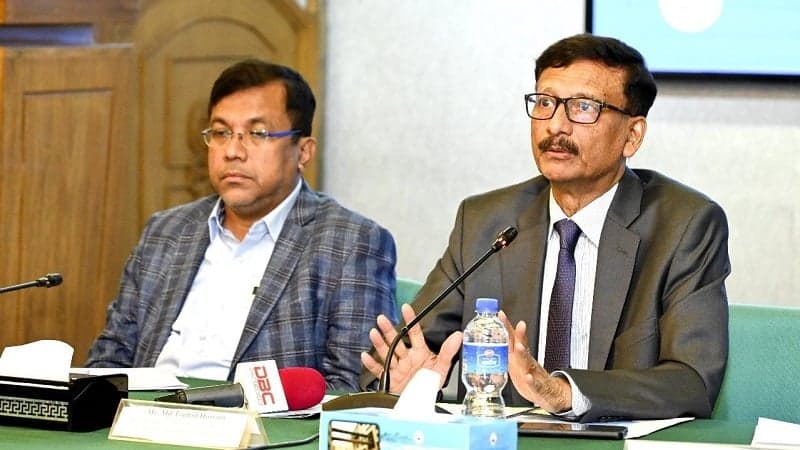

Foreign Affairs Adviser Md Touhid Hossain on Saturday (23 November) underlined the need for a national consensus to address the Rohingya crisis, which has been further complicated by the ongoing civil war in Myanmar, particularly in Rakhine State.
"We achieved far less than we could have because there was no national consensus on Rohingya policy," Touhid said, urging political parties to unify on the issue.
He was addressing a national dialogue on Rohingya policy organised by the South Asian Institute of Policy and Governance (SIPG) of North South University (NSU) at the Bangladesh Institute of International and Strategic Studies (BIISS).
Touhid laid emphasis on importance of developing a minimum level of deterrence—not for war, but to demonstrate Bangladesh's strength and engage in multilateral negotiations.
Myanmar must come to the negotiation, If they are unwilling, they need to understand there will be consequences, he said.
Touhid reiterated that the displaced Rohingyas must return to Myanmar with guaranteed rights and safety to ensure a sustainable resolution to the crisis.
"We need a solution where they won't return in five years. Rohingyas must go back with rights, and security," he said.
Touhid described the Rohingya crisis as Bangladesh's most pressing international issue, worsening with time.
He stressed the importance of maintaining international support in handling the situation.
Touhid said that while Bangladesh cannot directly engage non-state actors like the AA, the Rohingya crisis cannot be resolved without considering the AA's control over Rakhine State.
He also advocated for providing Rohingya children with education up to class X and imparting skills training to prepare them for eventual repatriation.
High Representative of the Chief Adviser for Rohingya and Priority Affairs, Dr Khalilur Rahman warned that the global community's attention to the Rohingya issue is waning.
However, he noted that the current government is striving to rekindle international focus through a UN Conference on Rohingya planned for early next year.
BNP Standing Committee Member Amir Khasru Mahmud Chowdhury echoed the call for a comprehensive Rohingya policy and a national consensus.
He also emphasized enhancing border security and trade relations with Myanmar, stating, "A weak country cannot negotiate effectively".
He advocated for improved race relations in Rakhine State, particularly between the Rohingyas and the Rakhine ethnic communities.
Jamaat-e-Islami leader AHM Mamidur Rahman Azad highlighted the severe security concerns in southeastern Bangladesh due to the Rohingya presence in Cox's Bazar.
He urged better healthcare and education facilities for the displaced population.
Leave A Comment
You need login first to leave a comment